
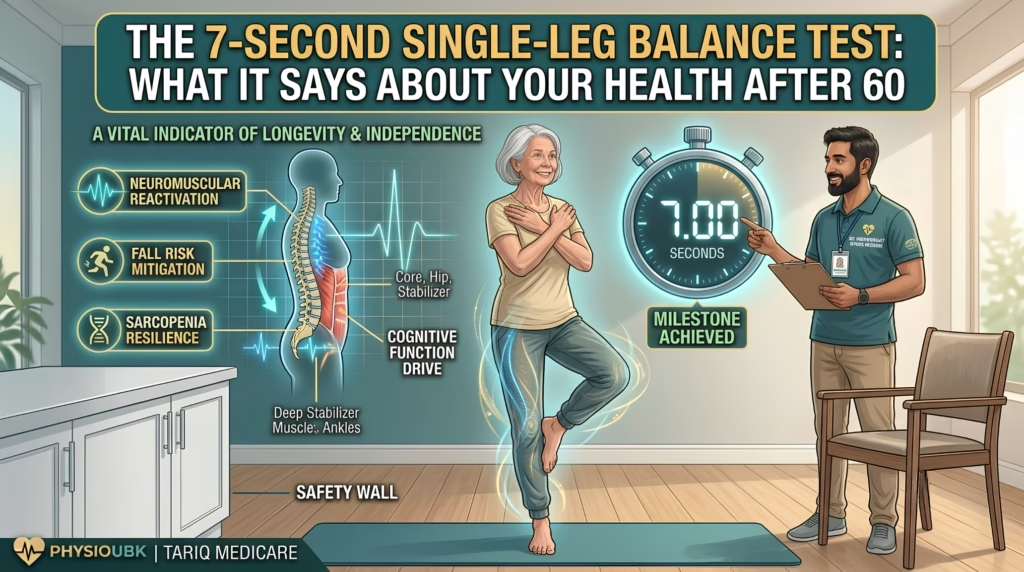
Can you stand on one leg, undisturbed, for at least 7 seconds?
It sounds like a simple playground challenge. However, in the world of geriatric rehabilitation and preventative medicine, this brief window of time is one of the most powerful, non-invasive indicators of your biological age, neurological health, and long-term independence.
As we cross the threshold of 60, maintaining physical health shifts from tracking cardiovascular endurance or muscle mass to evaluating a more complex system: balance.
Here is a clinical look at what the 7-second single leg balance test reveals about your body, why it matters for your longevity, and how you can systematically rebuild your stability from the comfort of home.
The Science of Balance: More Than Just Strong Legs
When a physical therapist evaluates your balance, they aren’t just looking at the strength of your ankles or thighs. Balance is a complex, rapid-fire conversation between your brain and your environment. It relies heavily on three primary systems:
- The Vestibular System: The fluid-filled canals in your inner ear that tell your brain where your head is in space.
- The Visual System: Your eyes tracking your surroundings to help map out coordinates and horizons.
- Proprioception: A network of microscopic receptors in your joints, tendons, and muscles (especially in your feet and ankles) that act as the body’s internal GPS, sensing pressure and position.
When you lift one foot off the ground, your base of support is instantly cut in half. Your brain must instantly process data from all three systems and fire micro-contractions down your kinetic chain to keep you upright.
Failing to hold this position for at least 7 seconds isn’t just a sign of weak muscles; it is often an early clinical indicator that these neuromuscular communication pathways are slowing down.
Why 7 Seconds Is the Magic Number After 60
Medical research over the past few decades has continually linked single-leg stance times to overall mortality and life expectancy.
A prominent study published in the British Journal of Sports Medicine tracked adults over a span of several years and found a striking correlation: individuals over the age of 50 who were unable to complete a 10-second single-leg stance test had a significantly higher risk of all-cause mortality over the following decade.
For individuals over 60, hitting a minimum baseline of 7 to 10 seconds is considered a critical neurological milestone. Dropping below this threshold serves as a warning sign for several age-related changes:
1. Accelerating Sarcopenia
Sarcopenia is the natural, age-related loss of skeletal muscle mass and strength. The deep stabilizing muscles of your hips (like the gluteus medius) and the micro-muscles surrounding your ankles are the first line of defense against a fall. If these muscles have atrophied, holding a single-leg stance becomes incredibly difficult.
2. Silent Neurological Decline
Because balance requires immense cognitive processing, a rapid decline in balance can sometimes predate noticeable cognitive or memory issues. It shows that the white matter pathways in the brain, which send signals down the spinal cord, may be experiencing age-related delays.
3. Increased Fall Risk
Falls are the leading cause of injury-related hospitalizations among seniors. A poor score on a single-leg stance test directly correlates to a higher statistical likelihood of experiencing a trip or fall in your daily life.
How to Safely Take the Test at Home
Before you try this test, safety is the absolute priority. Do not attempt this in the middle of an open room without support nearby.
The Setup:
- Stand barefoot on a flat, solid floor (avoid thick rugs or carpets).
- Stand next to a sturdy countertop, a stable wall, or a heavy chair that you can grab instantly if you lose your balance.
- Cross your arms over your chest. Do not use your arms to balance like a tightrope walker.
The Execution:
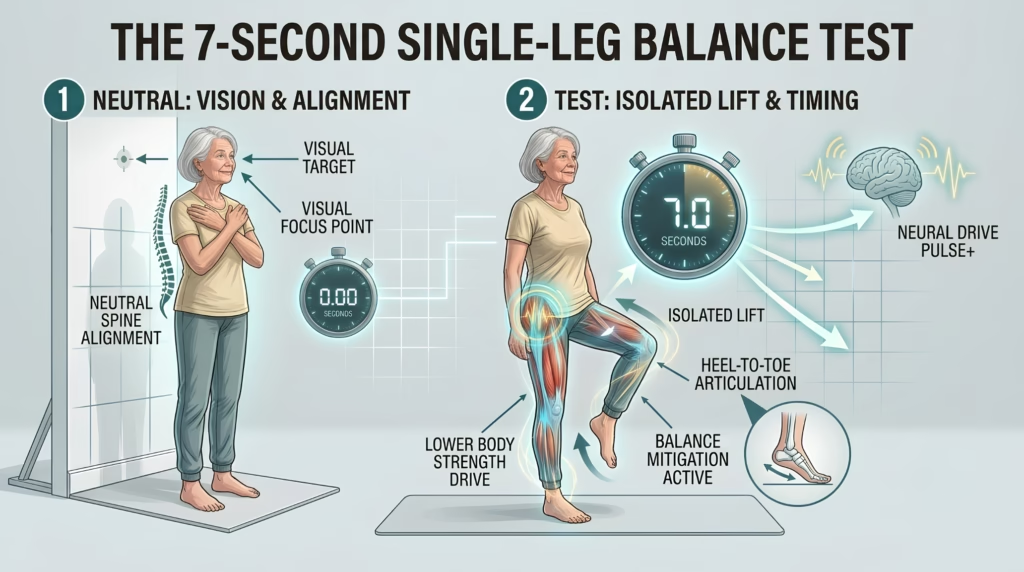
- Pick a spot on the wall directly in front of you to focus your vision.
- Lift one foot completely off the ground (bending your knee so your foot hovers a few inches high). Ensure your lifted leg does not touch or rest against your standing leg.
- Start a timer (or have a loved one count).
- Stop the clock the moment:
- Your standing foot shifts or moves on the floor.
- Your lifted foot touches the ground.
- You have to uncross your arms or reach out to touch the wall/chair for safety.
Test both your left and right legs. It is entirely normal to have one side that feels slightly more stable than the other.
Understanding Your Score: Age-Based Norms
While 7 seconds is the critical target threshold to protect against immediate fall risks, clinicians use standardized normative data to see how your balance matches your biological age.
On a standard, eyes-open single-leg stance test, average targets look like this:
| Age Range | Target Baseline (Eyes Open) | Clinical Outlook |
| 60 – 69 Years | 20 to 30+ seconds | High level of independence; low immediate fall risk. |
| 70 – 79 Years | 10 to 15 seconds | Normal age-related decline; requires active maintenance. |
| 80+ Years | 5 to 9 seconds | Requires targeted intervention to maintain safe mobility. |
The Red Flag: Regardless of whether you are 62 or 82, if your score drops below 7 seconds, your physical foundation requires immediate, proactive attention to preserve your mobility and protect your joints.
The Roadmap to Rebuild Your Balance
If you struggled to hit the 7-second mark, do not be discouraged. The neuromuscular system is remarkably adaptable at any age. Just like a bicep muscle grows stronger with lifting weights, your proprioceptive system gets sharper with targeted practice.
Here are three simple, equipment-free exercises you can introduce into your daily routine. This strategy relies on “habit-stacking”, pairing your balance exercises with actions you already do every day.
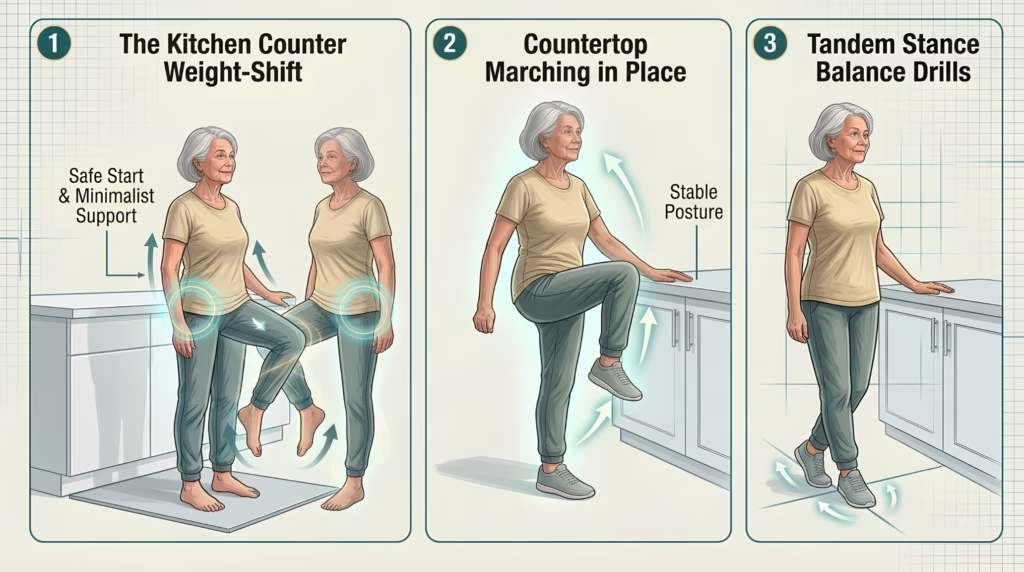
1. The Kitchen Counter Weight-Shift
- How to do it: While waiting for your morning coffee or tea to brew, stand at the kitchen counter. Lightly place your fingertips on the counter for safety. Shift all your weight onto your left leg and hover your right foot for 5 seconds. Switch to the right side.
- The Goal: Progressively lighten your fingertip pressure until you are balancing completely unsupported for 10 seconds.
2. Tandem Standing (The Balance Beam)
- How to do it: Stand next to a wall or hallway. Place your right foot directly in front of your left foot, so that the toes of your left foot are touching the heel of your right foot (like you are walking a tightrope).
- The Goal: Hold this narrow stance for 20–30 seconds. This builds lateral ankle stability, which stops you from tipping sideways if you trip.
3. Clock-Work Taps
- How to do it: Stand on your left leg next to a support structure. Imagine you are standing in the center of a clock face. Gently tap your right foot forward to 12 o’clock, return to center, tap out to 3 o’clock, return to center, and tap backward to 6 o’clock.
- The Goal: Complete 5 rounds on each leg. This forces the standing hip and ankle to stabilize your body while your other limbs are in motion, mimicking real-world movements like stepping over an obstacle.
Final Thoughts from a Clinical Perspective
Aging gracefully isn’t about avoiding change; it’s about managing it with the right tools. Your balance is a direct reflection of your body’s internal communication network. By taking 5 minutes a day to challenge that network, you aren’t just improving a test score, you are actively protecting your joint health, keeping your brain sharp, and ensuring you can move confidently on your own terms for decades to come.
About the Authors
This clinical screening guide was developed by the editorial team at PhysioUBK. Dedicated to preventative health and active aging, physioubk.com provides accessible, science-backed strategies to help seniors maintain their physical independence, restore balance, and prevent falls. For professional mobility evaluations, personalized geriatric wellness programs, or specialized balance training, reach out to our clinical teams at Tariq Medicare in Khanewal, Pakistan.
Runner’s Knee Exercises: 8 Physio-Approved Moves for Stronger Knees
Here’s the secret about runner’s knee that surprises most of my patients: the problem is…
Sciatica Exercises: A Physiotherapist’s Complete Guide
“Which exercises should I do for my sciatica?” It’s the question I get most, and…
Seated Exercises for Obesity: A Safe Starting Guide
Most exercise advice starts with an assumption: that you can stand up, walk out the…
Immediate Relief for Sciatica Pain: 7 Things That Actually Work
It’s 2 AM, a sharp electric pain is shooting from your buttock down to your…

Tech Neck: 5 Desk Habits That Hurt Your Neck
Your head weighs about 5 kg. Tilt it forward 60 degrees to look at your…
Knee Pain Treatment in Khanewal: Walk, Climb, and Squat Without Fear
A few weeks ago a schoolteacher in her early fifties walked into my clinic and…