
Water Intake Calculator
Almost everyone who walks into my clinic knows they should drink more water. Almost none of them can say how much more. This calculator starts from your body weight, using the same 35 ml per kilogram rule clinicians use to estimate daily fluids, then adjusts for your exercise, your weather and your life stage. You get one clear target in millilitres, litres, glasses and bottles, and a physiotherapist’s read on how to actually reach it. Water and energy travel together, so pair it with our TDEE calculator for the calorie side of the same day.
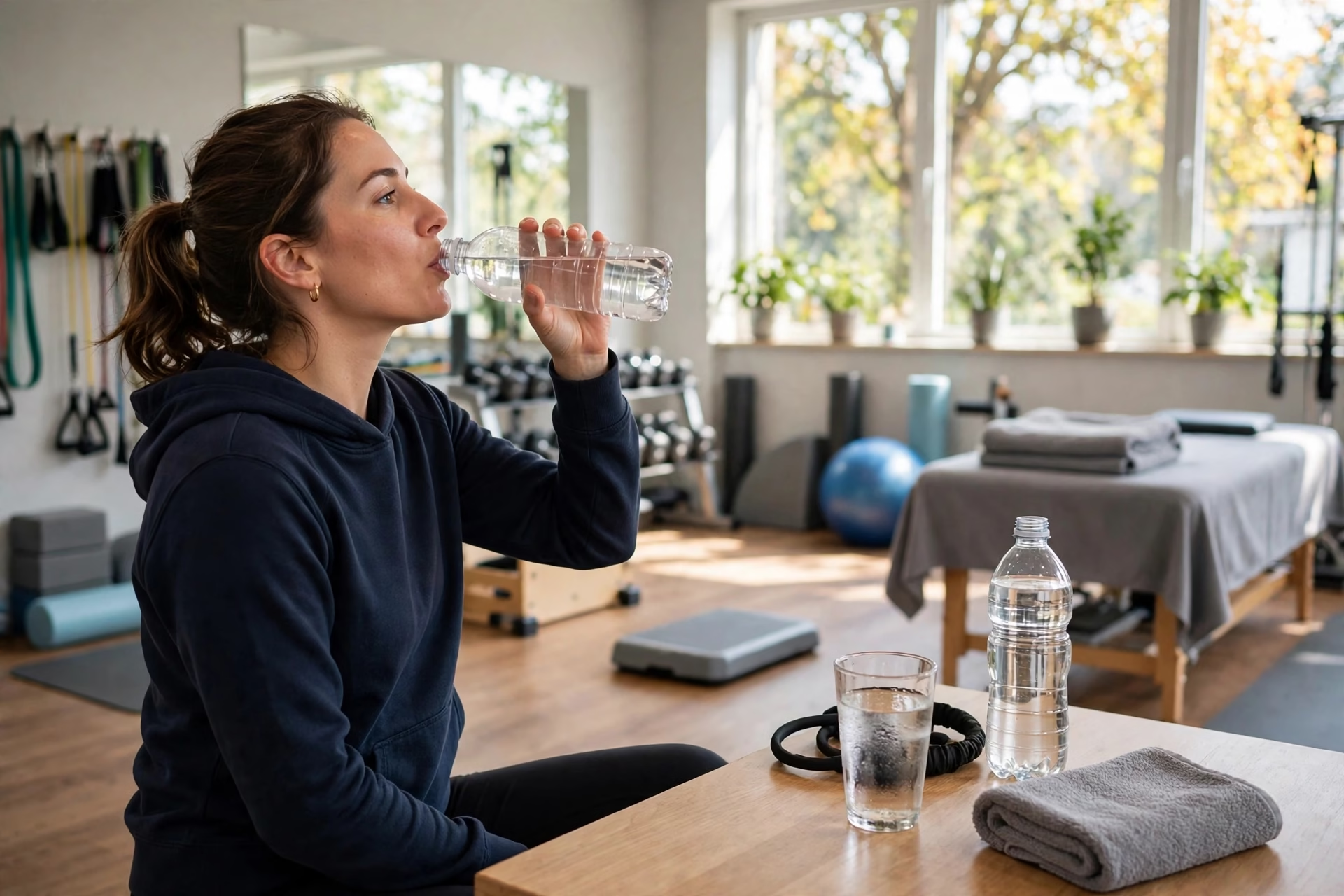
Your daily target
The maths is shown in full below, line by line. Nothing you type leaves this page.
| Part of the target | Water |
|---|---|
| Base from your weight70.0 kg x 35 ml | |
| Exercise | |
| Climate | |
| Condition | |
| Daily target |
Where the 35 ml rule comes from
When clinicians estimate how much fluid an adult needs just to keep the system running, the working figure is 30 to 35 ml per kilogram of body weight per day. It is not a marketing number; it is the maintenance estimate used for patients who cannot simply drink when thirsty, and it scales with the body in front of you. This calculator uses the top of the range, 35 ml, because most people who land here are under drinking.
The official reference figures sit in the same territory, quoted two different ways. The European Food Safety Authority sets adequate total water at 2.0 litres a day for women and 2.5 litres for men. The Institute of Medicine in the United States gives 2.7 litres for women and 3.7 litres for men. Both count total water, drinks plus the water inside food, and the US figures use larger reference body sizes, which is why they look higher: a different accounting method, not a different physiology.
Here is the honest point most water advice skips: roughly 20 percent of your daily water normally arrives in food. Fruit, vegetables, yogurt, cooked rice, lentils and even bread all carry meaningful water, so a normal eater does not have to drink every millilitre from a bottle. Treat the number here as a drinking guide, not a law with a penalty attached. After that, thirst and urine colour, pale straw most of the day, fine tune it.
How to spread it through the day
The target is the easy part. The pattern is what most people get wrong: almost nothing all day, then a litre at night, which mostly produces a disturbed night rather than a hydrated body. Your kidneys process water at a limited rate, so steady intake beats rare floods. Three anchors cover nearly the whole target.
Start on waking
One glass first thing. You lose water overnight through breath and sweat, and most people start the day already slightly behind.
Anchor to meals
A glass with each meal and one between meals reaches roughly two litres on its own. Habits tied to things you already do survive; habits tied to willpower do not.
Around exercise
Drink before you start, sip during anything longer than half an hour, and replace properly afterwards. A bottle in your bag is the whole system.
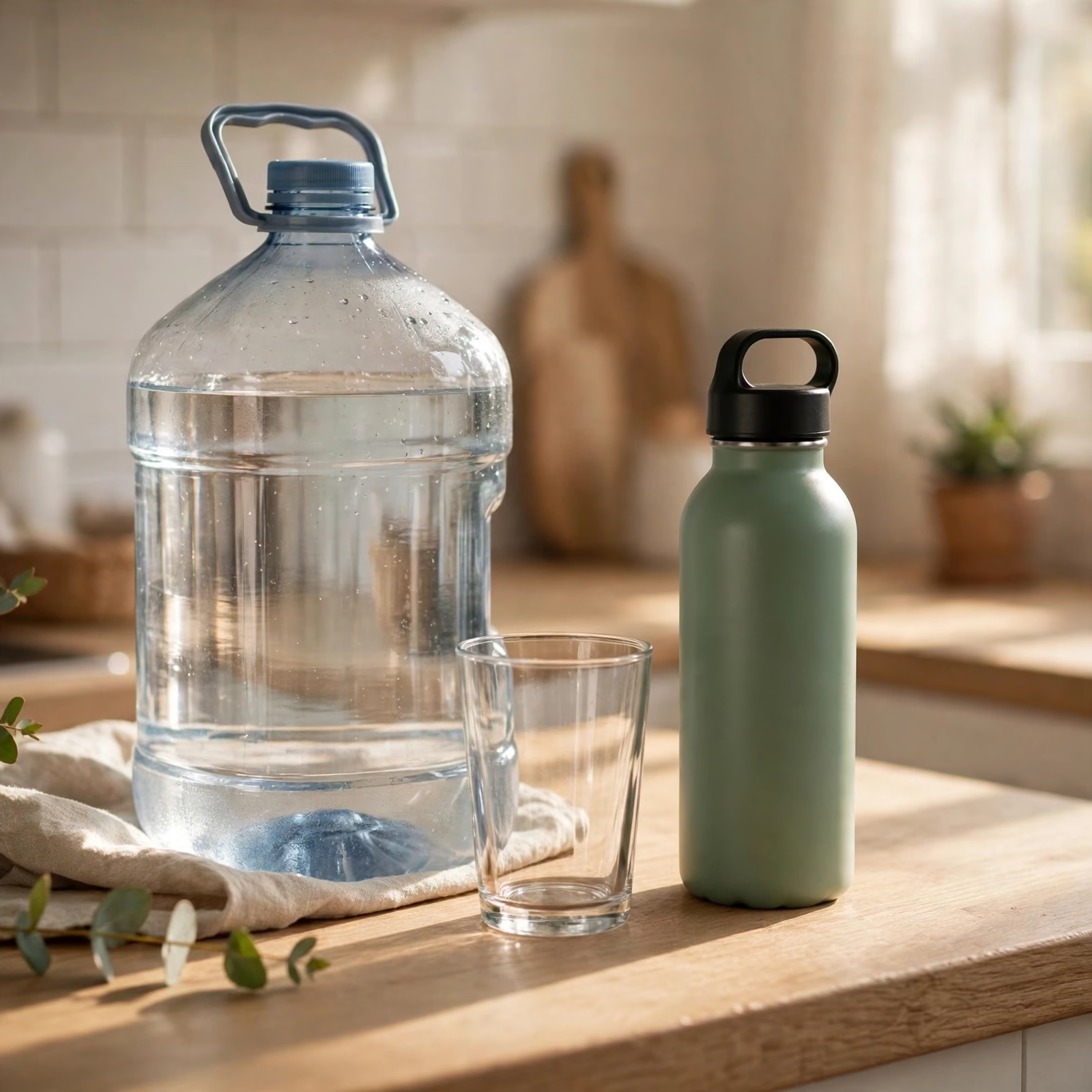
Keep a filled bottle where you can see it and refill it the moment it empties. Visible water gets drunk. On heavy days, tick the glasses from your result off against meals and breaks.
Water, muscles and joints: the physio view
Muscle is roughly three quarters water, and it behaves like it. Once you lose around 2 percent of your body mass as sweat, endurance falls, exercise feels harder than it should, and concentration slips. For a 70 kg person that is only 1.4 litres of unreplaced sweat, easily lost in a hot afternoon. Headaches, tiredness and constipation are the quieter costs that show up in clinic first.
Joints deserve an honest version of the story. Cartilage has no blood supply and depends on fluid moving in and out under load; the discs in your spine lose a little height across the day and rehydrate as you sleep. Staying reasonably hydrated supports that exchange. What extra water has never been shown to do is rebuild worn cartilage or reverse arthritis, and I do not tell patients otherwise. The fair claim is smaller: do not load joints in a body that is chronically running dry.
Older adults need a different strategy: thirst becomes a late signal with age, and the kidneys concentrate urine less efficiently, so waiting to feel thirsty stops working. For my older patients I prescribe drinking by the clock: a glass on waking, one with each meal, one mid afternoon. New dizziness or muddled thinking in an older person, and plain under drinking is one of the first causes we check.
And the cramps point, because it comes up every week: cramps have many causes, including fatigue, sudden load increases, low electrolytes and certain medicines. Dehydration can be one ingredient, but water alone does not fix cramps, and a cramp that keeps returning deserves an assessment rather than a bigger bottle.
Signs you are drinking too little, and too much
Too little
The signals build in a predictable order: dark urine, a dry mouth, a dull headache, then dizziness when you stand, very low urine output and a tiredness sleep does not explain. In older adults it can jump straight to confusion and unsteadiness, which is why families often notice first. The fix is unglamorous: drink steadily over the next few hours, add food or a pinch of salt if you have been sweating heavily, and watch the urine lighten.
Too much
More is not always better. Forcing very large volumes of plain water over a few hours dilutes the sodium in the blood, a condition called hyponatremia, which can cause nausea, bloating, headache and, in severe cases, dangerous confusion. It is seen mostly in endurance events, where runners drink far beyond thirst for hours. The guardrail is simple: drink to your target and your thirst, spread across the day. During very long, hot exercise, some salt in food or drinks helps you keep the fluid.
One group must ignore this calculator entirely: anyone whose clinician has set a fluid restriction, including many people with kidney disease or heart failure, and anyone told to limit fluids after surgery or on certain medicines. That restriction was set for your body and your blood tests. Follow it.
Turn the number into a plan
Water is one dial on the same dashboard as calories, protein and strength. Sweat losses climb as training and calorie burn climb, so set these numbers together rather than in isolation:
TDEE Calculator
Your maintenance calories scale with the same activity that drives your sweat losses. Set both targets from the same honest picture of your day.
Macro Calculator
Hydration supports training, but protein builds what training breaks down. This turns your calories into daily protein, carb and fat.
One Rep Max Calculator
Heavy training days are high sweat days. Estimate your 1RM, plan loads by percentage, and add the exercise water on those days.
If your weight itself is part of the picture, the body fat calculator shows what that weight is made of, and the BMI calculator gives the quick screening number. Together the tools cover composition, calories, protein, strength and the water all of it runs on.
Water intake calculator: frequently asked questions
How much water should I drink a day?
There is no single number that fits everyone. A practical starting point is 30 to 35 ml per kilogram of body weight per day, which is what this calculator uses, adjusted for exercise, heat and pregnancy. For a 70 kg adult that is near 2.5 litres from drinks, and official guides agree: EFSA sets adequate total water at 2.0 litres a day for women and 2.5 for men, food included. Let thirst and urine colour fine tune it from there.
Does tea, coffee or juice count toward my water intake?
Yes. Tea, coffee, milk, juice and the water inside food all count. The old idea that coffee dehydrates you has not held up: at normal intakes, caffeinated drinks hydrate much like water does. Plain water is still the best default, with no sugar, no acid load on teeth and no calories, but a day built on tea and food is not a dry day. Sugary drinks are the exception to handle with care, because of what comes with them.
Can I drink too much water?
Yes, though it is uncommon in daily life. Very large amounts of plain water over a few hours can dilute the sodium in your blood, a condition called hyponatremia, and it is dangerous. It shows up mostly in endurance events, where people force water well beyond thirst for hours. The guardrail: drink to thirst and to your plan, spread across the day, and do not chase litres far beyond your target. On long, hard exercise in heat, some salt helps you hold the fluid.
Why does this calculator use my body weight?
Because water needs scale with body size. A larger body has more tissue to service and more skin producing sweat, so a flat rule like eight glasses a day undershoots big, active people and overshoots small, sedentary ones. The per kilogram rule, 30 to 35 ml per kilogram, is the same approach clinicians use to estimate maintenance fluids. It is still an estimate, but it starts from your body, not an average stranger.
How much extra water do I need when I exercise or in hot weather?
Sweat is the reason. Allow roughly 350 ml extra for every 30 minutes of exercise, which this calculator adds for you, and more in heat, where losses can pass a litre an hour. The most honest check is the scale: each kilogram lost in a long session is roughly a litre to replace over the next few hours. In Khanewal summers, outdoor workers and athletes should treat the heat additions here as the floor, not the ceiling.
What colour should my urine be?
Pale straw is the aim: the light yellow of lemonade, not apple juice. Clear, colourless urine all day usually means you are drinking more than you need; dark yellow or amber, especially with a dry mouth or headache, means your body is asking for water. Judge the trend across the day, not the first morning sample, which is naturally darker. B vitamins and some medicines can change the colour on their own.
PhysioUBK Health Tools · Estimates only, not medical advice · physioubk.com