
Macro Calculator: protein, carbs and fat targets
Stop guessing your portions. Enter your details and get daily protein, carb and fat targets for fat loss, maintenance or muscle gain, calculated from your body and your goal, with the formula shown so you can check the math.

Your results
Based on the Mifflin-St Jeor equation, a commonly used and validated estimation formula.
Your daily macro split
| Per meal (4 meals/day) | Target |
|---|---|
| Proteinthe anchor of every meal | |
| Carbohydratesmostly around training | |
| Fatspread through the day |
⚠ This target is very low. Dropping below roughly 1,200 kcal/day (women) or 1,500 kcal/day (men) without medical supervision risks muscle loss and slower healing. Pick maintenance or talk to us first.
How this macro calculator works
This page runs the same calculation a sports dietitian would do by hand, then shows every step. Nothing is hidden in a black box:
Protein is set first
Protein is fixed from your body weight before anything else, because it decides whether lost weight is fat or muscle, and whether gained weight is muscle or just mass.
Fat takes its share
About a quarter of your calories go to fat: enough for hormones, joints and vitamin absorption, without crowding out the other macros.
Carbs fill the gap
Whatever calories remain become carbohydrates: your training fuel. More active days and bigger goals mean more carbs on the plate.
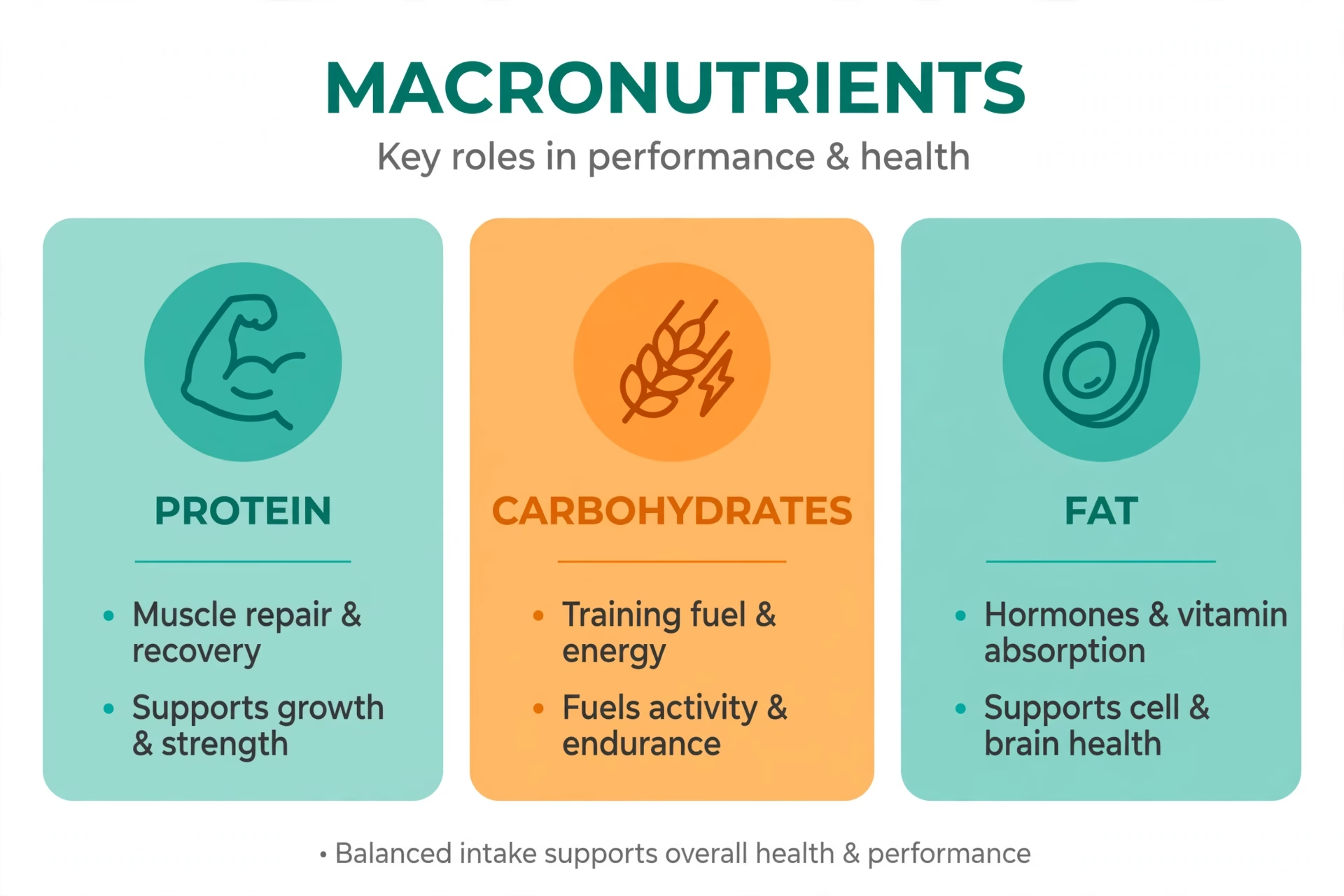
What each macro does
Calories decide the direction of your weight. Macros decide what that weight is made of:
Protein
Repairs and builds muscle, keeps you full, and protects lean tissue when calories drop. The most important macro to get right.
Carbohydrates
Your body’s preferred fuel for training and daily activity. Cutting them too hard flattens workouts and recovery.
Fat
Supports hormones, joints and the absorption of vitamins A, D, E and K. Too little hurts health; too much crowds out protein and carbs.
Check the math: a worked example
Take a 30-year-old man, 75 kg, 172 cm, lightly active, aiming to maintain. Here is every step, with nothing hidden:
Run the same inputs through the calculator above and you will get the same numbers. That is the point: a tool you can audit is a tool you can trust.
Why a physiotherapist built a macro calculator
Body weight is a clinical variable, not just a cosmetic one. Every extra kilogram multiplies the load on knees, hips and the lower back, and every kilogram of muscle lost to crash dieting removes active protection from those same joints. Nutrition and rehabilitation are the same project: tissue that is well fed heals faster, adapts better and hurts less.
That is why this calculator is protein-first. Protein is the building material for muscle, tendon and bone repair. Set it right and your training builds you up; set it wrong and the same training breaks you down.
Macro calculators for every goal
One formula, tuned four ways. Pick the page that matches your goal:
Macro Calculator for Weight Loss
A 500 kcal deficit with protein at 2.0 g/kg, built to take fat off while leaving muscle alone.
Macro Calculator for Muscle Gain
A lean 250 kcal surplus with protein set for growth, so the weight you add is muscle, not just mass.
Keto Macro Calculator
Carbs capped for ketosis, protein kept moderate, with the electrolyte cautions most keto guides skip.
Macro Calculator for Women
Protein targets that account for muscle preservation, bone health and training through hormonal cycles.
Want your maintenance calories first? Start with our TDEE calculator, then come back here to split them into macros.
Macro calculator: frequently asked questions
What are macros?
Macros, short for macronutrients, are the three nutrients your body needs in large amounts: protein, carbohydrates and fat. Each plays a distinct role: protein repairs and builds tissue, carbohydrates fuel training and daily activity, and fat supports hormones and vitamin absorption.
How much protein do I need per day?
Most active adults need 1.6 to 2.2 g of protein per kg of body weight per day. This calculator sets 2.0 g/kg for fat loss, 1.6 g/kg for maintenance and 1.8 g/kg for muscle gain, matching the evidence-based ranges used in sports nutrition research.
Should I count macros or just calories?
Calories decide whether you lose, maintain or gain weight. Macros decide what that weight is made of. Counting protein at minimum protects muscle during fat loss and supports growth during a muscle-gain phase; many people track protein and calories and let carbs and fat fall where they may.
How do I calculate my macros for fat loss?
First estimate maintenance calories (TDEE), subtract about 500 kcal for a steady deficit, set protein at 2.0 g per kg of body weight, allocate roughly 25% of calories to fat, and fill the remaining calories with carbohydrates. This page does all of that automatically.
Do macros matter for injury recovery?
Yes. Healing tissue is built from protein, and recovery needs energy. Under-eating protein or calories during rehab can slow healing and cost muscle that protects joints. If you are injured, maintenance calories with solid protein is usually smarter than dieting.
What is a good macro split?
There is no single ideal split; it depends on your goal. A common evidence-based starting point is protein at 1.6-2.2 g/kg, fat at 20-30% of calories, and carbohydrates filling the rest. Endurance athletes trend toward more carbs, while low-carb approaches like keto flip the fat and carb shares.
PhysioUBK Health Tools · Estimates only, not medical advice · physioubk.com