
If you’re reading this with an aching back, shifting in your chair every few minutes — you’re not alone, and you’re in the right place. Back pain, or kamar dard as we all call it, is the single most common reason people walk into my clinic. Farmers, teachers, shopkeepers, students, new mothers — back pain doesn’t care what you do for a living.
Here’s what I want you to know first: most back pain is not dangerous, most of it gets better, and very little of it needs surgery. But “wait and see” isn’t a treatment plan either.
Let’s talk about what’s actually going on with your back — and what we can do about it.
What causes lower back pain?
In my 8+ years of practice, these are the culprits I see again and again:
- Muscle strain and spasm — the most common cause by far. Lifting something heavy, a sudden twist, or even sleeping in a bad position can strain the muscles supporting your spine.
- Slip disc (herniated disc) — when the soft cushion between your vertebrae bulges or leaks. This is the one people fear most, but even slip discs usually heal without surgery.
- Poor posture and long sitting — desk jobs, long drives, and hours on the phone quietly overload the lower back, day after day.
- Weak core muscles — your spine depends on the muscles around it. When they’re weak, the spine takes the beating instead.
- Age-related changes — discs lose water content as we age. This is normal and doesn’t automatically mean pain, but it makes the back less forgiving.
- Excess body weight — every extra kilo is extra load on your lumbar spine, all day long. (More on this below — it matters more than most people think.)
Less commonly, back pain can come from arthritis, fractures, or infections — which is why a proper assessment matters instead of guessing.
The biggest myth: “I should rest until it feels better”
If you take one thing from this page, let it be this: complete bed rest is one of the worst things you can do for back pain.
I know it feels counterintuitive. When your back screams, lying down feels like the only option. But every major guideline — including the NHS and international spine research — says the same thing: stay as active as you comfortably can. Gentle movement keeps blood flowing to the injured tissues, prevents stiffness, and actually speeds up healing. People who stay mobile recover faster than people who take to bed.
That doesn’t mean lifting sacks of wheat on day one. It means walking, moving, and avoiding the sofa-marathon. Your body was built to move — and it heals by moving.
When is back pain serious? Know the red flags
Most back pain is mechanical — muscles, joints, discs — and not dangerous. But some symptoms need urgent medical attention. See a doctor immediately if you have:
- Numbness in the saddle area (inner thighs, groin, buttocks)
- Loss of bladder or bowel control
- Severe weakness in one or both legs
- Back pain after a significant fall or accident
- Unexplained weight loss or fever alongside back pain
- Pain that is severe, constant, and getting worse at night
These are rare, but they’re the reason a professional assessment matters. Everything else on this page assumes none of these apply to you.
Do you need an MRI or X-ray?
This is the question almost every patient asks me — and the answer surprises most people: usually not, at least not at first.
Here’s something most clinics won’t tell you: if we scanned the backs of 100 pain-free adults, a large number would show disc bulges, degeneration, or “abnormalities.” These findings are often just normal aging — like grey hair for your spine. A scan that shows a bulging disc doesn’t prove the disc is causing your pain.
I recommend imaging only when red flags are present, when pain isn’t improving after a fair trial of treatment, or when we’re planning an injection or surgery. Otherwise, an MRI
often creates more anxiety than answers. A good clinical examination tells us more than a scan in most cases.
If your back pain travels down into your leg, you can also take our free Sciatica & Disc Risk Screener — a 2-minute self-check that estimates whether a disc or nerve issue could be involved.
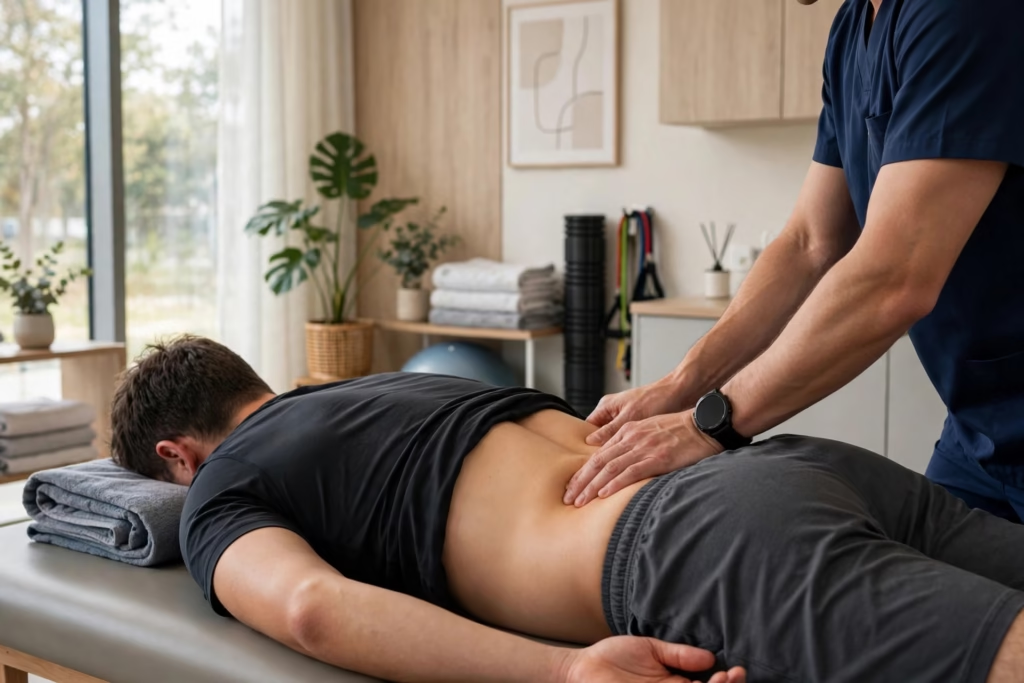
How physiotherapy treats back pain
When you come to my clinic with back pain, here’s what actually happens:
- Proper assessment first. I find out exactly what’s causing your pain — muscle, joint, disc, or nerve — through movement testing, not guesswork. The treatment depends entirely on the diagnosis.
- Hands-on treatment. Depending on what you need: spinal mobilization, soft-tissue release, dry needling, or electrotherapy to reduce pain and restore movement.
- Therapeutic exercise. This is the core of lasting recovery. A personalized program to strengthen your core, improve flexibility, and retrain movement patterns — so the pain doesn’t come back the moment treatment stops.
- Posture and lifestyle correction. We fix the daily habits feeding your pain: how you sit, lift, sleep, and work.
Most patients feel meaningful improvement within 4–6 sessions. Chronic cases — pain lasting more than 12 weeks — take longer, but they still improve. The goal isn’t just pain relief; it’s a back that stays better.
The weight connection: why your kilos matter
I’ll be honest with you as your physio: if you carry significant extra weight, it is loading your lower back every minute of every day. Research consistently shows that weight loss reduces back pain — sometimes dramatically.
The first step is knowing your numbers. I’ve built a free tool for my patients — a TDEE calculator that tells you exactly how many calories your body needs per day, with protein targets to protect your muscles while you lose weight. Knowing your daily calorie target is where every successful weight-loss plan starts, and your back will thank you for it.
What you can do at home right now
- Keep walking. Short, frequent walks beat one long one. Walking is the single best exercise for most back pain.
- Apply heat. A warm towel or hot water bottle for 15–20 minutes relaxes muscle spasm.
- Watch your sitting. Get up every 30–40 minutes. Your chair is not the enemy — never leaving it is.
- Sleep on your side with a pillow between your knees, or on your back with a pillow under your knees.
- Avoid heavy lifting, sudden twisting, and prolonged bed rest.

These help — but they’re first aid, not treatment. If pain persists beyond a week or two,
get assessed.
Frequently asked questions
How do I know if my back pain is serious?
Most back pain is mechanical and not dangerous. Watch for the red flags listed above — saddle numbness, bladder/bowel changes, leg weakness, or pain after trauma. If none of those apply, your pain is very likely treatable with physiotherapy.
Should I rest or keep moving with back pain?
Keep moving. Complete bed rest slows healing and causes stiffness. Stay as active as you comfortably can — walking and gentle movement are medicine for your back.
Do I need an MRI or X-ray for back pain?
Usually not at first. Imaging is needed only with red flags, trauma, or pain that doesn’t improve with proper treatment. A clinical examination is more informative in most cases.
Is walking good for lower back pain?
Yes — it’s one of the best things you can do. Short, frequent walks improve blood flow, reduce stiffness, and speed recovery. Stop if a specific movement sharply worsens pain and get assessed.
When should I see a physiotherapist for back pain?
If pain lasts more than a week or two, keeps returning, radiates into your leg, or limits your daily activities — don’t wait. Early treatment means faster recovery and fewer sessions.
How many physiotherapy sessions will my back pain need?
Most acute cases improve meaningfully within 4–6 sessions. Chronic pain (over 12 weeks) takes longer. After your first assessment, I’ll give you an honest, personalized estimate — no endless sessions.
Get your back assessed in Khanewal
You don’t have to live with back pain — and you don’t need surgery to fix it. Book a consultation at Tariq Medicare Hospital, Khanewal, and let’s find out exactly what’s causing your pain and fix it properly.
Call or WhatsApp: +92 308 9333364
Dr. Usman Barkat PT — Consultant Physiotherapist & Managing Director, Tariq Medicare Hospital, Khanewal. DPT, MS Physical Therapy, 8+ years of clinical experience.
Disclaimer: This article is for information only and isn’t a substitute for professional diagnosis. If you have any of the red-flag symptoms above, seek medical attention promptly.