

The countdown to the FIFA World Cup 2026 is officially underway. Elite athletes are preparing for the most grueling tournament in modern sports history. Expanding to 48 national teams means players face up to eight matches over 39 days. This packed summer schedule places an unprecedented physiological demand on the human body. To survive, players must maintain elite metabolic flexibility and rapid tissue healing.
For sports scientists and therapists, a tournament of this scale is a fascinating case study in human bioenergetics. Understanding how a football player’s body adapts to intense mechanical stress is vital for longevity. This comprehensive guide goes directly inside the elite training ground. We will explore the precise exercise biochemistry, muscle microtrauma, and advanced recovery strategies that dictate world-class football performance.
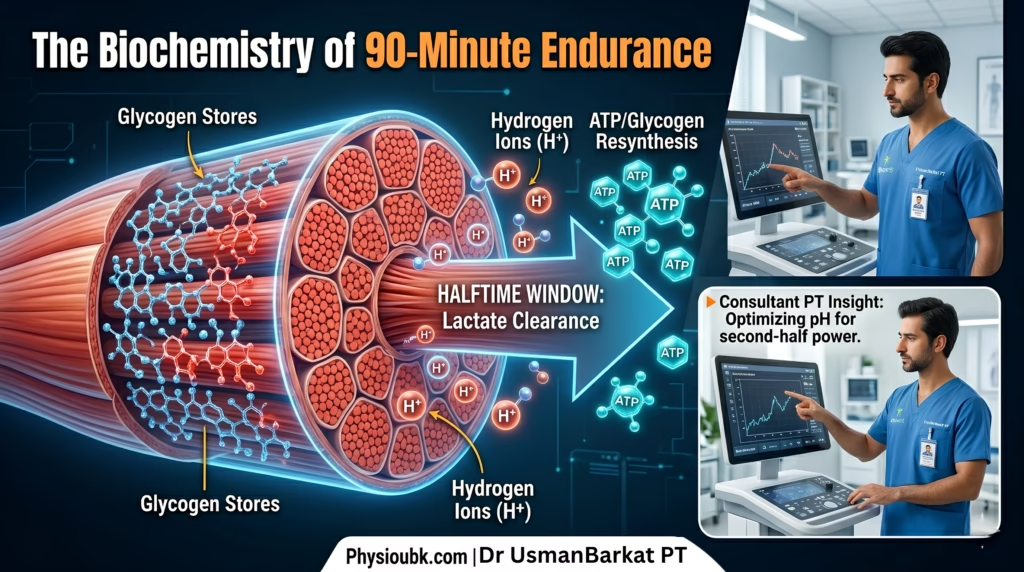
1. The Bioenergetics of 90-Minute Elite Performance
An elite football match is a complex masterpiece of mixed metabolic energy demands. Players are no longer just endurance athletes; they are explosive sprinters who must cover up to 12 kilometers per match. This continuous transition between low-intensity jogging and maximal sprinting requires highly adaptable cellular energy systems.
The Phosphagen System and Explosive Sprinting
Sprinting to win a loose ball or leaping for an aerial duel relies entirely on the phosphagen energy system. Skeletal muscles utilize stored adenosine triphosphate (ATP) and phosphocreatine (PCr) to generate immediate, explosive power. This anaerobic pathway operates inside the sarcoplasm without requiring oxygen.
Because intramuscular PCr stores are highly limited, they deplete within 10 seconds of maximal effort. During a match, a player exploits low-intensity walking windows to rapidly resynthesize these phosphagen stores for the next sprint.
Anaerobic Glycolysis and the Challenge of Metabolic Acidosis
When a counter-attack forces a player to sprint repeatedly without adequate rest, the body shifts to anaerobic glycolysis. This pathway breaks down stored muscle glycogen into glucose to regenerate ATP quickly. A major byproduct of rapid anaerobic glycogen breakdown is the accumulation of pyruvate, which converts into lactate when oxygen delivery lags.
Along with lactate, hydrogen ions (H+) accumulate within the working muscle tissue, causing an immediate drop in intracellular pH. This metabolic acidosis disrupts enzyme function and compromises the muscle’s physical contractile force, resulting in the classic “heavy legs” feeling experienced late in each half.
Aerobic Respiration: The Engine of Endurance
While anaerobic pathways power the highlights, aerobic metabolism inside the mitochondria acts as the foundation of football performance. The aerobic system utilizes oxygen to break down carbohydrates and fatty acids, producing vast amounts of sustainable cellular energy. A highly developed aerobic engine allows a football player to maintain a high work rate for the full 90 minutes.
Crucially, a powerful aerobic system accelerates the clearance of metabolic byproducts during low-intensity periods. It drives the rapid removal of hydrogen ions and helps restore intramuscular pH back to baseline levels during a match.
2. The Biochemistry of Halftime Recovery
The 15-minute halftime interval is not just a tactical meeting; it is a critical biochemical rescue window. Elite sports scientists utilize this brief period to aggressively jumpstart the cellular recovery timeline. Failing to manage metabolic stress during halftime dramatically increases the risk of tissue failure in the second half.
[Halftime Window]
       │
       ├─► Low-Intensity Active Cycling ──► Flushes Accumulating Hydrogen Ions
       ├─► Hypertonic Glycogen Fluid ─────► Restores Depleted Cellular Energy
       └─► Targeted Myofascial Release ───► Reduces Protective Neuromuscular Tone
Normalising Intracellular pH
As players enter the dressing room, their muscles are highly acidic from repeated anaerobic bursts. Sitting completely still can cause blood pooling and slow down metabolic clearing pathways. Elite teams often utilize low-intensity active recovery, such as spending two minutes on a stationary bicycle. This light movement maintains optimal local blood circulation without adding structural mechanical stress.
Enhanced blood flow accelerates the transport of accumulated hydrogen ions away from working muscle groups and into the liver for conversion. This active circulatory support helps normalize cellular pH before players return to the pitch.
Replenishing Glycogen and Restoring Homeostasis
A player can deplete over 50% of their total intramuscular glycogen stores during the first 45 minutes of play. To combat this acute energy deficit, sports nutritionists provide specific hypertonic carbohydrate fluids during halftime. These rapidly absorbing sugars trigger a calculated insulin pulse, accelerating glucose transport directly into fatigued muscle cells.
Replenishing these cellular energy stores prevents the body from breaking down structural proteins for emergency fuel in the second half. Additionally, proper fluid intake maintains optimal cell volume, which inhibits catabolic signaling pathways that promote muscle degradation.
3. Biomechanics and Pathophysiology of Common Football Injuries
The physical nature of football subjects the musculoskeletal system to immense mechanical loading patterns. Modern tactical systems emphasize aggressive pressing, sudden deceleration, and violent changes of direction. These high-velocity movements place unique stress on muscle-tendon units, often leading to acute microtrauma.
Eccentric Hamstring Strains During High-Velocity Sprinting
Hamstring strains are the most prevalent non-contact injuries in professional football today. These injuries occur almost exclusively during the late swing phase of sprinting, when the hamstrings contract eccentrically to decelerate the swinging lower leg. Eccentric contractions involve a muscle lengthening under high tension, which places immense mechanical stress on individual sarcomeres.
If the force exceeds the structural integrity of the tissue, microtrauma occurs, typically at the muscle-tendon junction. This structural disruption causes immediate Z-line streaming and compromises the stability of the sarcolemma membrane.
Groin and Adductor Stress from Biomechanical Kicking Forces
The repetitive action of passing and long-range kicking subjects the adductor muscle complex to chronic mechanical strain. Kicking requires explosive hip flexion combined with forceful adduction to accelerate the ball. This motion creates a powerful shearing force across the pubic symphysis, where the adductor longus tendon inserts.
Over a long tournament, this repetitive microtrauma can degrade local extracellular matrix structures, leading to chronic groin instability. Physical therapists focus heavily on strengthening these stabilizing attachment points to protect players from debilitating pelvic imbalances.
Exercise-Induced Muscle Damage (EIMD) and Sarcomere Disruption
Even without an acute tear, 90 minutes of football causes widespread exercise-induced muscle damage (EIMD). The constant deceleration required to change direction creates microscopic tears within individual muscle fibers. This structural mechanical breakdown allows extracellular calcium ions (Ca{2+}) to flood uncontrolled into the cell.
High internal calcium levels activate proteolytic enzymes called calpains, which degrade damaged structural proteins. This initial cellular degradation is the primary driver of delayed onset muscle soreness (DOMS), which peaks 48 hours post-match.
4. Advanced Recovery Stacks: Accelerating the Healing Timeline
With only a few days between World Cup fixtures, traditional rest is simply not enough to ensure full tissue recovery. National teams deploy highly sophisticated recovery protocols to compress the standard tissue healing timeline. These advanced modalities manipulate local biochemistry to transition muscles from a damaged state to a fully remodeled structure.
Muscle Microtrauma (Post-Match) ──► Targeted Cryotherapy (Vasoconstriction) ──► Reduced Secondary Hypoxia
                                                                                           │
                                                                                           ▼
Proliferation Phase (24-72 Hours) ──► Pulsed Compression / Active Loading ──► Stimulates mTOR & Growth Signaling
Cryotherapy and Inflammation Management
Cold-water immersion remains a cornerstone tool used immediately following a competitive match. Submerging players in ice baths induces rapid peripheral vasoconstriction, significantly reducing localized blood flow to damaged limbs. This temperature drop lowers the metabolic rate of surrounding cells, protecting healthy tissue from secondary hypoxic damage.
While acute inflammation is essential for clearing cellular debris, limiting its severity helps minimize structural swelling. Reducing excessive swelling protects local joint receptors and allows players to initiate pain-free active physical therapy much sooner.
Myokine Signaling and Cellular Rebuilding Pathways
Real tissue healing relies on a highly coordinated shift within the local immune cell population. Hours after a match, pro-inflammatory M1 macrophages infiltrate the damaged sarcomeres to clear out dead cellular debris. As this clearance phase concludes, these immune cells must transform into regenerative M2 macrophages.
M2 macrophages release anti-inflammatory cytokines that activate satellite cells, which are dormant muscle stem cells. These activated stem cells migrate to the microscopic injury sites, fusing with damaged fibers to accelerate protein synthesis via the central mTOR pathway.
5. Bringing Elite Sports Science to Your Clinic
- Professional football players require highly customized training volumes based on their unique biochemical profile.
- Overtraining occurs when the rate of exercise-induced muscle damage continuously outpaces the body’s natural cellular repair capacity.
- Chronic low-grade inflammation blocks the necessary transition of immune cells from a clearing phase to a rebuilding phase.
- Relying on expert clinical supervision allows for the accurate tracking of structural tissue healing and functional progression.
- Every recovery plan must adjust mechanical loading dosages dynamically based on the patient’s real-time metabolic stress levels.
- Managing athletic care at Tariq Medicare Khanewal with Dr. Usman Barkat PT ensures access to structured diagnostics and professional monitoring.
- Visit physioubk.com to explore more advanced, evidence-based guides on exercise biochemistry and elite performance.
Conclusion: The Intersections of Biology and Performance
Elite football performance is a beautiful balance of tactical skill, physical conditioning, and complex cellular chemistry. The FIFA World Cup 2026 will push the absolute limits of human endurance, showcasing the vital importance of sports science. From managing internal pH drops during halftime to guiding structural sarcomere repair, optimization happens at the molecular level. Treating physical movement as a precise biological science changes how we approach training and injury rehabilitation.
As modern physical therapy evolves, evidence-based protocols remain the gold standard for every athlete. Balancing high-intensity physical stress with structured, scientifically backed recovery unlocks the body’s true functional potential. Dr. Usman Barkat PT and the dedicated clinical team at Tariq Medicare Khanewal are committed to providing this world-class level of care. Protect your structural health, elevate your fitness, and discover your personalized performance strategy by visiting Physioubk.com today.
Author Bio & Credibility Note
Dr. M Usman Barkat PT is a Managing Director and Consultant Physiotherapist with eight years of clinical experience. He specializes in musculoskeletal rehabilitation, sports performance conditioning, and exercise biochemistry. Dr. Usman leads the clinical team at Tariq Medicare in Khanewal. Book Your online appointment and get your muscle performance checked.
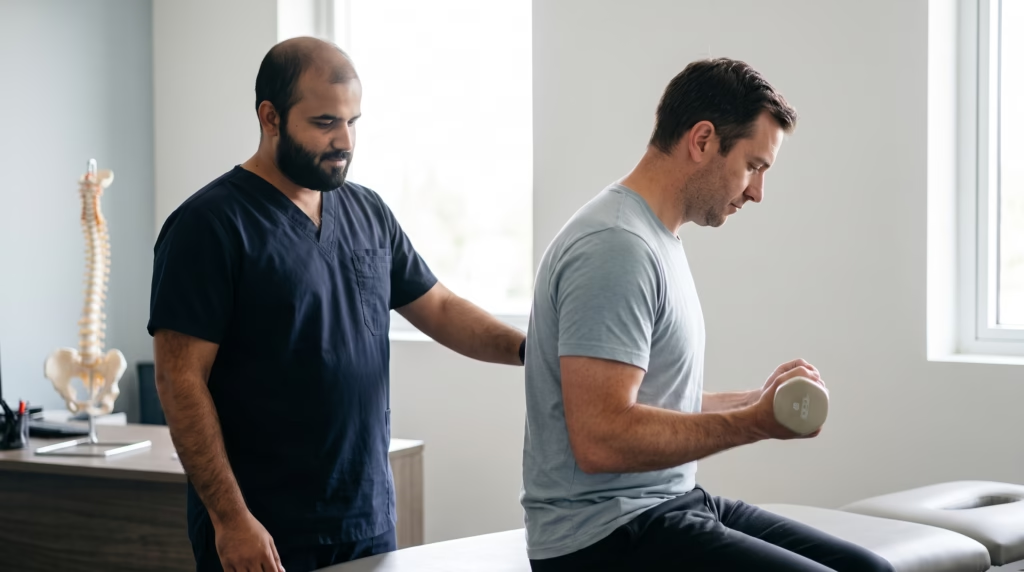
What is a Functional Capacity Evaluation (FCE) in Physical Therapy?
CLINICAL GUIDE & ASSESSMENT PROTOCOL An exhaustive, clinician-reviewed guide explaining the protocols, physical tolerance metrics,…
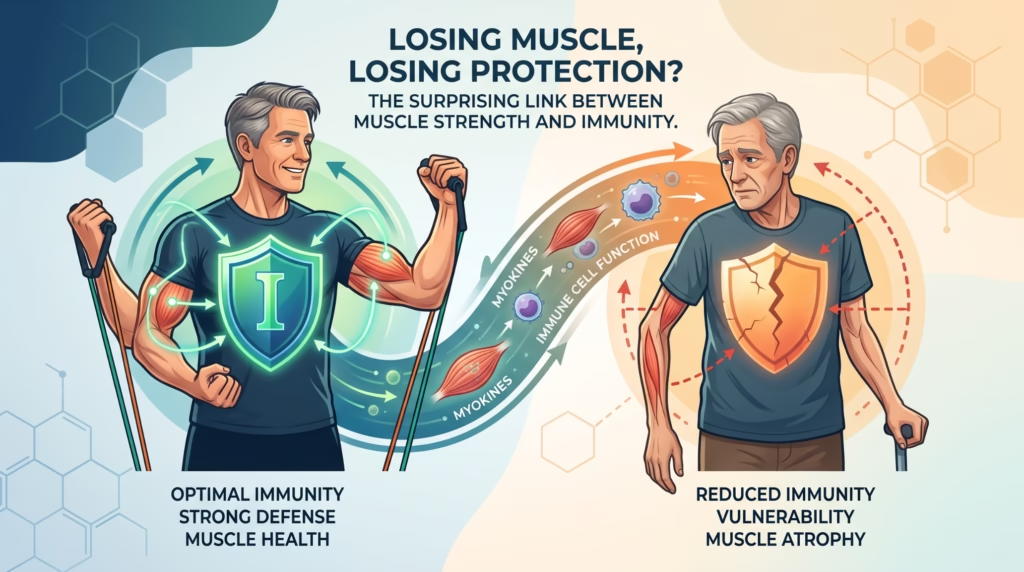
Losing Muscle, Losing Protection? The Surprising Link Between Muscle Strength and Immunity
When most people think of the immune system, they picture white blood cells, lymph nodes,…

Sleep Better, Think Better: Can a 20-Minute Workout Undo a Sleepless Night?
Waking up after a sleepless night of tossing and turning feels like trying to operate…
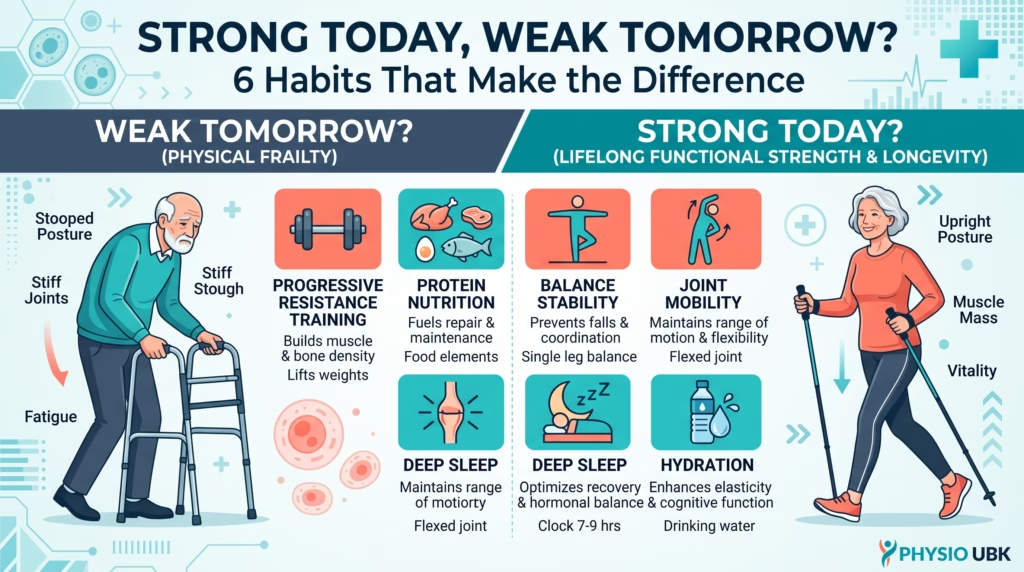
Strong Today, Weak Tomorrow? 6 Habits That Make the Difference
Physical strength often feels permanent when we have it. When you can effortlessly carry heavy…

The 5 Best Deep Core Exercises for Chronic Lower Back Pain
Lower back pain is the leading cause of disability worldwide. Millions of people wake up…

Better Posture, Less Pain: 7 Bad Habits That Are Hurting Your Spine
In our modern world, back and neck pain have become almost universal human experiences. We…