
When persistent hip or lower back pain strikes, most people blame a heavy lifting session, long hours spent sitting at a desk, or simply “getting older.” However, the true source of your discomfort might not be in your back or hips at all, it could be sitting right under your feet.
As physical therapists, one of the first things we evaluate during a movement assessment is foot mechanics and footwear. Your feet are the foundation of your entire skeletal system. When your shoes fail to support that foundation, the mechanical stress doesn’t stay in your feet; it travels upward, disrupting your hips, pelvis, and lumbar spine.
In this deep-dive guide, we will unpack how your shoes alter your biomechanics, highlight the biggest footwear red flags, and share evidence-based steps to restore your posture from the ground up.
The Kinetic Chain: How Your Feet Control Your Spine
To understand how a pair of shoes can cause lower back or hip pain, you first need to understand the Kinetic Chain.
In human biomechanics, your body functions as an interconnected chain of joints and segments:
When your foot strikes the ground, it absorbs impact forces equal to 1.5 to 3 times your body weight during normal walking, and up to 5 times your body weight during running.
If your footwear alters how your foot absorbs that force, the energy has to go somewhere else. Nearby joints, specifically your knees, hips, and lower back, are forced to compensate for structural instability down below.
Key Takeaway: You cannot fix lower back tightness or chronic hip aching without addressing the structural base absorbing your foot strikes every single day.
4 Common Footwear Traps Causing Hip & Back Pain
Not all shoes are created equal, and some of the most popular shoe styles are notorious for disrupting optimal alignment.
1. High Heels and High “Heel-to-Toe Drop”
- The Problem: Elevating your heel above your toes shifts your body’s center of gravity forward.
- The Biomechanical Ripple Effect: To keep you from falling forward, your body naturally tilts your pelvis anteriorly (forward pelvic tilt). This increases the arching curve in your lower back (lumbar lordosis), compressing the facet joints in your spine and shortening your hip flexors.
- The Result: Chronic low back stiffness, tight hip flexors, and glute inhibition.
2. Completely Flat, Unsupportive Shoes (Flats, Flip-Flops, Barefoot Shoes without Transition)
- The Problem: Shoes with paper-thin soles offer zero arch support or shock absorption.
- The Biomechanical Ripple Effect: Without arch support, feet tend to roll inward excessively, a motion known as overpronation. As the foot rolls inward, the shin bone and thigh bone rotate inward as well. This internal rotation pulls the head of the femur deeper into the hip socket and tilts the pelvis out of alignment.
- The Result: Sacroiliac (SI) joint pain, trochanteric bursitis, and deep hip aching.
3. Worn-Out Running or Walking Shoes
- The Problem: Even the best supportive running shoes degrade over time. After 300–500 miles (or roughly 6–8 months of regular wear), the midsole foam loses its shock-absorbing capability.
- The Biomechanical Ripple Effect: Worn-out cushioning forces your hips and lumbar spine to absorb micro-trauma with every single step you take on hard surfaces like concrete.
- The Result: Diffuse lower back aching after walking or standing for extended periods.
4. Narrow Toe Boxes
- The Problem: Stylish shoes often taper at the toes, squeezing your toes together.
- The Biomechanical Ripple Effect: Your big toe (hallux) plays a crucial role in stabilizing your foot arch during push-off. Squeezing it inwards prevents proper arch engagement, altering your gait cycle and forcing your hips to work overtime to generate forward propulsion.
- The Result: Hip gait compensation, lateral hip pain, and premature fatigue.
Quick Assessment: Are Your Shoes the Cause?
How do you know if your shoes are contributing to your discomfort? Look for these warning signs:
| Symptom / Pattern | Likely Footwear Connection |
| Pain worsens after standing or walking in a specific pair of shoes | Insufficient shock absorption or improper arch support |
| One side of your lower back hurts significantly more | Uneven tread wear on the soles of your shoes |
| Tight hip flexors that don’t respond to stretching | High heel-to-toe drop forcing an anterior pelvic tilt |
| Dull aching in the hips at the end of the workday | Rigid soles preventing natural big-toe expansion |
The Physio-Approved Footwear Checklist
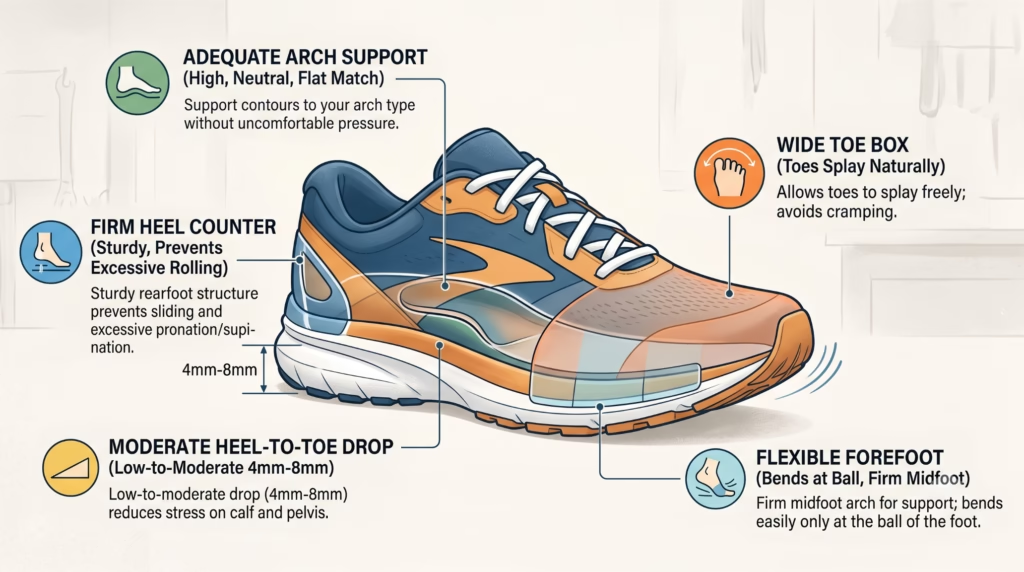
When shopping for daily shoes, athletic sneakers, or work footwear, look for these key structural features:
- Adequate Arch Support: Match your arch type (high, neutral, or flat). The arch should feel supported without pressing uncomfortably into your foot.
- A Wide Toe Box: Your toes should be able to splay naturally without feeling cramped.
- Firm Heel Counter: The back of the shoe surrounding your heel should be sturdy, preventing your heel from sliding or rolling excessively inward/outward.
- Moderate Heel-to-Toe Drop: For daily walking, aim for a low-to-moderate heel drop (around 4mm to 8mm) to avoid excessive stress on the calf-Achilles complex or pelvis.
- Flexible Forefoot: The shoe should bend easily at the ball of the foot (where your toes flex), but remain firm through the midfoot arch.
3 Simple Exercises to Restore Your Foot-to-Hip Mechanics
While changing your shoes is crucial, you also need to recondition the muscles in your feet and hips. Try incorporating these exercises into your daily routine:
1. The “Short Foot” Exercise (Foot Core Activation)
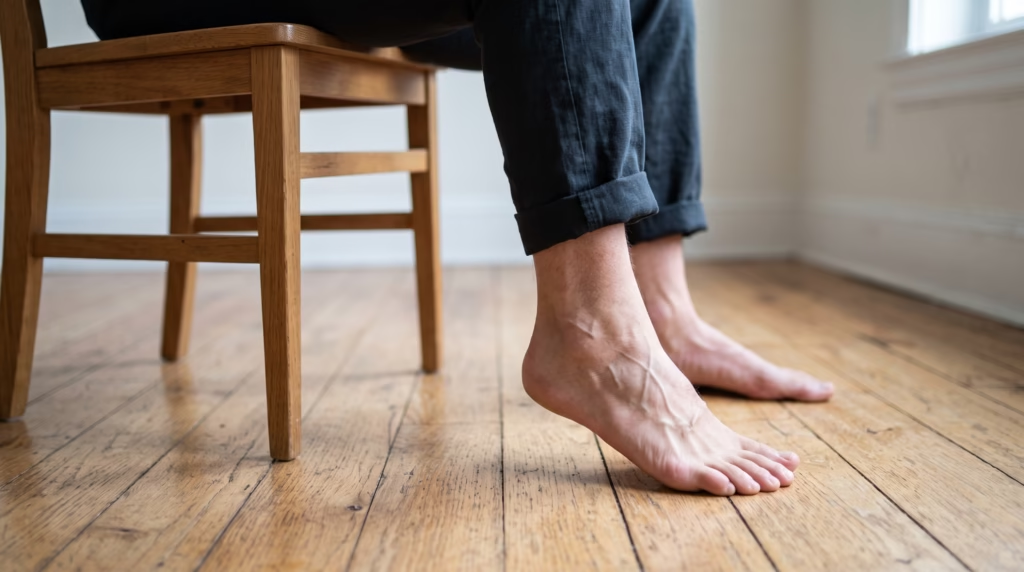
- Why: Strengthens the intrinsic muscles of the foot to naturally support your arch.
- How: Sit in a chair with your feet flat on the floor. Without curling your toes, draw the ball of your foot toward your heel by lifting your arch upward. Hold for 5 seconds, relax, and repeat 10 times per foot.
2. Standing Glute Bridges & Hips
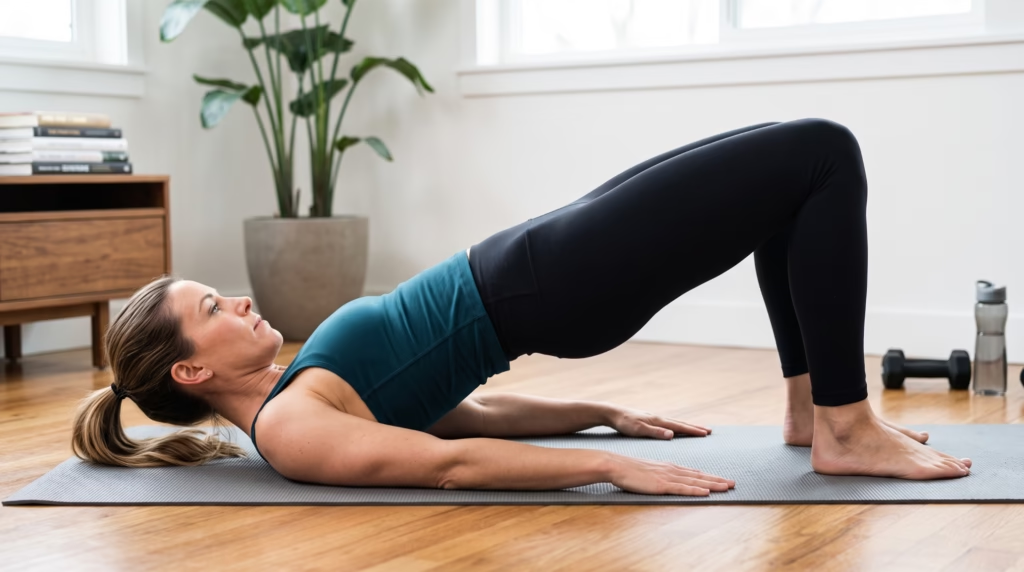
- Why: Awakens gluteal muscles that go silent due to flat or elevated shoes.
- How: Lie on your back with knees bent and feet flat on the floor, hip-width apart. Drive through your heels, squeeze your glutes, and lift your hips toward the ceiling until your body forms a straight line from knees to shoulders. Hold for 2 seconds at the top, lower slowly, and repeat for 3 sets of 12 reps.
3. Calf & Plantar Fascia Self-Myofascial Release
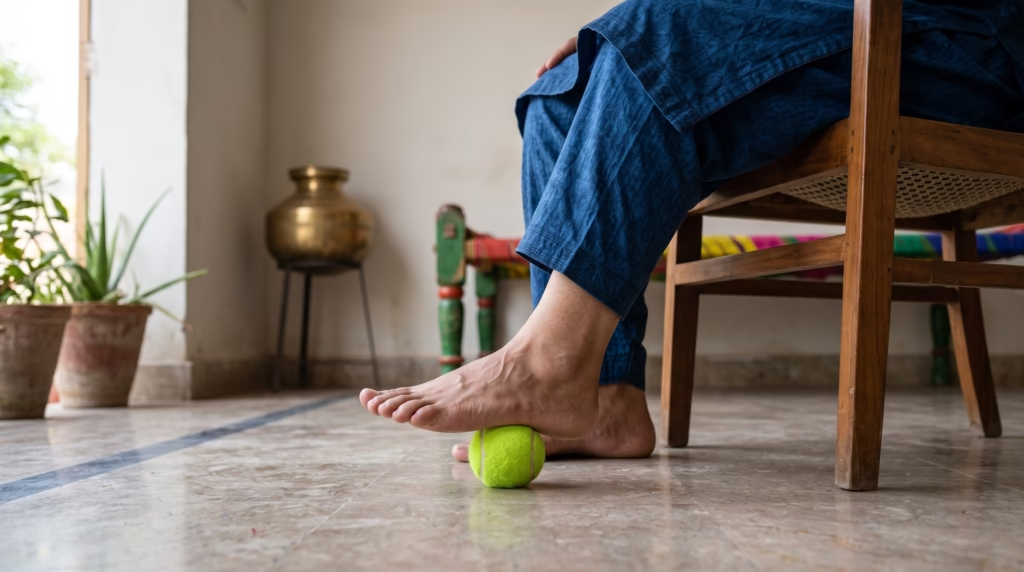
- Why: Releases tension built up in the soles and lower legs from unsupportive shoes.
- How: Place a tennis ball or lacrosse ball under the arch of your foot while seated. Roll the ball firmly along the bottom of your foot for 1 to 2 minutes per side.
Take the Next Step Toward Pain-Free Movement
If you’ve swapped your footwear and still experience stubborn lower back or hip discomfort, the underlying issue may require a professional assessment. A physical therapist can perform a comprehensive gait analysis, evaluate joint mobility, and provide custom treatment plans or orthotic recommendations.
Need expert guidance?
Visit us at PhysioUBK to book a consultation with Dr. Usman Barkat, learn more about custom movement solutions, and explore evidence-based rehab resources designed to keep you moving comfortably!
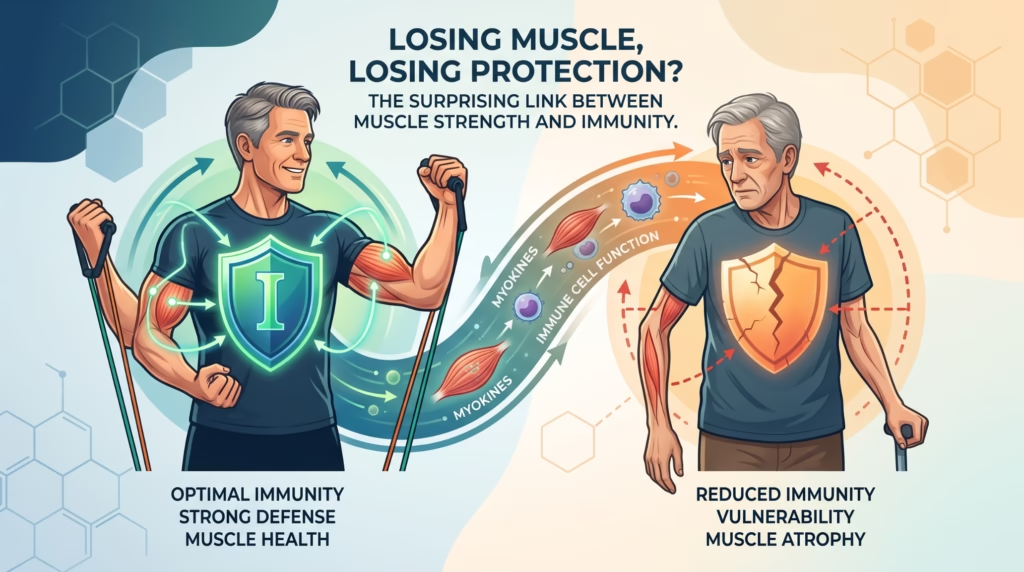
Losing Muscle, Losing Protection? The Surprising Link Between Muscle Strength and Immunity
When most people think of the immune system, they picture white blood cells, lymph nodes,…
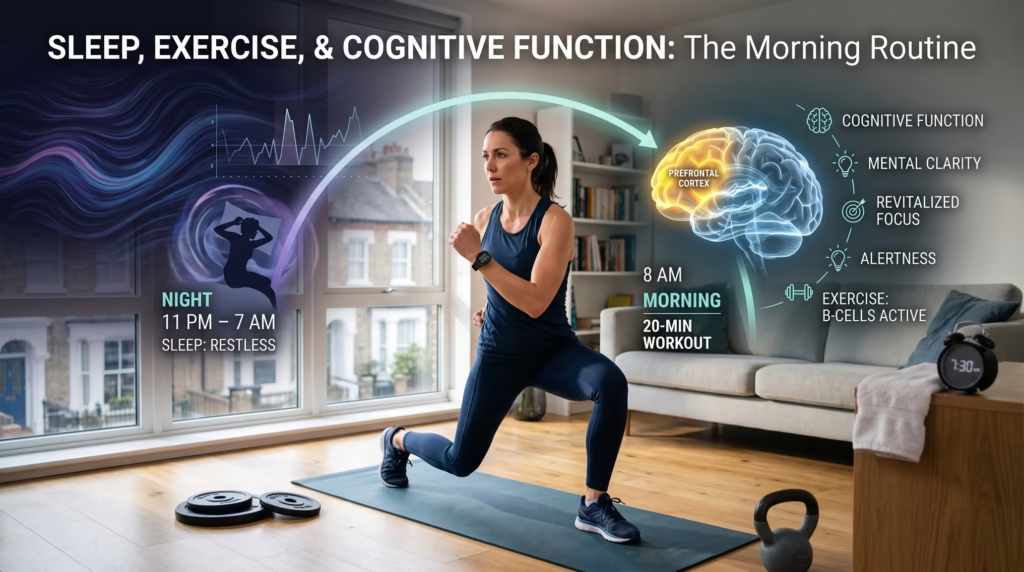
Sleep Better, Think Better: Can a 20-Minute Workout Undo a Sleepless Night?
Waking up after a sleepless night of tossing and turning feels like trying to operate…
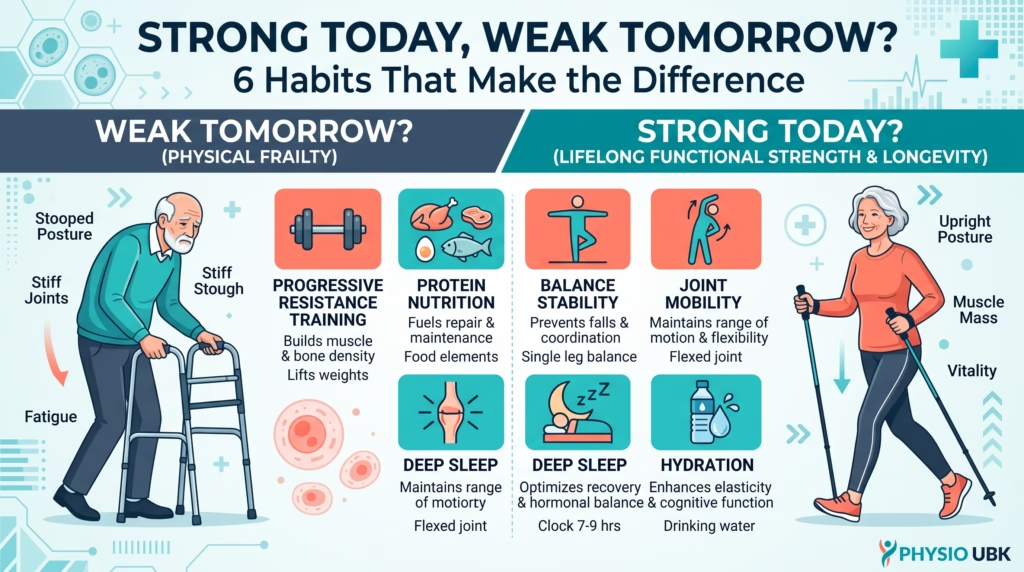
Strong Today, Weak Tomorrow? 6 Habits That Make the Difference
Physical strength often feels permanent when we have it. When you can effortlessly carry heavy…
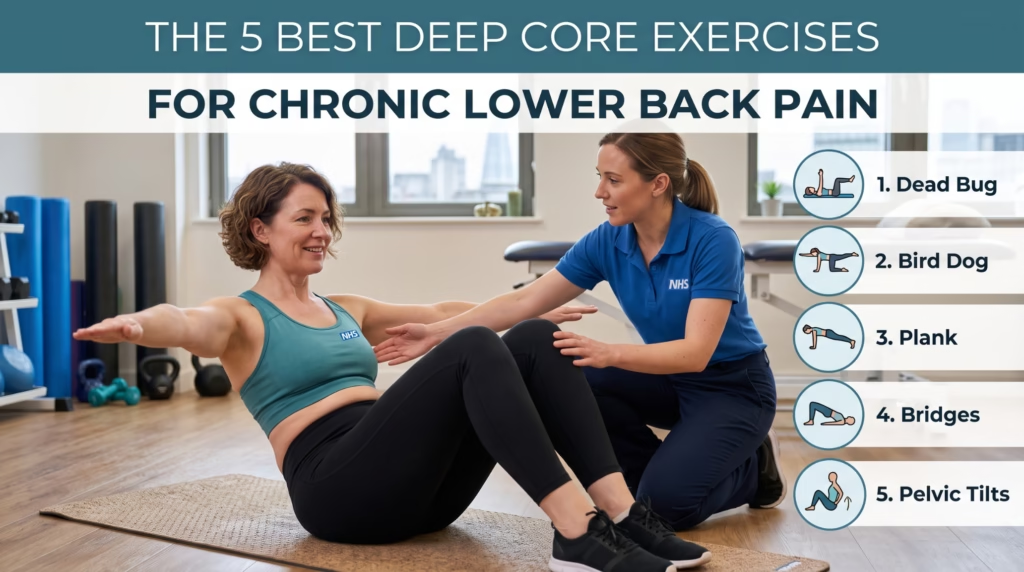
The 5 Best Deep Core Exercises for Chronic Lower Back Pain
Lower back pain is the leading cause of disability worldwide. Millions of people wake up…
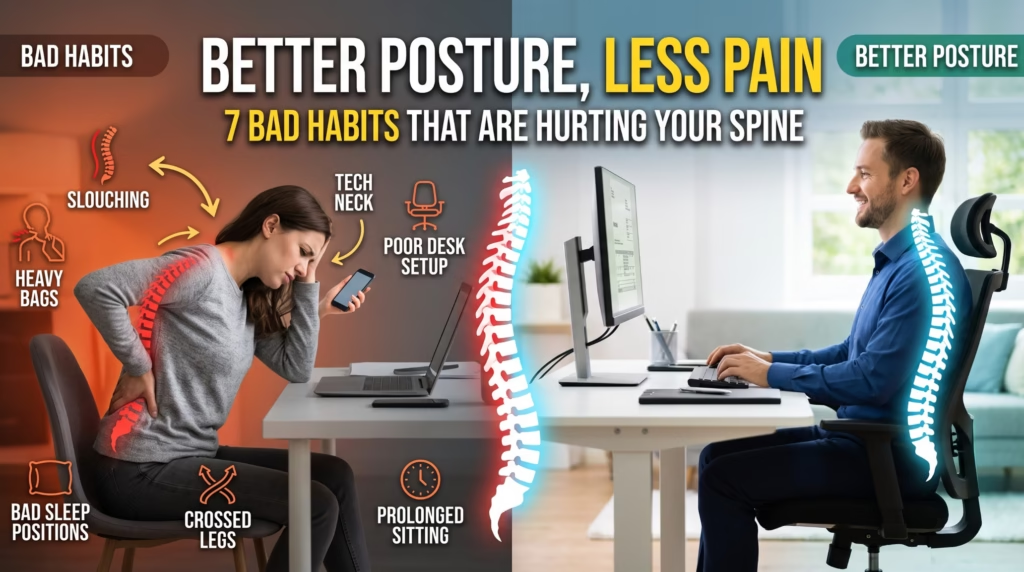
Better Posture, Less Pain: 7 Bad Habits That Are Hurting Your Spine
In our modern world, back and neck pain have become almost universal human experiences. We…
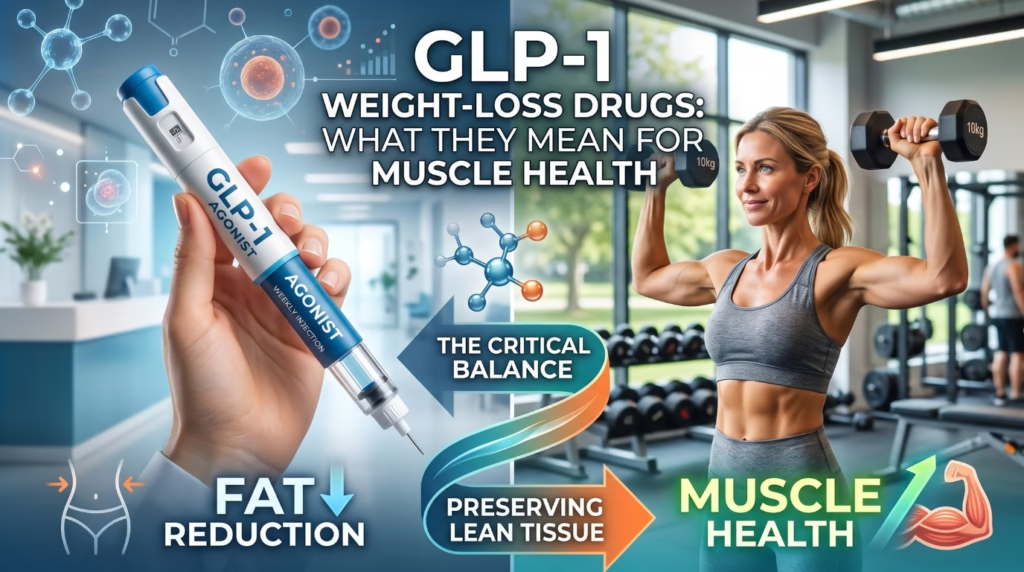
GLP-1 Weight-Loss Drugs: What They Mean for Muscle Health
The landscape of metabolic medicine and weight management has undergone a historic transformation. Medications like…