
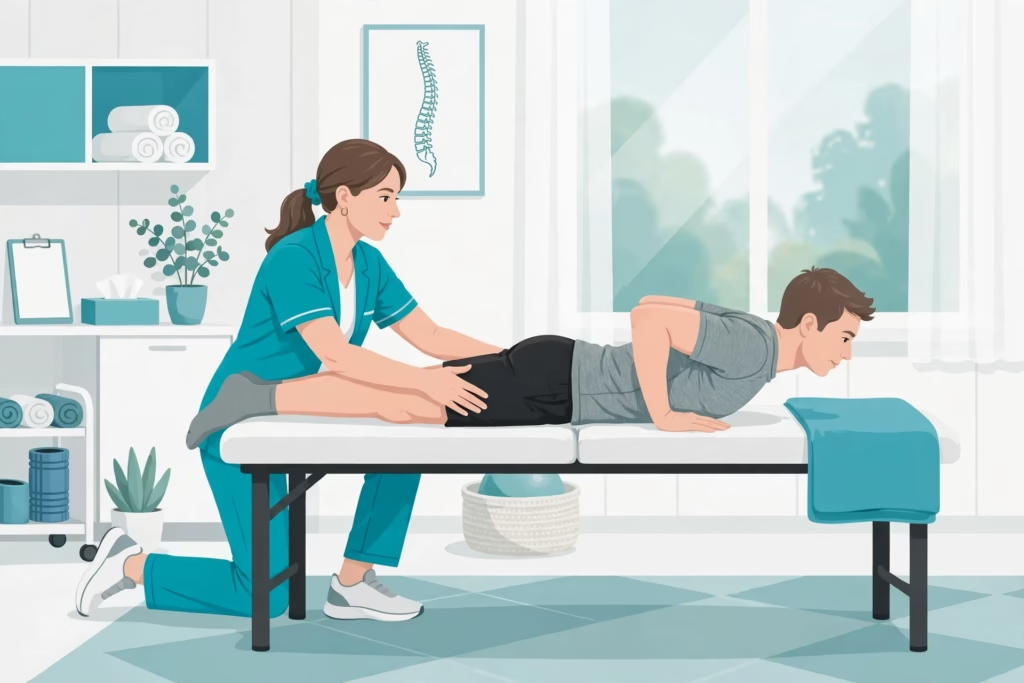
“Which exercises should I do for my sciatica?” It’s the question I get most, and the honest answer is: it depends on your sciatica. The exercise that melts one patient’s pain can flare another’s. That’s because sciatica isn’t one condition; it’s a symptom with different causes, and the right exercise depends on which direction your spine likes to move.
This guide gives you the principles first, then a safe daily routine, then the moves to avoid. Before you start, take 60 seconds on our free Sciatica & Lumbar Disc Risk Screener. It helps you understand whether your symptoms look disc-related, which shapes everything below.
Key takeaway
Sciatica exercises work on one golden rule: movements that move pain up the leg toward the back (centralization) are helping; movements that push pain down toward the foot are harming. Extension-based exercises (like press-ups) help most disc-related sciatica; piriformis stretches help buttock-dominant pain. Start gentle, 10 minutes daily, and never push through sharp or electric pain.
The principles (read this before the exercises)
- Direction matters more than the exercise name. Lie on your stomach and gently press your upper body up; if pain moves toward the back, your spine likes extension. Extension exercises are your friends.
- Centralization good, peripheralization bad. Pain retreating from the calf toward the buttock or back = the nerve is calming. Pain spreading further down toward the foot = back off immediately.
- Mild stretch sensation is fine; sharp/electric pain is not. A gentle pull behind the knee during nerve glides is normal. Zapping, burning, or increasing numbness means stop.
- Consistency beats intensity. Ten gentle minutes daily beats one heroic weekend session that flares you for a week.
The safe daily routine (10-15 minutes)
Do these in order, once or twice daily. Full background on the condition itself is in our sciatica treatment guide.
1. McKenzie press-ups (extension): 10 reps
Lie face down, hands under shoulders. Keeping hips on the floor, slowly straighten your arms to lift your chest, letting your back arch. Hold 2 seconds, lower slowly. This is the single most useful sciatica exercise for disc-related cases, it encourages the disc material away from the nerve.
2. Standing back extensions: 10 reps
Stand, hands on your lower back, and gently arch backward, looking slightly up. Hold 2 seconds. Perfect for people who sit all day, it reverses hours of flexion in seconds.
3. Sciatic nerve glides: 10 reps per leg
Sit on a chair. Slump slightly, straighten the painful leg while looking up, then bend the knee while looking down. Slow and rhythmic, you’re “flossing” the nerve through its surrounding tissue, not stretching it hard.
4. Piriformis figure-4 stretch: 30 seconds × 3
Lie on your back, cross the painful ankle over the opposite knee, pull the bottom thigh gently toward you. Deep buttock stretch. If your pain is mostly buttock-based (see sciatica vs piriformis), this is your key move.
5. Cat-cow mobilization: 10 slow cycles
On all fours, slowly arch your back up (cat) then let it sag down (cow), moving with your breath. Gentle spinal mobility without loading the nerve.
6. Pelvic tilts: 15 reps
Lie on your back, knees bent. Flatten your lower back into the floor by tightening your stomach muscles, hold 5 seconds, release. Wakes up the deep core that protects the lumbar spine.
7. Bird-dog: 8 reps per side
On all fours, extend opposite arm and leg, keeping your trunk rock-steady. No wobbling. The gold-standard core exercise for sciatica: trains stability without spinal flexion.
8. Walking: 10-20 minutes
The most underrated sciatica exercise. Flat ground, upright posture, comfortable pace. If 20 minutes is too much, do two 10-minute walks. Walking nourishes spinal discs and prevents the deconditioning that makes sciatica linger.
Finish your day right too. The wrong sleep position can undo good exercise work. See our best sleeping positions for sciatica.
Exercises to avoid (or approach with caution)
- Aggressive standing hamstring stretches (toe touches): yanks the sciatic nerve; one of the most common self-treatment mistakes I see.
- Deep forward bends and heavy deadlifts during a flare. Loaded flexion is the disc’s worst enemy.
- Full sit-ups/crunches: high disc pressure; bird-dogs and pelvic tilts train the core far more safely.
- Prolonged sitting between exercise sessions. The exercises can’t outwork 10 hours in a chair.
When exercises aren’t enough
If 2-3 weeks of consistent, correctly-chosen exercise brings no improvement, or if you have any red flags (saddle numbness, bladder/bowel changes, foot drop, severe trauma). Get assessed. The right exercise prescription sometimes needs hands-on testing of what your spine responds to. Book a consultation and we’ll find your direction.
Frequently asked questions
What is the single best exercise for sciatica?
For disc-related sciatica (the most common kind), McKenzie press-ups. For piriformis-type pain, the figure-4 stretch. The “best” exercise depends on your cause, which is why the screener and the centralization rule above matter.
How often should I do sciatica exercises?
Daily, 10-15 minutes, once or twice a day. Consistency matters far more than duration or intensity.
Should I exercise during a sciatica flare?
Gentle movement, short walks, press-ups, nerve glides, usually helps even during flares. Avoid aggressive stretching and loaded bending until the sharp pain settles.
Which exercises should I avoid with sciatica?
Toe-touch hamstring stretches, deep forward bends, heavy deadlifts, full sit-ups, and anything that sends pain further down the leg.
How long until sciatica exercises work?
Many people feel improvement within 1-2 weeks of daily practice. Full resolution of the underlying issue typically takes several weeks of consistent rehab.
Do I need imaging before starting exercises?
Usually not. Most sciatica is diagnosed clinically, and the exercises above are safe starting points. Imaging is reserved for red-flag cases or pain that doesn’t respond to conservative care.
Call or WhatsApp: +92 308 9333364. Book your sciatica assessment at Tariq Medicare Hospital, Khanewal.
Dr. Usman Barkat PT: Consultant Physiotherapist & Managing Director, Tariq Medicare Hospital, Khanewal. DPT, MS Physical Therapy, 8+ years of clinical experience.
Disclaimer: This article is for information only and isn’t a substitute for professional diagnosis. Stop any exercise that causes sharp, electric, or worsening pain, and seek care for red-flag symptoms.