
There’s a special kind of misery in sciatica. It’s not just back pain — it’s a burning, shooting, electric pain that starts in your buttock and races down the back of your leg, sometimes all the way to your foot. Sitting becomes torture. Standing too long is no better. And the worst part? You can’t find a position that makes it stop.
If that sounds familiar, keep reading. I’ve treated hundreds of sciatica cases, and here’s the honest truth: most sciatica gets better without surgery. But getting the right diagnosis and the right treatment early makes all the difference between weeks of recovery and months of suffering.

What sciatica actually is
Your sciatic nerve is the longest nerve in your body — it runs from your lower back, through your buttock, and down each leg to your foot. Sciatica happens when something irritates or compresses this nerve. The usual suspects:
- Slip disc (herniated disc) — a disc bulge pressing on the nerve root. The most common cause.
- Piriformis syndrome — a small muscle deep in the buttock squeezes the sciatic nerve as it passes through.
- Spinal stenosis — narrowing of the spaces in the spine that the nerve passes through.
- Spondylolisthesis — one vertebra slipping forward over another.
Notice something important: these are very different problems that all feel like “sciatica.” Which is exactly why the next section matters so much.
Is it actually sciatica? Getting the diagnosis right
Here’s something most clinics skip: a lot of what patients call “sciatica” isn’t sciatica at all. Leg pain can come from a hamstring strain, hip joint problems, or pain referred from the back without any nerve involvement.
Why does this matter? Because the wrong diagnosis leads to the wrong treatment. The classic example: piriformis stretches are all over the internet as a “sciatica cure” — but if your problem is actually a herniated disc, aggressive piriformis stretching can make it worse.
This is why I never treat leg pain without a proper assessment first. Through movement testing and neurological examination, I figure out exactly which structure is causing your pain — nerve, muscle, joint, or disc — and only then decide the treatment. If the answer is “sciatica,” I ask again until I’m sure.
Not sure where your leg pain is coming from? Take our free 2-minute Sciatica & Disc Risk Screener — answer 4 quick questions and get an estimated risk assessment based on your symptoms.
If your pain stays in the back without traveling down the leg, you may be dealing with straightforward lower back pain instead — which has its own treatment path.
Sitting: the real daily battle
Ask anyone with sciatica what their hardest moment of the day is, and most will say the same thing: sitting. In online sciatica communities, “how do you guys sit?” is literally the most discussed topic. Car seats, office chairs, prayer, eating meals — sitting is unavoidable, and sciatica makes every minute of it painful.
Here’s what actually helps:
- Get up every 20–30 minutes. No chair, however expensive, is comfortable for a sciatic nerve for hours. Set a timer.
- Sit with support. A small cushion or rolled towel behind your lower back keeps the spine’s natural curve and takes pressure off the nerve.
- Hips slightly above knees. If your chair is too low, your hamstrings and piriformis tighten — both can aggravate the nerve.
- In the car: sit close enough that your knees are slightly bent, use lumbar support, and stop to walk on long drives.
- Avoid soft, deep sofas. They round your lower back and compress everything. A firm chair is kinder to sciatica.
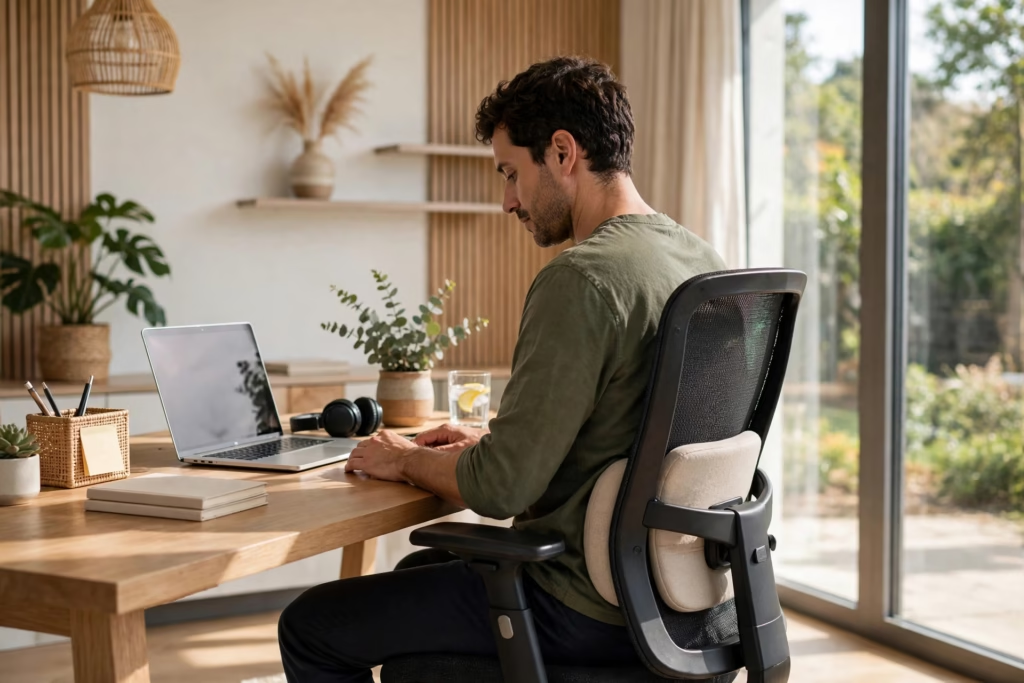
Sitting strategy won’t cure sciatica — but it can be the difference between a bearable day and an unbearable one while you recover.
How long does sciatica last? An honest answer
This is the most-asked question about sciatica, so here’s the straight answer:
- Most cases improve significantly within 4–6 weeks with proper treatment.
- 80–90% resolve without surgery.
- If pain persists beyond 12 weeks, we consider it chronic — it needs reassessment and a different strategy, not just more of the same.
Anyone who promises you a 3-day cure is selling something. Recovery has a real timeline, and I’d rather give you the honest one. What I can promise: with the right treatment, most of my sciatica patients are sleeping better and sitting comfortably within the first couple of weeks.
How physiotherapy treats sciatica
Treatment depends on the cause — which is why the assessment comes first. A typical plan includes:
- Accurate diagnosis. Nerve vs. muscle vs. disc — established through clinical testing before any treatment begins.
- Pain relief. Spinal mobilization, nerve-gliding techniques, soft-tissue release, and electrotherapy to calm the irritated nerve and reduce pain.
- Targeted exercise. Nerve glides, directional exercises (like McKenzie extensions for disc-related sciatica), and progressive core strengthening. The right exercises for your cause — not generic stretches from the internet.
- Posture and movement retraining. Fixing how you sit, bend, and lift so the nerve stays happy after treatment ends.
Surgery is rarely needed. It’s reserved for cases with progressive weakness or red-flag symptoms — and I’ll tell you honestly if you’re one of them.
When sciatica is an emergency: red flags
Most sciatica is painful but not dangerous. Seek urgent medical care if you develop:
- Numbness in the saddle area (inner thighs, groin, buttocks)
- Loss of bladder or bowel control
- Rapidly worsening weakness in the leg or foot (foot drop)
- Severe pain after a significant trauma
These can signal cauda equina syndrome — a rare but genuine emergency. Don’t wait on these.
What you can do at home right now
- Keep walking. Short, gentle walks are good for most sciatica — they keep the nerve gliding instead of getting stuck. Stop if pain sharply worsens.
- Ice or heat? Ice for the first few days if there’s a fresh flare-up (15 minutes at a time); heat after that to relax the surrounding muscles. Neither cures sciatica, but both can take the edge off.
- Sleep on your side with a pillow between your knees — this keeps the spine aligned and reduces nerve tension. If you sleep on your back, put a pillow under your knees.
- Stay active within comfort. Total bed rest makes sciatica worse, not better — the same rule as back pain.
- Don’t aggressively stretch the painful leg. Especially deep piriformis or hamstring stretches — if the cause is a disc, these can aggravate it. Get diagnosed first.
Frequently asked questions
How long does sciatica usually last?
Most cases improve significantly within 4–6 weeks with proper treatment, and 80–90% resolve without surgery. Pain lasting beyond 12 weeks is considered chronic and needs reassessment.
Is walking good or bad for sciatica?
Good — for most people. Short, gentle walks keep the sciatic nerve gliding and prevent stiffness. If walking sharply worsens your pain, stop and get assessed rather than pushing through.
Should I use ice or heat for sciatica?
Ice for a fresh flare-up (15 minutes at a time); heat afterward to relax tight muscles around the nerve. Both relieve symptoms but don’t treat the cause — that needs proper diagnosis and physiotherapy.
What is the best sleeping position for sciatica?
On your side with a pillow between your knees, or on your back with a pillow under your knees. Both keep the spine aligned and reduce tension on the sciatic nerve. Avoid sleeping on your stomach.
Can sciatica go away on its own?
Sometimes — mild cases can settle in a few weeks. But “wait and see” is a gamble: without addressing the cause, it often returns or drags on for months. Early physiotherapy shortens recovery significantly.
When should I see a doctor for sciatica?
If pain lasts more than a week or two, is severe, keeps returning, or causes numbness or weakness in the leg — don’t wait. Seek urgent care immediately for saddle numbness or bladder/bowel changes.
Get your sciatica assessed in Khanewal
Shooting leg pain is miserable — but it’s also one of the most treatable conditions I see, when it’s diagnosed properly. Book a consultation at Tariq Medicare Hospital, Khanewal, and let’s find out exactly what’s irritating your nerve and fix it.
Call or WhatsApp: +92 308 9333364
Dr. Usman Barkat PT — Consultant Physiotherapist & Managing Director, Tariq Medicare Hospital, Khanewal. DPT, MS Physical Therapy, 8+ years of clinical experience.
Disclaimer: This article is for information only and isn’t a substitute for professional diagnosis. If you have any of the red-flag symptoms above, seek medical attention promptly.