
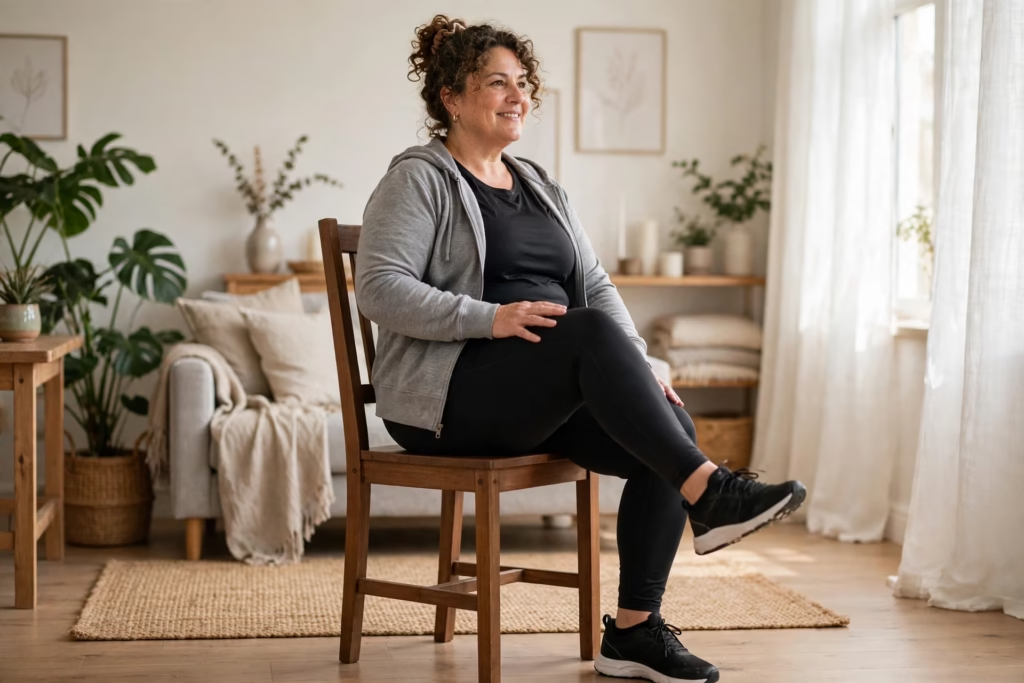
Most exercise advice starts with an assumption: that you can stand up, walk out the door, and keep going for half an hour. If you carry significant extra weight and your knees, back, or feet start protesting within minutes, that advice is not just unhelpful. It can feel like a door being closed in your face.
Here is what rarely gets said plainly. You do not need to stand to start getting fitter. A sturdy chair, ten minutes, and your own body weight are enough to begin. This guide explains why seated exercise works, how to do it safely at a higher body weight, and gives you a complete starter routine built on physiotherapy principles.
Why seated exercise is a legitimate starting point
There is a persistent myth that exercise only “counts” if it leaves you breathless and sweating. The evidence says otherwise. The American College of Sports Medicine advises adults with obesity to begin with as little as five minutes of activity per day, adding about five minutes every one to two weeks until they reach 30 minutes on most days. Short bouts count. Three ten-minute sessions spread across the day deliver real benefit for someone starting from zero.
Seated exercise has specific advantages at a higher body weight. It removes the pounding that walking or jogging puts through knees, hips, and feet, which are already carrying extra load with every step. It lets you work the large muscle groups of the legs, glutes, and trunk, and those large muscles are what drive energy expenditure. And strength work matters here more than most people realize. Resistance training two to three times per week helps preserve lean muscle while you lose weight, and muscle is the tissue that keeps your metabolism running. Research summarized by the American Academy of Family Physicians found that exercise improves cardiovascular risk factors even in people who do not lose weight, which means the benefits start long before the scale moves.
None of this means seated exercise is the final destination. It is the on-ramp. The goal is to build enough strength, stamina, and confidence that standing activities become possible later.
Before your first session: set yourself up safely
A few minutes of preparation prevents most problems.
Get medical clearance if you have a heart condition, uncontrolled blood pressure, diabetes with complications, or severe joint disease. This is standard guidance from exercise authorities, not caution for its own sake. If you are already under a doctor’s care, ask what limits apply to you.
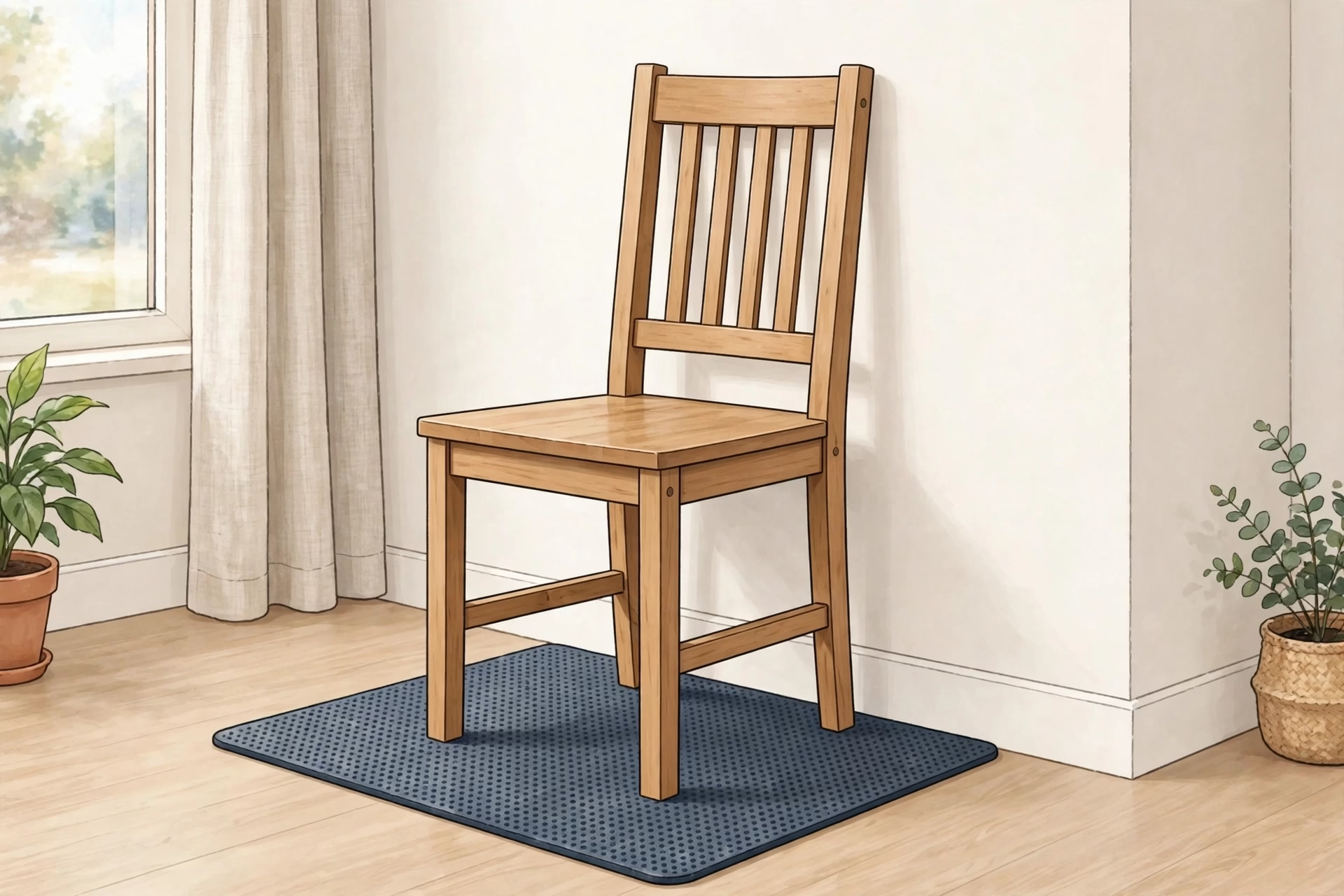
Choose the right chair. This matters more at a higher body weight than most guides admit. Use a sturdy, straight-backed chair with no wheels and no arms, placed on a non-slip surface with its back against a wall so it cannot slide. Check that the chair is rated for your weight. A wobbling chair is not a challenge to overcome. It is a reason to find a better chair. (Safety guidance echoed by MyObesityTeam’s chair exercise guide and ACE Fitness.)
Wear comfortable clothing and keep water nearby. Overheating is a genuine concern when carrying extra weight, so exercise in a cool room, avoid overdressing, and drink water before, during, and after.
Learn the breathing rule now. Never hold your breath during an effort. Breathe out on the hardest part of each movement and breathe in as you return. Holding your breath spikes blood pressure, which is exactly what you want to avoid.
Your starter routine: 8 exercises, one chair
Do this routine three days per week to start, with at least one rest day between sessions. Begin with one set of each exercise and rest 30 to 60 seconds between them. The whole thing takes about ten minutes at first. When that feels easy for two weeks in a row, add a second set.
1. Seated marching (warm-up and gentle cardio)
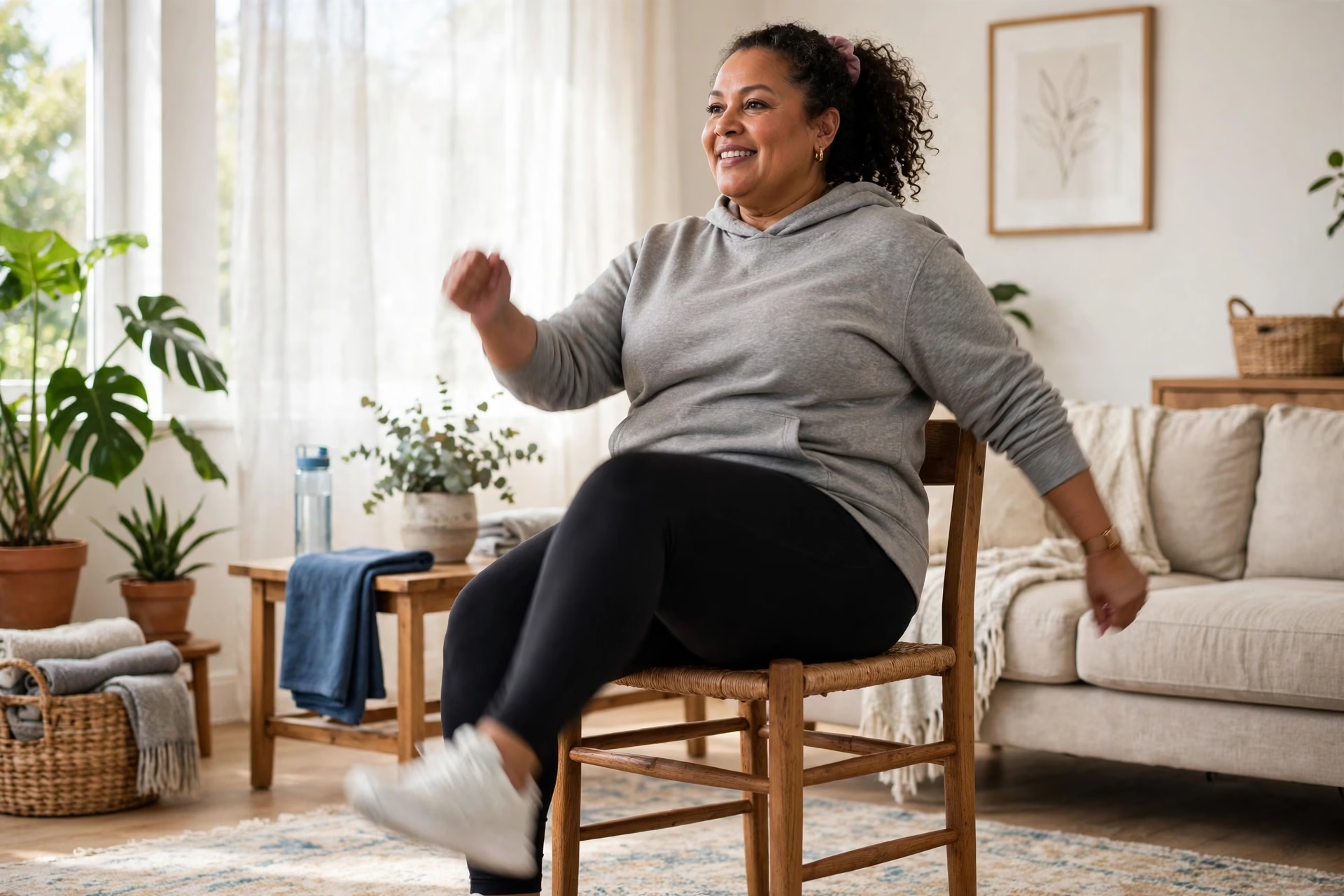
Sit tall near the front edge of the chair, feet flat on the floor. Lift your right knee toward your chest, lower it, then lift the left. Keep alternating in a steady rhythm, letting your arms swing naturally. Start with 30 seconds and build toward two minutes. Brace your stomach muscles lightly and resist the urge to lean back. If the chair back is doing the work, your core is not.
2. Arm raises (shoulders)
Sit tall, arms resting at your sides. Breathe out as you raise both arms sideways to shoulder height, pause for one second, then lower them slowly. Repeat 8 to 10 times. Keep your shoulders away from your ears and your movements controlled. No swinging.
3. Seated torso twists (core and spinal mobility)
Sit tall with feet flat, arms crossed over your chest. Slowly rotate your upper body to the right, keeping your hips facing forward. Pause, feel the gentle stretch through your side and mid-back, then return to center and repeat to the left. Do 8 twists per side. Move from your waist, not your shoulders, and never force the rotation.
4. Knee extensions (quadriceps)
Sit back in the chair so your back is supported. Slowly straighten one knee until the leg is as straight as comfortable, hold for two seconds, then lower. Alternate legs for 8 to 10 repetitions per side. Your quadriceps are among the largest muscles in your body, and strengthening them directly protects your knees during standing and walking later.
5. Glute squeezes (glutes, no movement required)
Sit tall and simply squeeze your buttock muscles together as hard as you comfortably can. Hold for five seconds, release, and repeat 10 times. This sounds almost too simple. It is one of the first exercises physiotherapists teach because weak glutes are behind a surprising amount of back and knee pain. You can do these anywhere, even while watching television.
6. Sit-to-stands (functional leg strength)
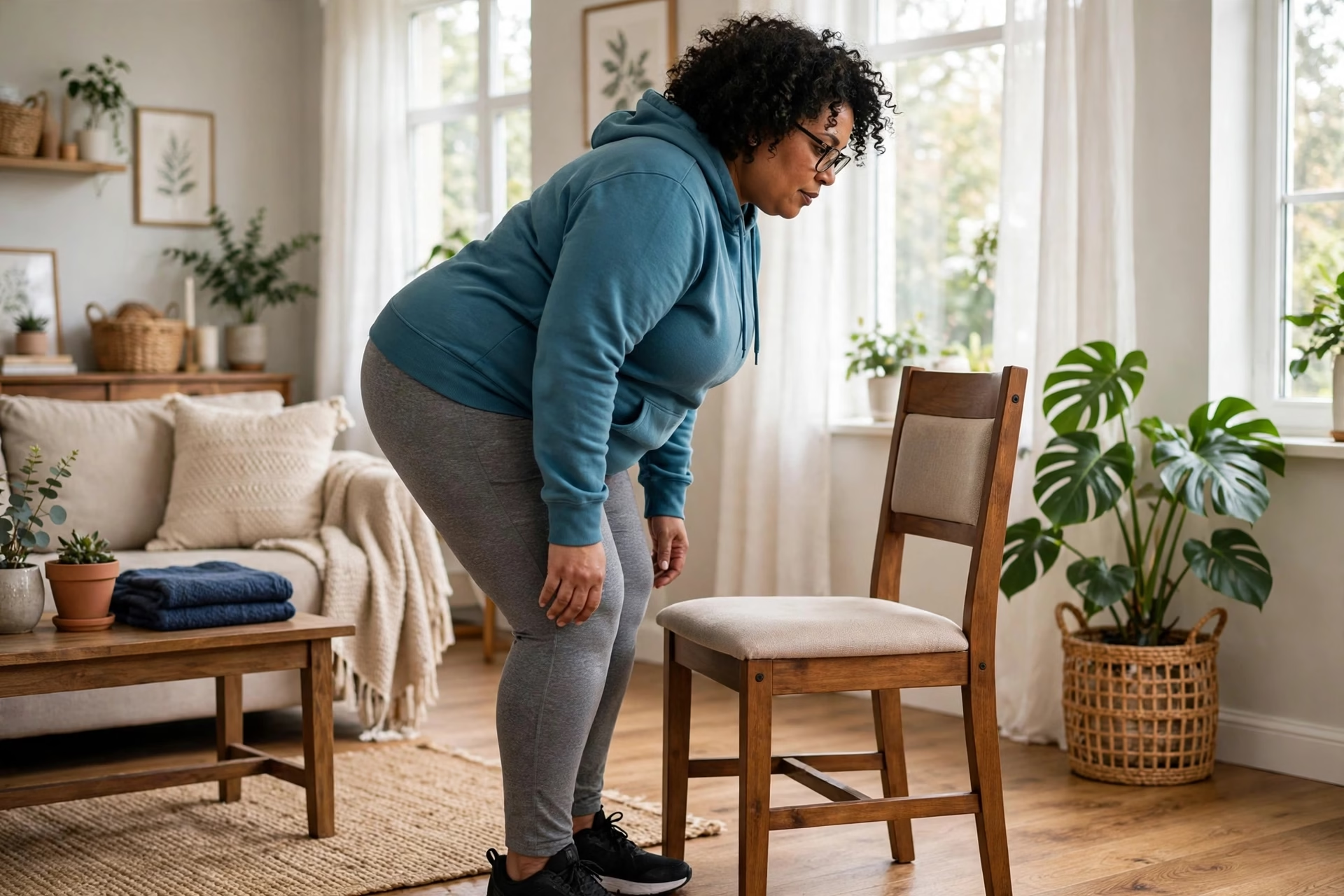
This is the most important exercise on the list. Sit near the front edge of the chair, feet flat and slightly behind your knees. Lean your chest slightly forward, press through your heels, and stand up without using your hands. Then sit back down slowly, controlling the descent. Start with 5 repetitions. Standing up from a chair is something you do dozens of times a day, and training it directly is what turns exercise into independence. When five becomes easy, try slowing the sitting-down phase to a count of three.
7. Arm circles (shoulders and upper back)
Extend both arms out to the sides at shoulder height. Make small, controlled circles for 20 seconds, then reverse direction for 20 seconds. Keep the circles small. Big, fast circles strain the shoulder joint without adding benefit.
8. Ankle pumps (calves and circulation)
With feet flat, lift your heels so you are on the balls of your feet, hold for two seconds, then lift your toes while keeping heels down. Alternate for one minute. This keeps blood moving in your lower legs, which matters if you sit for long hours.
Finish with two minutes of slow, deep breathing, shoulders relaxed. That is your cool-down.
How much is enough: the honest numbers
Forget the posters showing hour-long workouts. Here is what the ACSM guidance summarized by FP Notebook actually recommends for adults with obesity:
- Start with about 5 minutes per day. Yes, five.
- Add roughly 5 minutes every one to two weeks.
- Work toward 30 minutes per day, five or more days per week. You can split this into 10-minute bouts.
- Add resistance exercises (like the ones above) two to three days per week.
- Avoid high-impact activities such as running or jumping until your joints and fitness can handle them.
Progress is not linear, and that is normal. Some weeks you will add time easily. Other weeks your knees will ache or life will get in the way. The rule is simple: never increase duration and intensity in the same week, and if pain lasts more than a day after exercise, you did too much. Scale back, not off.
Moving beyond the chair
You will know you are ready to progress when the full routine with two sets feels easy and your breathing recovers within a couple of minutes. The natural next steps, in order:
- Add light hand weights (even water bottles) to the arm exercises.
- Slow every movement down. Slower means harder, with no extra joint stress.
- Add short standing intervals: stand behind the chair, hold the back for balance, and march in place for one minute between seated exercises.
- When standing intervals feel comfortable, explore our low-impact cardio guide for seniors and the no-jump cardio routine for bad knees, which build on exactly the strength you have developed here.
Each stage might take weeks. That is not failure. That is how bodies adapt.
When to stop and get checked
Stop exercising and speak to your doctor or physiotherapist if you experience chest pain or pressure, severe shortness of breath that does not settle with rest, dizziness, or joint pain that is sharp rather than achy. Muscle tiredness after exercise is normal. Sharp, stabbing, or swelling pain is information. Listen to it.
If you have diabetes, check your blood sugar before and after exercise when starting out, since activity can lower it. If you take blood pressure medication, the breathing rule matters doubly for you.
Frequently asked questions
Will seated exercise actually help me lose weight?
Exercise alone produces modest weight loss, but that undersells it. Combined with sensible eating changes, regular activity produces meaningfully more weight loss than diet alone, and it preserves the muscle that keeps weight off afterward. Just as important, fitness improves blood pressure, blood sugar, and heart health even before weight changes.
Is seated exercise “real” exercise?
Yes. Your muscles cannot tell whether you are standing or sitting. They respond to resistance and repetition. Studies of chair-based programs show genuine gains in strength, endurance, and daily function. It is a starting point, not a lesser version.
What if my knees hurt during the leg exercises?
Reduce the range of motion: straighten the knee only halfway. If even that hurts sharply, skip the exercise for now and focus on the upper body and glute work, then ask a physiotherapist to assess the knee. Pain is guidance, not a verdict.
Do I need any equipment?
No. Your body weight is enough for the first several weeks. When you are ready for more, a pair of light dumbbells or resistance bands is plenty. Our guide on how physiotherapy supports weight loss explains how supervised programs build on home routines like this one.
How is this different from chair exercises for seniors?
The movements overlap, and our chair exercise guide for seniors with limited mobility is a fine companion. This guide is specifically calibrated for higher body weight: chair selection and safety, joint loading, realistic starting durations, and progression paced for larger bodies.
A final word
The hardest repetition is the first one, and you have already done the harder thing by reading this far. Start with five minutes tomorrow. Not Monday, not next month. Five minutes, one chair, no audience. In a month, you will not recognize the person who thought exercise was not for them. And if something hurts, or you are unsure whether an exercise suits your condition, that is exactly what a physiotherapist is for. Book an assessment and get a plan built around your body, not someone else’s.