
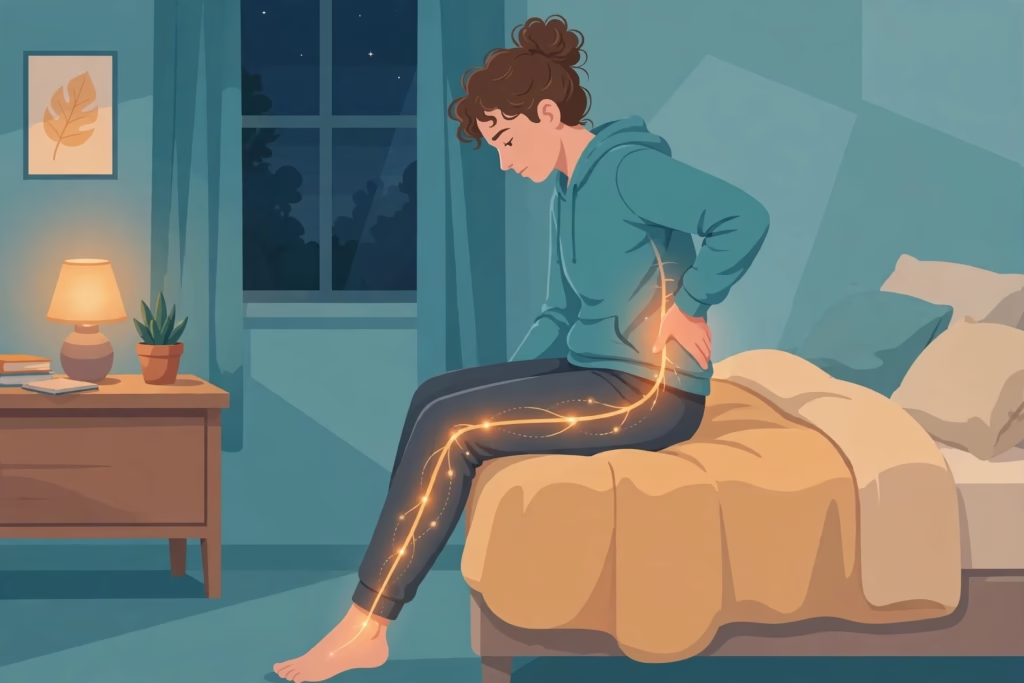
It’s 2 AM, a sharp electric pain is shooting from your buttock down to your calf, and you need it to calm down now — not after six weeks of rehab. I hear this from patients constantly: “Doctor, just tell me what to do tonight.”
This post is exactly that. Seven things you can do right now, in order, to settle a sciatica flare. None of them require equipment, and all of them are safe for most people. After that, I’ll tell you what not to do — because the wrong move during a flare can make the next 48 hours worse.
One important note: these calm the pain down. They don’t fix the underlying cause (usually a disc or piriformis issue). For the full picture, read our sciatica treatment guide.
Key takeaway
Sciatica flares calm fastest with a combination of unloading the nerve (the 90-90 resting position), cold therapy in the first 48 hours, short frequent walks, and gentle nerve glides — not bed rest, not aggressive stretching. If you have saddle numbness, bladder/bowel changes, or foot drop, skip this list and seek urgent care.
The 7 immediate fixes
1. Get into the 90-90 position
Lie on your back on the floor (not a soft bed), hips and knees both bent at 90 degrees, calves resting on a chair or sofa seat. This position opens up the spaces around the lumbar nerve roots and takes gravity off the irritated nerve. Stay 10–20 minutes. Many patients feel the leg pain start to “retreat” upward — that’s a good sign.
Can’t get on the floor? Side-lying with a pillow between your knees is the backup — painful side up. More on night positions in our sciatica sleep positions guide.
2. Ice first, heat later
For the first 24–48 hours of a flare: cold pack on the lower back/buttock, 15 minutes at a time, with a thin cloth barrier, every 2–3 hours. Cold calms the inflammatory response around the irritated nerve.
After 48 hours, switch to heat — a hot water bottle or warm towel for 15–20 minutes relaxes the protective muscle spasm that builds up around sciatica. Rule of thumb: ice for fresh, sharp flares; heat for stiff, achy aftermath.
3. Take a short walk — yes, even now
It sounds wrong, but a 5–10 minute gentle walk often eases sciatica more than lying still. Walking pumps fluid around the spinal discs, prevents the surrounding muscles from locking up, and tells your nervous system the leg still works. Walk on flat ground, short steps, upright posture. If pain spikes sharply, stop — you’ve done enough for now.
4. Try a gentle sciatic nerve glide
Sit on a chair, slump slightly, then slowly straighten the painful leg while looking up, then bend the knee while looking down — a slow, rhythmic “flossing” motion, 10 reps. It should feel like a mild stretch behind the knee, never sharp or electric. This helps the nerve glide freely through surrounding tissue instead of getting tugged. Stop if pain shoots further down the leg.
5. The figure-4 release (only if your pain is mostly in the buttock)
If your pain centers in the buttock rather than the back, the piriformis muscle may be the culprit — see sciatica vs piriformis syndrome to tell the difference. Lie on your back, cross the painful ankle over the opposite knee, and gently pull the bottom leg toward you until you feel a deep buttock stretch. Hold 30 seconds, 3 times. If it aggravates the leg pain, skip it — this one isn’t for disc-related sciatica.
6. Fix how you’re sitting right now
Most flares get worse in soft, low chairs. Sit with feet flat, knees slightly below hips, and a rolled towel behind your lower back. And the 30-minute rule: never sit longer than half an hour without standing, walking, or changing position. A surprising number of “mystery flares” are just marathon sitting sessions.
7. Calm the guarding spiral
When pain spikes, your whole body tenses — and that tension squeezes the irritated area harder, which spikes the pain further. Break the loop: slow breathing (in 4 counts, out 6), unclench your jaw, drop your shoulders. It sounds too simple to work, but reducing the muscular “guarding” around the nerve genuinely lowers pain within minutes.
What NOT to do during a flare
- Don’t aggressively stretch the hamstring of the painful leg — yanking on an irritated sciatic nerve makes it angrier.
- Don’t get deep-tissue massage directly on the sciatic nerve path during an acute flare.
- Don’t stay in bed all day. Brief rest is fine; a full day of bed rest stiffens everything and usually makes tomorrow worse.
- Don’t bend, lift, and twist — the classic “picking up a suitcase” combo that started many flares in the first place.
Red flags: skip the home fixes and get urgent care
Most sciatica is not dangerous, but these signs are emergencies — don’t wait:
- Numbness in the “saddle” area (inner thighs, groin, buttocks)
- Trouble controlling bladder or bowels, or sudden changes
- Foot drop — you can’t lift the front of your foot when walking
- Pain after significant trauma, or with fever and unexplained weight loss
- Pain so severe you can’t find any comfortable position at all
These can signal cauda equina syndrome or serious nerve compression, which needs same-day medical attention.
Frequently asked questions
How fast can sciatica pain ease?
With the right positions and movement, many flares settle noticeably within 24–72 hours. The underlying cause takes longer — typically a few weeks of guided rehab — but the sharp, scary pain usually backs off much sooner.
Should I use heat or ice for sciatica?
Ice for the first 24–48 hours of a fresh flare (15 minutes, with a cloth barrier), then heat for the stiff, achy phase after. When in doubt during a new flare, start with ice.
Is walking good or bad for sciatica?
Good — short, frequent, flat-ground walks are one of the best things you can do. Stop if pain sharply increases, but don’t avoid walking out of fear.
Can I still go to work with sciatica?
Usually yes, with modifications: change position every 30 minutes, use lumbar support, avoid heavy lifting and long drives. Total rest is rarely the answer.
Does bed rest help sciatica?
Brief rest (a few hours) during the worst of a flare is fine. But full days of bed rest slow recovery — gentle movement heals faster.
When is sciatica an emergency?
Saddle numbness, bladder or bowel changes, foot drop, or pain after major trauma — seek urgent medical care immediately. These are rare but serious.
Call or WhatsApp: +92 308 9333364 — Book your sciatica assessment at Tariq Medicare Hospital, Khanewal.
Dr. Usman Barkat PT — Consultant Physiotherapist & Managing Director, Tariq Medicare Hospital, Khanewal. DPT, MS Physical Therapy, 8+ years of clinical experience.
Disclaimer: This article is for information only and isn’t a substitute for professional diagnosis. If you have any red-flag symptoms above, seek medical care promptly.