
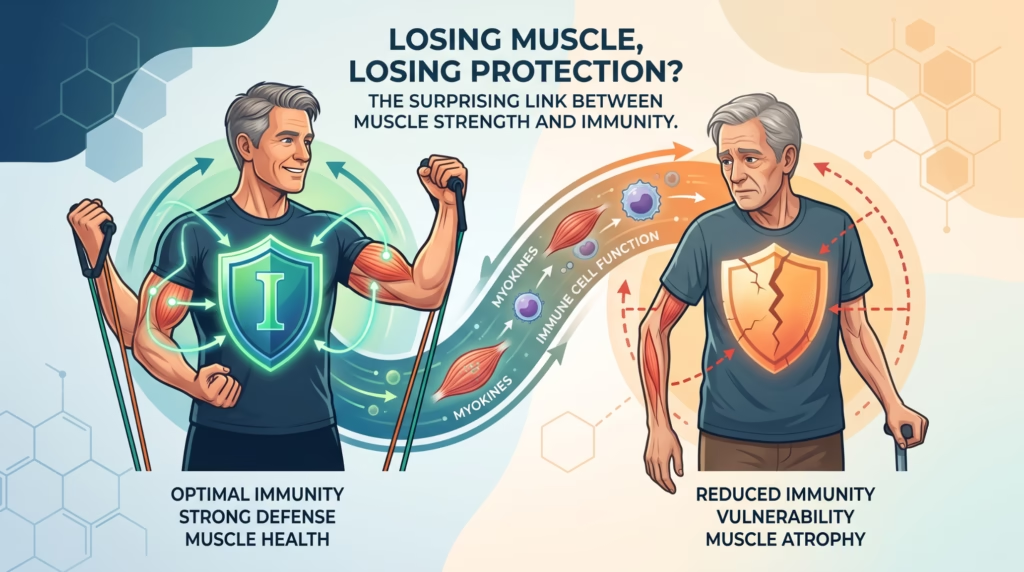
When most people think of the immune system, they picture white blood cells, lymph nodes, antibodies, and seasonal vaccines. When they think of muscle strength, they picture gym workouts, athletic performance, or aesthetic leanness. For decades, traditional medicine and public health campaigns treated these two systems as completely independent: the musculoskeletal framework was viewed simply as a biological chassis designed for locomotion, while the immune network operated as an isolated defense perimeter.
Modern clinical exercise physiology and immunology have shattered this division. Skeletal muscle is now recognized as one of the body’s largest and most metabolically active endocrine and immune-regulatory organs.
As we age past our fourth decade, the natural, progressive decline of muscle mass, a condition known clinically as sarcopenia, does not merely make opening a jar harder or climbing stairs more exhausting. It quietly dismantled your body’s primary defense reservoir against pathogens, systemic inflammation, and chronic disease. Losing muscle means losing biological resilience, leaving your immune system vulnerable right when you need it most.
The Dual Decline: Sarcopenia Meets Immunosenescence
Beginning around age 30, adults naturally lose between 3% and 8% of their skeletal muscle mass per decade. After age 60, this rate of involuntary atrophy accelerates sharply. Muscle fibers, particularly the fast-twitch (Type II) fibers responsible for rapid force production and power, shrink and undergo apoptosis (programmed cell death).
Simultaneously, the immune system undergoes its own age-related degradation, termed immunosenescence. The thymus gland, the primary factory where immune T-cells mature, atrophies and is largely replaced by adipose tissue by middle age. As a result, older adults produce fewer naive T-cells capable of identifying new viruses or bacteria, while memory T-cells become exhausted and senescent.
These two conditions do not happen in parallel by coincidence; they drive one another in a destructive biological feedback loop:
When muscle is lost, the immune system loses its chief metabolic fuel source and primary anti-inflammatory signaling network. When systemic inflammation rises, it accelerates the enzymatic breakdown of remaining muscle tissue. Understanding how to disrupt this cascade is the key to healthy aging.
The Biochemical Bridge: How Muscle Directly Controls Immunity
How does a bicep or quadricep protect you from a respiratory viral infection or post-surgical sepsis? The answer lies in two major physiological functions: muscle as a biochemical factory (myokines) and muscle as a nutrient reservoir (amino acids).
1. The Myokine Network: Muscle as an Endocrine Organ
Every time a skeletal muscle contracts against resistance, it synthesizes and secretes specialized signaling proteins called myokines directly into the bloodstream. Myokines act as molecular messengers, communicating directly with bone, fat tissue, the brain, and immune organs.
- Interleukin-6 (IL-6), The Dual-Faced Molecule: In clinical pathology, IL-6 is often labeled a pro-inflammatory cytokine linked to autoimmune disease and tissue destruction. However, muscle-derived IL-6, released during physical exertion, acts in a completely opposite manner. Muscle IL-6 acts as an anti-inflammatory agent. It stimulates the production of classical anti-inflammatory cytokines (such as IL-10 and IL-1ra) while directly inhibiting Tumor Necrosis Factor-alpha (TNF-α), the primary driver of systemic tissue inflammation.
- Interleukin-15 (IL-15): Heavily expressed in skeletal muscle tissue, IL-15 plays a central role in maintaining natural killer (NK) cells and memory CD8+ T-cells. NK cells are the immune system’s frontline sentinels, responsible for destroying virus-infected cells and eliminating early-stage tumor cells. As muscle mass declines, circulating IL-15 drops, weakening immune surveillance.
- Irisin: Released during repeated muscle contractions, irisin drives the browning of white adipose tissue, improves insulin sensitivity, and reduces macrophage infiltration in fat depots, actively suppressing chronic inflammation.
2. The Glutamine Reservoir: White Blood Cell Fuel
During an acute infection, burn, surgical trauma, or severe illness, the metabolic demands of the immune system increase dramatically. Activated lymphocytes, neutrophils, and macrophages divide rapidly to fight off the pathogen, consuming massive quantities of glucose and an amino acid called glutamine.
Immune cells cannot synthesize enough glutamine to meet their own metabolic demands during an immunological crisis. Instead, they rely almost entirely on the body’s primary storage site for free glutamine: skeletal muscle tissue.
Muscle tissue contains over 70% of the body’s total pool of free glutamine. When an infection strikes, muscle tissue undergoes controlled catabolism, breaking down its own contractile proteins to flood the bloodstream with glutamine for white blood cells.
If an individual enters an illness with ample, healthy muscle mass, the body pays this metabolic tax without issue, mounting an aggressive immune response while preserving functional mobility. However, an individual suffering from sarcopenia has depleted reserves. When their immune system calls for amino acid reinforcements, the depleted muscle tissue cannot supply them. The result is rapid immune exhaustion, prolonged infection, and severe muscle wasting that often leaves older adults bedridden.
“Inflammaging” and Myosteatosis: The Hidden Saboteurs
Muscle loss is not just about the tissue you lose; it is also about what replaces it.
When muscle mass shrinks due to physical inactivity and metabolic aging, the remaining fibers are infiltrated by lipid droplets, a pathological process called myosteatosis (marbling of the muscle with fat). This ectopic fat deposition is toxic to muscle cells.
Intramuscular fat secretes a relentless stream of pro-inflammatory adipokines, transforming healthy muscle from an anti-inflammatory protector into a source of chronic, low-grade systemic inflammation. This persistent state of smoldering, baseline inflammation is termed inflammaging.
Inflammaging damages blood vessels, degrades joint surfaces, alters insulin sensitivity, and exhausts naive immune cells before an actual pathogen even enters the body. Furthermore, continuous systemic inflammation directly blunts muscle protein synthesis (MPS), meaning that even when an older adult eats protein, their body struggles to build or maintain muscle fibers, a phenomenon known as anabolic resistance.
Clinical Evidence: Muscle Mass as a Predictor of Survival
In clinical and hospital settings, physical therapists and physicians regularly witness the direct correlation between musculoskeletal strength and survival rates. Muscle mass is increasingly utilized as a vital sign in geriatrics, oncology, and intensive care medicine.
| Clinical Parameter | Low Muscle Mass / Low Grip Strength | Normal / High Muscle Mass |
| Hospital Length of Stay | Prolonged by 30% to 50% | Significantly shorter |
| Post-Surgical Infection Rate | 2 to 4 times higher incidence of pneumonia & sepsis | Low incidence; rapid wound closure |
| Vaccine Responsiveness | Blunted antibody production | Robust, sustained antibody titers |
| Chemotherapy Toxicity | Severe adverse reactions; lower tolerance | Higher completion rate of treatment |
| 1-Year Mortality Post-ICU | Elevated risk of secondary mortality | Significantly higher survival & recovery |
A landmark study examining older patients admitted with lower respiratory tract infections revealed that those with low handgrip strength had significantly higher rates of clinical failure, secondary bacteremia, and readmission compared to age-matched peers with intact grip strength. Muscle is not an aesthetic luxury; it is biological metabolic insurance.
Assessing Your Functional Reserve: Three Simple Clinical Tests
You do not need a dual-energy X-ray absorptiometry (DEXA) scan to evaluate whether your muscle-immunity buffer is compromised. Physical therapy utilizes three validated, functional assessments that correlate strongly with systemic muscle mass and biological longevity:
Caregivers and adults over 40 should treat changes in these functional metrics as early warning signs of systemic decline, long before laboratory blood panels reflect chronic disease.
The Clinical Prescription: Progressive Loading for Immune Defense
To reverse sarcopenia, stimulate myokine secretion, and protect immune function, standard cardio (like casual walking) is beneficial but insufficient on its own. The nervous system and skeletal muscles require mechanical tension and progressive overload to stimulate muscle protein synthesis and stem the tide of inflammaging.
Here is an evidence-based clinical rehabilitation protocol designed for adults 40+, seniors, and individuals rebuilding their functional reserve.
The “Functional Four” Movement Patterns
These four multi-joint movements recruit large muscle groups, driving maximum myokine release and systemic metabolic adaptation without placing excessive, destructive stress on aging joints.
1. The Supported Squat to Box (Lower-Body Extensor Strength)

- Why It Matters: Activates the quadriceps, gluteus maximus, and adductors—the largest muscle groups in the human body, responsible for the bulk of circulating glutamine storage.
- Execution: Stand in front of a sturdy chair. Keep your feet shoulder-width apart, chest upright. Hinge backward at your hips, bending your knees until your glutes lightly tap the chair seat. Press firmly through your whole foot (heels and big toes) to drive back up to full standing.
- Dosage: 3 sets of 8 to 10 controlled repetitions. Rest 90 seconds between sets.
2. The Incline Push-Up / Wall Press (Upper-Body Anterior Chain)

- Why It Matters: Builds functional chest, anterior shoulder, and tricep strength, preserving the pushing mechanics needed for independence and upper-body myokine signaling.
- Execution: Place hands shoulder-width apart against a sturdy kitchen counter, table, or wall. Keep your body in a rigid plank from head to heels. Lower your chest smoothly toward the surface, keeping your elbows tucked at a 45-degree angle to protect the shoulder joint. Press firmly away to return to the starting position.
- Dosage: 3 sets of 10 to 12 repetitions.
3. The Farmer’s Carry (Systemic Grip and Postural Stability)

- Why It Matters: Directly builds handgrip strength (the clinical biomarker of vitality) while loading the traps, core, and hip stabilizers under continuous dynamic tension.
- Execution: Hold two moderately heavy weights (dumbbells, kettlebells, or full water jugs) at your sides. Stand tall, pull your shoulder blades gently back and down, and walk in a straight line with slow, deliberate, heel-to-toe steps. Prevent the weights from swinging.
- Dosage: 3 to 4 rounds of 30 to 45 seconds of continuous walking.
4. The Romanian Deadlift / Hip Hinge (Posterior Chain Protection)
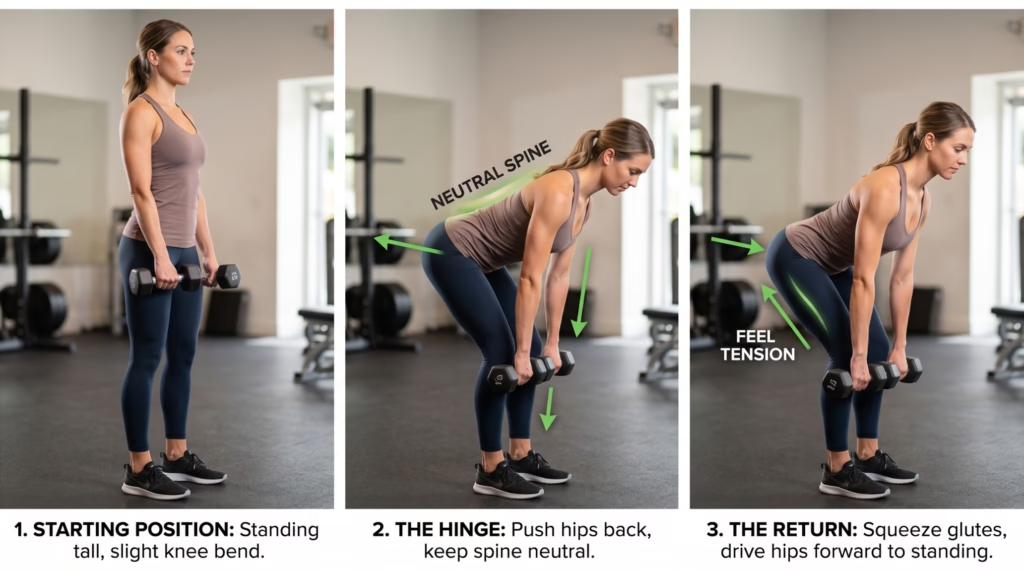
- Why It Matters: Targets the hamstrings, glutes, and spinal erectors, maintaining hip mobility and protecting the lumbar spine from the disc compression often associated with weak posterior muscles.
- Execution: Stand tall with a slight bend in your knees holding light weights in front of your thighs. Push your hips straight back toward the wall behind you while keeping your spine neutral. Lower the weights until they reach just below knee level, feel the tension in the hamstrings, and squeeze your glutes to pull your hips forward to standing.
- Dosage: 3 sets of 8 to 10 repetitions.
Nutritional Synergy: Overcoming Anabolic Resistance
Exercise provides the mechanical trigger, but the body requires raw building blocks to overcome anabolic resistance and preserve the immune system’s amino acid bank.
1. Optimize the Leucine Threshold
As we age, our muscle cells become less responsive to amino acid signaling. To initiate muscle protein synthesis, older adults must reach the leucine threshold, approximately 2.5 to 3 grams of the essential amino acid leucine per meal.
- Sources: High-quality animal proteins (eggs, wild fish, poultry, lean beef) or whey protein isolate provide high leucine concentrations. Plant-based eaters should combine varied sources (pea and rice protein blends, soy, legumes) to reach adequate leucine levels.
2. Distribute Protein Evenly Throughout the Day
The traditional Western pattern of eating a tiny amount of protein at breakfast, a light amount at lunch, and a massive protein-heavy dinner is inefficient for older adults. Muscle protein synthesis cannot store excess amino acids eaten in a single sitting.
- Clinical Recommendation: Consume 1.2 to 1.6 grams of protein per kilogram of body weight daily (unless medically restricted by chronic kidney disease). Divide this evenly across 3 to 4 meals (roughly 25 to 40 grams of protein per meal).
3. Key Micronutrients for Muscle-Immune Health
- Vitamin D3: Skeletal muscle cells contain specific Vitamin D receptors (VDRs). Vitamin D deficiency is directly linked to muscle weakness, increased fall risk, and impaired T-cell activation. Aim for optimal serum levels (40–60 ng/mL) through sensible sunlight exposure, fatty fish, and medical supplementation when indicated.
- Creatine Monohydrate: Beyond its popularity with young athletes, 3 to 5 grams of pure creatine monohydrate daily is clinically proven to support cellular energy (ATP) in aging muscle fibers, prevent cognitive fatigue, and assist in preserving lean mass during periods of reduced activity.
- Adequate Daily Hydration: Dehydrated muscle tissue experiences accelerated protein breakdown and reduced shock-absorption capability in joint cartilage. Drink sufficient fluids to maintain pale, clear urine throughout the day.
The Caregiver’s Blueprint: Protecting Bedridden and Vulnerable Adults
For caregivers managing older parents or vulnerable individuals recovering from surgery, muscle preservation must be prioritized as an immune safeguard. Complete bed rest causes dramatic, rapid declines in physical capacity: an older adult confined to a hospital bed can lose up to 1 kilogram of muscle mass in just 10 days, accompanied by a sharp drop in metabolic rate and immune function.
Caregivers should implement these non-negotiable physical therapy strategies:
- Incentivize Upright Time: Assist the individual into a seated position in a chair for all meals. Gravity alone forces the postural muscles of the spine and core to engage, preventing the rapid diaphragmatic weakening that leads to post-operative pneumonia.
- Bedside Plantarflexion and Knee Extension: When bed rest is mandatory, prompt the patient to perform gentle ankle pumps, seated knee kicks (straightening the leg out), and gluteal squeezes for 5 minutes every 2 hours. This maintains local blood circulation, decreases deep vein thrombosis (DVT) risk, and slows muscular atrophy.
- Prioritize Protein First at Mealtimes: If an older individual has low appetite during an illness, encourage them to eat their protein source first before filling up on refined carbohydrates or liquids.
Strength Is Your First Line of Defense
Physical fitness is often framed through the lens of appearances, scale weight, or athletic milestones. Yet the human body was fundamentally constructed to move against gravity, and the immune system was built to operate in direct chemical partnership with working muscle fibers.
When you invest in your physical strength, whether you are 45, 65, or 85, you are doing far more than preventing joint stiffness or keeping your balance on uneven terrain. You are stocking your body’s metabolic emergency pharmacy, maintaining your white blood cells’ primary energy reserve, and keeping systemic inflammation under clinical control.
Treat progressive resistance training and adequate protein intake not as lifestyle options, but as biological necessities. Every squat, every carry, and every deliberate contraction is an investment in an internal shield that protects you from infection, speeds your recovery from illness, and preserves your functional independence for decades to come.
Preserving functional muscle mass is far more than a fitness goal; it is a vital clinical defense for your immune system and lifelong vitality. If you or an older family member are experiencing reduced strength, slower recovery times, or mobility limitations, early and structured intervention is key to preventing long-term decline. Under the clinical guidance of Physiotherapist Dr. Usman Barkat at Tariq Medicare, patients receive tailored, evidence-based rehabilitation programs designed to combat sarcopenia, restore joint function, and build biological resilience safely. To access more clinician-reviewed guides, safe senior exercise progressions, and functional longevity resources, visit physioubk.com to start protecting your strength from the ground up.
Evidence-Based Muscle & Immunity Toolkit
Physical therapist-recommended tools to safely assess functional strength, rebuild lean muscle, and support immune reserve.
Digital Hand Dynamometer
Measures grip strength accurately to monitor functional vitality, frailty indicators, and biological aging at home.
Check Price on AmazonMulti-Level Resistance Bands
Provides joint-safe mechanical tension for box squats and upper-body presses without joint compression.
Check Price on AmazonMicronized Creatine Monohydrate
Clinically proven to replenish cellular ATP reserves, maintain lean mass, and combat age-related muscle fatigue.
Check Price on AmazonFrequently Asked Questions
How does losing muscle mass weaken the immune system?
Skeletal muscle serves as the body’s primary storage reservoir for free glutamine, an amino acid white blood cells consume rapidly during an infection. When muscle atrophies due to sarcopenia, the body lacks the amino acid reserves to sustain immune defenses, leading to prolonged illnesses, delayed wound healing, and higher infection severity.
What are myokines, and why are they vital for healthy aging?
Myokines are specialized signaling proteins secreted directly by contracting muscle fibers. They act as anti-inflammatory messengers throughout the body, suppressing inflammatory drivers like Tumor Necrosis Factor-alpha (TNF-α), activating Natural Killer (NK) cells to target pathogens, and combating chronic low-grade systemic inflammation (“inflammaging”).
Can regular walking alone protect muscle mass as we age?
While walking is excellent for aerobic stamina and joint lubrication, it does not provide sufficient mechanical tension to recruit fast-twitch (Type II) fibers or prevent sarcopenia. Preserving muscle mass and stimulating myokine release requires progressive resistance training, such as box squats, incline push-ups, and loaded carries, at least 2 to 3 times per week.
How much protein do adults over 40 need to trigger muscle repair?
Due to age-related anabolic resistance, older adults require 1.2 to 1.6 grams of protein per kilogram of body weight daily (unless medically restricted by chronic kidney disease). Aim for 25 to 40 grams of high-quality protein per meal to supply the 2.5 to 3 grams of leucine needed to activate muscle protein synthesis.
What is the fastest clinical test to check for sarcopenia at home?
The 5-Time Sit-to-Stand (FTSTS) test is a reliable assessment. Sit in a sturdy armless chair, cross your arms over your chest, and stand up and sit down completely 5 times as fast as possible. Finishing in under 12 seconds indicates adequate lower-body reserve, whereas times exceeding 15 seconds suggest functional decline and frailty risk.