
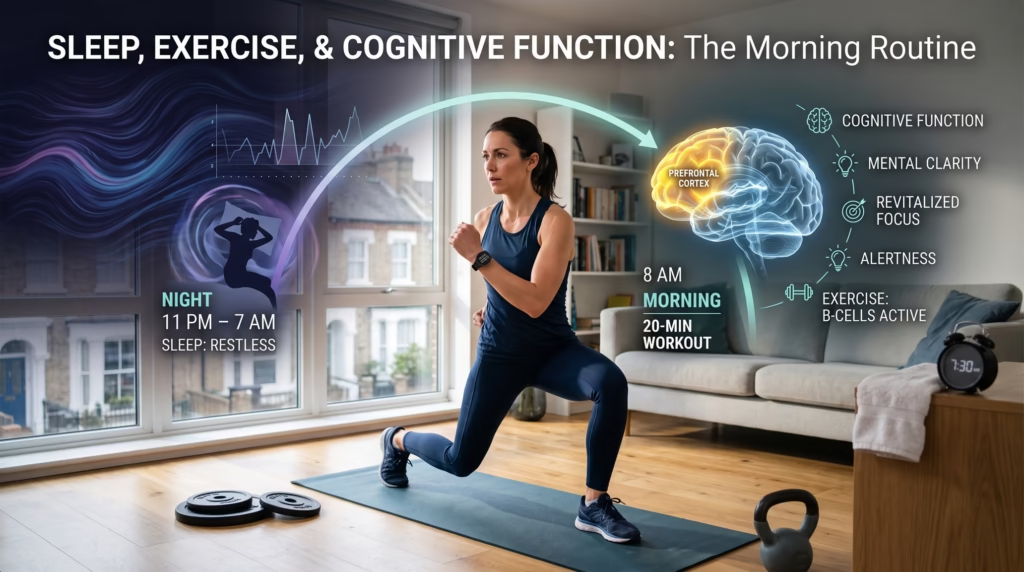
Waking up after a sleepless night of tossing and turning feels like trying to operate heavy machinery underwater. The alarm goes off, your joints feel stiff, and a thick layer of brain fog makes even simple decisions, like what to eat for breakfast, feel overwhelmingly complex. In our fast-paced world, acute sleep deprivation is a universal experience, often met with a heavy reliance on caffeine to drag the body and mind through the workday.
But while a strong cup of coffee might temporarily block sleep receptors, it does nothing to restore true cognitive function, focus, or physical vitality. A growing body of clinical evidence suggests a much more effective, biological reset button: a short, strategic bout of exercise.
When you are exhausted, the idea of working out often sounds like a form of punishment. However, a targeted 20-minute workout can act as a powerful neurological and physiological intervention, temporarily rescuing your brain from the depths of sleep deprivation. Here is a comprehensive clinical look at what happens to your brain when you lose sleep, why a short workout can restore your cognitive edge, and the exact evidence-based routine you should use when you are running on empty.
The Cognitive and Physical Toll of a Sleepless Night
To understand how exercise rescues a tired brain, we must first look at the systemic damage caused by acute sleep loss. Sleep is not merely a passive state of rest; it is an active, highly structured biological process where the brain consolidates memories, clears out metabolic waste, and repairs cellular damage.
When you cut this process short, the deficits are immediate and measurable:
- Prefrontal Cortex Suppression: The prefrontal cortex is the CEO of your brain. It is responsible for executive functions like decision-making, impulse control, emotional regulation, and working memory. After a poor night of sleep, metabolic activity in this region drops significantly. This is why you are more irritable, prone to distraction, and likely to make poor dietary or professional choices when exhausted.
- Adenosine Buildup: Throughout the day, your brain produces a neurochemical called adenosine, which builds up and creates “sleep pressure.” Sleep clears adenosine away. When you do not sleep enough, you wake up with a backlog of this chemical, leaving you feeling groggy and physically lethargic.
- Musculoskeletal Stiffness: From a physical therapy perspective, sleep is when tissue healing and muscular relaxation occur. Poor sleep often means poor sleeping postures, increased muscle tension, and a lack of deep REM sleep, which is critical for muscle recovery. This results in the morning stiffness, particularly in the lumbar spine and neck, that frequently accompanies a bad night’s sleep.
The Biological Magic of the 20-Minute Reset
Can 20 minutes of exercise truly “undo” a sleepless night? Clinically speaking, exercise cannot replace the restorative power of sleep. However, it can significantly, and immediately, mitigate the cognitive and physical deficits caused by sleep loss, providing a functional bridge to get you through the day.
When you engage in moderate, continuous movement, a cascade of physiological responses occurs that directly counteracts sleep deprivation:
1. The Oxygen and Blood Flow Surge
Sleep deprivation decreases global cerebral blood flow. Exercise immediately reverses this. As your heart rate elevates, oxygen-rich blood is pumped vigorously into the brain, particularly targeting the suppressed prefrontal cortex. This vascular flush awakens dormant neural pathways, instantly improving alertness, reaction times, and focus.
2. The Release of BDNF (Brain-Derived Neurotrophic Factor)
BDNF is a crucial protein that scientists often refer to as “Miracle-Gro for the brain.” It promotes neuroplasticity, protects existing neurons, and encourages the growth of new synapses. Even a short 20-minute bout of moderate aerobic exercise triggers a spike in BDNF, which sharpens memory consolidation and accelerates cognitive processing speeds, both of which are severely compromised by lack of sleep.
3. Neurotransmitter Balancing
Sleep loss throws your neurotransmitters out of equilibrium, often elevating cortisol (the stress hormone) while depressing dopamine and serotonin (the mood-regulating hormones). A focused, moderate-intensity workout releases endorphins, boosts dopamine, and helps metabolize excess morning cortisol. This neurochemical rebalancing clears away the emotional irritability and brain fog associated with exhaustion.
To assist in neurochemical rebalancing after a poor night of sleep, clinical evidence supports the use of highly bioavailable Magnesium Glycinate, which aids in muscular relaxation without the groggy side effects of sleep medications
4. Core Temperature Regulation
Your body’s core temperature naturally drops during sleep and slowly rises as you wake up. After a bad night of sleep, this thermoregulatory rhythm is disrupted, leaving you feeling cold, sluggish, and stiff. Cardiovascular exercise rapidly raises your core body temperature, sending a powerful biological signal to your circadian rhythm that it is time to be awake, alert, and active.
The Rules of Exercising on Zero Sleep
While movement is medicine, the dosage must be precise. Hitting the gym for a heavy, one-hour powerlifting session or a high-intensity interval training (HIIT) class after zero sleep is a recipe for disaster.
When you are sleep-deprived, your central nervous system is already heavily taxed. Your proprioception (your body’s awareness of itself in space) is delayed, your stabilizing muscles fatigue faster, and your risk of acute musculoskeletal injury skyrockets.
To use exercise as a cognitive reset without draining your remaining reserves, you must follow these clinical safety rules:
- Rule 1: Cap it at 20 to 30 Minutes. This is the sweet spot. It is long enough to trigger cardiovascular benefits and BDNF release, but short enough to prevent the depletion of your muscle glycogen stores.
- Rule 2: Keep it Moderate (Zone 2 Cardio). You should be breathing heavily but still able to hold a conversation. If you are gasping for air, you are spiking your stress hormones too high for an already exhausted body.
- Rule 3: Avoid Heavy Loads and Complex Lifts. Your neuromuscular coordination is compromised. Save the heavy deadlifts, overhead presses, and box jumps for a day when your central nervous system is fully rested. Focus on cyclical, safe, and low-impact movements.
The 20-Minute Cognitive Rescue Routine
This routine is specifically designed to flush morning stiffness, elevate cerebral blood flow, and stimulate the brain without exhausting the body. It requires no equipment and focuses heavily on mobilizing the spine and elevating the heart rate safely.
Phase 1: The Neurological Wake-Up (Minutes 0–3)
Before moving, we must reset the nervous system and oxygenate the body using the diaphragm.

- 90/90 Diaphragmatic Breathing: Lie flat on your back with your calves resting on a chair or couch so your hips and knees are at 90-degree angles. Place one hand on your belly. Breathe deeply through your nose for a count of 4, feeling your belly expand. Exhale through your mouth for a count of 6. This decompresses the lumbar spine after tossing and turning and shifts the nervous system out of a stressed, sleep-deprived state.
- Duration: 3 minutes of continuous, mindful breathing.
Phase 2: Spinal and Joint Mobility (Minutes 3–8)
Tossing and turning locks up the facet joints in the spine. We need to introduce synovial fluid to these joints to eliminate stiffness.
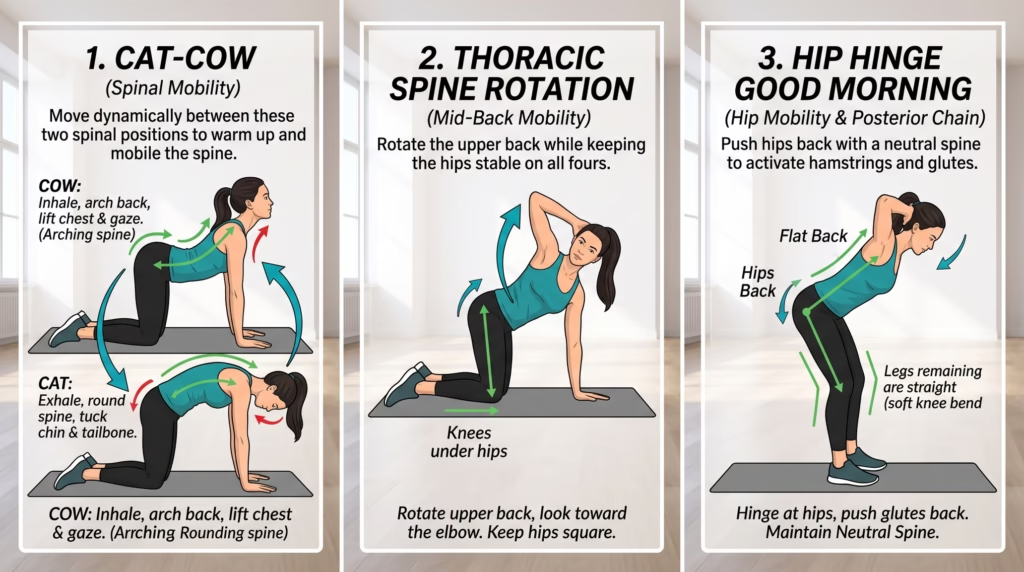
- Cat-Cow Flow (10 Repetitions): On your hands and knees, slowly arch your back toward the ceiling (Cat), dropping your head. Then, let your belly sink toward the floor (Cow), lifting your chest. Move smoothly with your breath to lubricate the entire spinal column.
When moving through the Cat-Cow flow, doing this on a hard floor can aggravate the knees. I highly recommend using an extra-thick, high-density orthopedic mat to protect your joints and allow you to focus entirely on spinal mobility rather than knee pain - Thoracic Rotations (8 Repetitions per side): Still on hands and knees, place your right hand behind your head. Rotate your right elbow down toward your left forearm, then open up, rotating your elbow and chest toward the ceiling. This opens the mid-back and ribcage, improving your breathing capacity for the cardio phase.
- Hip Hinges / Good Mornings (15 Repetitions): Stand up with your feet shoulder-width apart. Keeping your back perfectly straight and a slight bend in your knees, push your hips backward until you feel a stretch in your hamstrings, then squeeze your glutes to stand tall. This activates the posterior chain without loading the spine.
Phase 3: The Cognitive Flush (Minutes 8–18)
This is the core of the biological reset. The goal is continuous, rhythmic, low-impact movement to drive blood to the prefrontal cortex. Choose one of the following based on your environment:
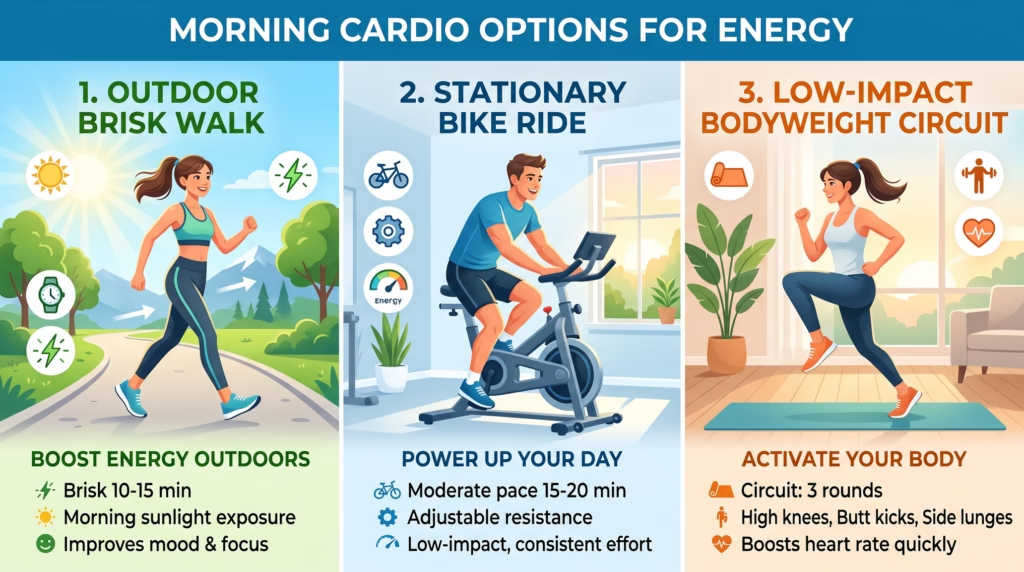
- Brisk Outdoor Walking: The absolute best option if the sun is up. The combination of cardiovascular movement and natural sunlight hitting your retina completely resets your circadian rhythm and halts daytime melatonin production.
- Stationary Cycling or Elliptical: Keep a steady, moderate pace. Resistance should be light to medium.
- Bodyweight Flow (If indoors with no equipment): Alternate between 1 minute of marching in place (bringing knees up high) and 1 minute of step-jacks (a low-impact jumping jack where you step side to side instead of jumping). Keep this continuous for 10 minutes.
Phase 4: Postural Reset (Minutes 18–20)
Finish the workout by setting your physical alignment for the day, combating the slumped posture that naturally occurs when we are fatigued.
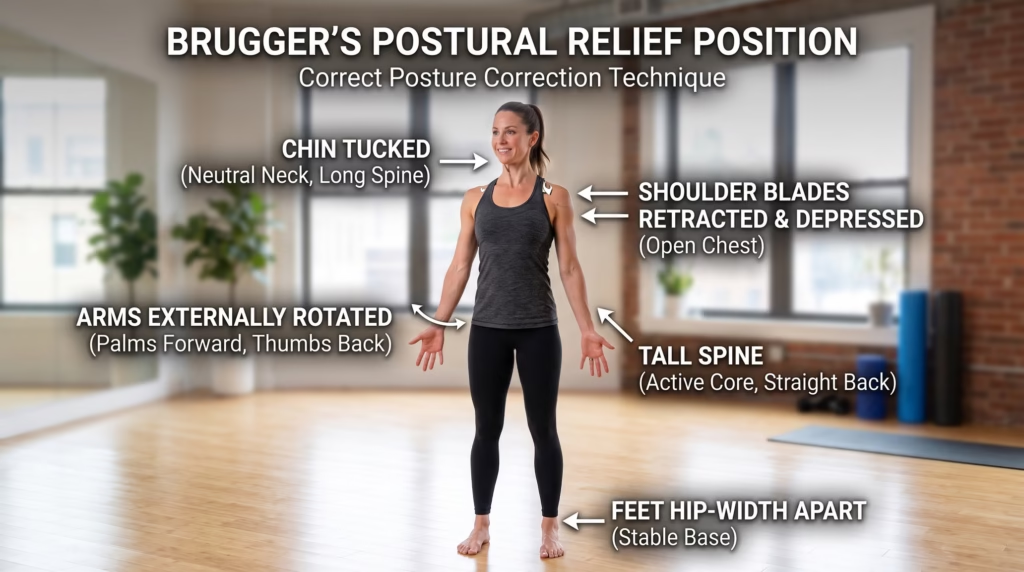
- Brugger’s Postural Relief Position: Stand tall with your feet slightly wider than shoulder-width. Externally rotate your arms so your palms face forward and your thumbs point behind you. Squeeze your shoulder blades together and tuck your chin slightly backward (making a double chin). Take 10 deep breaths in this position. It actively fights the forward-head and rounded-shoulder posture associated with exhaustion and desk work.
Long-Term Strategies for Sleep and Brain Health
While this 20-minute rescue routine is highly effective for an occasional bad night, it is not a substitute for chronic sleep deprivation. If you are consistently failing to get 7 to 9 hours of quality sleep, your body will eventually enter a state of systemic inflammation, increasing your risk for cardiovascular disease, metabolic syndrome, and chronic musculoskeletal pain.
If you find that your sleep is frequently disrupted by physical discomfort, such as lower back pain that wakes you up, resolving your nighttime pelvic alignment with a contoured knee support pillow can prevent the facet joint compression that disrupts your REM sleep.
Interestingly, regular exercise is one of the most potent, evidence-based treatments for chronic insomnia. Engaging in routine physical activity helps regulate your circadian rhythm, reduces sleep-onset latency (the time it takes to fall asleep), and increases the duration of deep, slow-wave sleep. However, the timing of your daily exercise matters. For optimal sleep hygiene, aim to complete vigorous workouts at least three to four hours before bedtime to allow your core body temperature and cortisol levels to drop back to baseline.
If you find that your sleep is frequently disrupted by physical discomfort, such as lower back pain that wakes you up, a stiff neck, or sciatica that flares up at night, the root cause may be a biomechanical dysfunction that requires clinical attention. Sleep positions, pillow support, and underlying joint instability play massive roles in the quality of your rest.
Resolving these physical barriers to sleep requires a comprehensive approach to biomechanics and rehabilitation. Addressing underlying joint restrictions, muscular imbalances, and core instability can transform not just how you move during the day, but how deeply you recover at night. At Tariq Medicare in Khanewal, we focus on identifying and treating these exact functional deficits through evidence-based physical therapy, ensuring that your body is capable of the deep, restorative rest it requires. True cognitive sharpness and physical vitality do not come from caffeine; they come from a healthy, well-aligned body that moves well and sleeps deeply.
Dr. Usman’s Sleep & Recovery Toolkit
The following are evidence-based tools I recommend to my physical therapy patients for improving sleep biomechanics and morning mobility.
High-Density Orthopedic Mat
Essential for the morning 20-minute mobility flow. A 1/2-inch extra-thick mat protects stiff joints and the lumbar spine from hard floors.
View on AmazonContoured Cervical Pillow
Maintains the natural lordotic curve of the neck during sleep, preventing the morning facet joint stiffness that causes headaches and brain fog.
View on AmazonMagnesium Glycinate
A highly bioavailable supplement that aids in neuromuscular relaxation and helps balance the stress hormones elevated by sleep deprivation.
View on AmazonFrequently Asked Questions
Can a 20-minute workout actually undo a sleepless night?
While exercise cannot replace the cellular repair and memory consolidation of deep sleep, a targeted 20-minute moderate workout significantly bridges the gap. It elevates cerebral blood flow, triggers Brain-Derived Neurotrophic Factor (BDNF), clears adenosine buildup, and sharpens executive cognitive function to eliminate morning brain fog.
Is it safe to exercise when running on zero sleep?
Yes, provided the workout is kept moderate (Zone 2 cardio) and capped at 20 to 30 minutes. Because sleep deprivation slows neural reaction time and weakens stabilizing muscles, you should strictly avoid heavy compound lifts, max-effort sprints, and high-intensity interval training (HIIT) to prevent acute injury.
What type of exercise is best after a sleepless night?
Brisk outdoor walking is the most effective choice because combining physical movement with natural morning sunlight directly resets your circadian rhythm and halts daytime melatonin release. Stationary cycling, elliptical training, and low-impact spinal mobility flows are also excellent indoor alternatives.
Why do joints and muscles feel stiffer after poor sleep?
Deep sleep is the primary phase for muscular repair and inflammatory regulation. When sleep is cut short or disrupted by tossing and turning, facet joints in the spine become restricted and muscle spindles remain in a hypertonic, guarded state, resulting in noticeable morning stiffness in the neck and lower back.
Can working out late in the day disrupt my upcoming sleep?
Vigorous, high-heart-rate workouts completed within 2 to 3 hours of bedtime elevate core body temperature and sympathetic nervous system activity, making it harder to fall asleep. Finish intense physical exercise earlier in the day or stick to gentle stretching before bed.
A poor night’s sleep doesn’t always mean you have to skip movement altogether. 💤💪 This is a great reminder that a short, well-planned workout may help support energy, mood, and mental alertness. The key is listening to your body and choosing the right intensity. Great insights on the connection between exercise, sleep, and overall well-being!