
Physical strength often feels permanent when we have it. When you can effortlessly carry heavy grocery bags up three flights of stairs, spring out of a low chair without bracing your hands on your knees, or power through a rigorous workout, it is easy to assume that functional capacity will always be there.
However, human physiology operates under a strict biological principle: use it or lose it.
Without intentional maintenance, physical strength, bone mineral density, and neuromuscular control steadily decline. Beginning in our early 30s, the body naturally loses between 3% to 8% of muscle mass per decade, an involuntary process known as sarcopenia. After age 60, this rate of loss accelerates significantly, accompanied by a drop in muscular power, tendon elasticity, and joint mobility.
The difference between someone who remains robust, capable, and independent in their 70s and 80s versus someone who experiences frailty, chronic stiffness, and loss of mobility does not come down to good luck or superior genetics. It comes down to daily, repeatable physical habits.
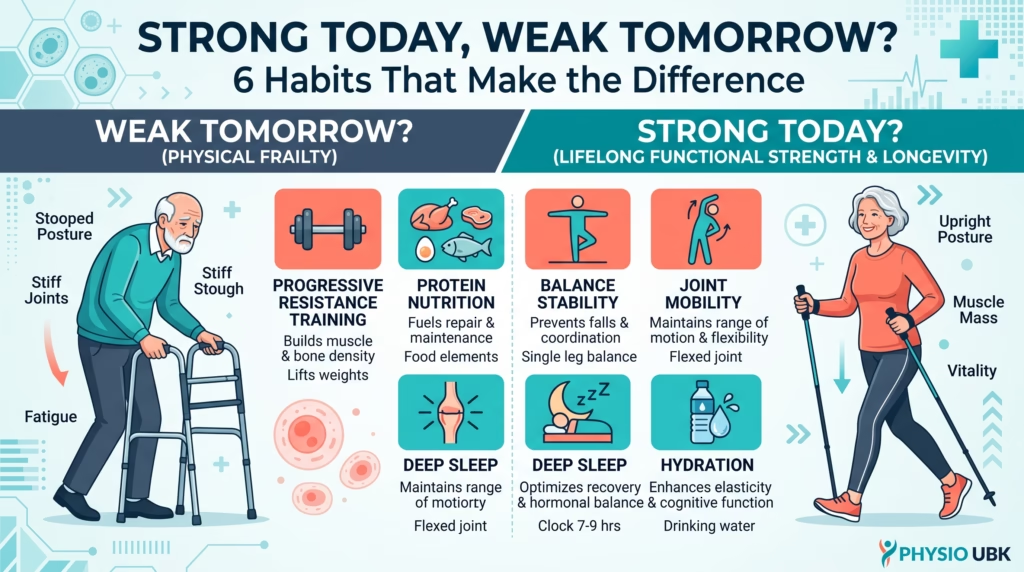
The choices you make today dictate your functional freedom tomorrow. Here are 6 science-backed habits that make the difference between lasting physical strength and progressive physical decline.
The Biological Trajectory: Why Strength Fades
To understand how daily habits preserve our physical resilience, we must look at how the musculoskeletal system changes over time.
Strength is not solely about muscle size; it is a complex collaboration between three primary systems:
- The Muscular System (Contractile Tissue): Muscle fibers, particularly fast-twitch Type II fibers responsible for explosive force and rapid stabilization, naturally atrophy when not subjected to challenging resistance.
- The Neuromuscular System (Neural Drive): Your brain’s ability to recruit motor units quickly and coordinate muscle firing patterns degrades without regular neuromuscular practice.
- The Connective Tissue & Skeletal System: Tendons, ligaments, and bones require mechanical loading to stimulate osteoblasts (bone-building cells) and collagen synthesis. Without mechanical tension, bone density drops (osteopenia/osteoporosis) and tendons become brittle.
Frailty is not an inevitable consequence of aging. It is largely the predictable outcome of chronic physical disuse and suboptimal lifestyle habits.
6 Habits That Separate Lifelong Strength from Progressive Weakness
1. Prioritizing Progressive Resistance Over “Just Cardio”
Cardiovascular exercise, like walking, cycling, or swimming, is outstanding for heart health, metabolic regulation, and mitochondrial efficiency. However, cardio alone cannot protect your body from muscle loss, power decline, or bone thinning.
Walking does not place enough mechanical tension on your upper body, spine, or posterior chain to stimulate bone remodeling or prevent sarcopenia. To stay strong tomorrow, you must load your musculoskeletal system against meaningful resistance today.

The Science of Mechanical Tension
When you lift weights or perform challenging bodyweight movements, mechanical tension creates micro-stimuli within muscle fibers. This activates the mTOR signaling pathway, stimulating Muscle Protein Synthesis (MPS) and prompting bones to pull in calcium, increasing mineral density.
How to Build the Habit:
- Train 2 to 3 Days Per Week: Dedicate at least two to three non-consecutive days to full-body progressive resistance training.
- Focus on the 5 Foundational Movement Patterns:
- Squat: Goblet squats, box squats, or leg presses (quadriceps and glute strength).
- Hinge: Romanian deadlifts or kettlebell swings (hamstrings, glutes, and lower back durability).
- Push: Push-ups, dumbbell bench presses, or overhead presses (chest, shoulders, and triceps).
- Pull: Cable rows, lat pulldowns, or dumbbell rows (upper back, rhomboids, and biceps).
- Carry: Farmer walks or suitcase carries (grip strength, core stability, and balance).
- Apply Progressive Overload: Gradually increase weight, repetitions, or movement control over time.
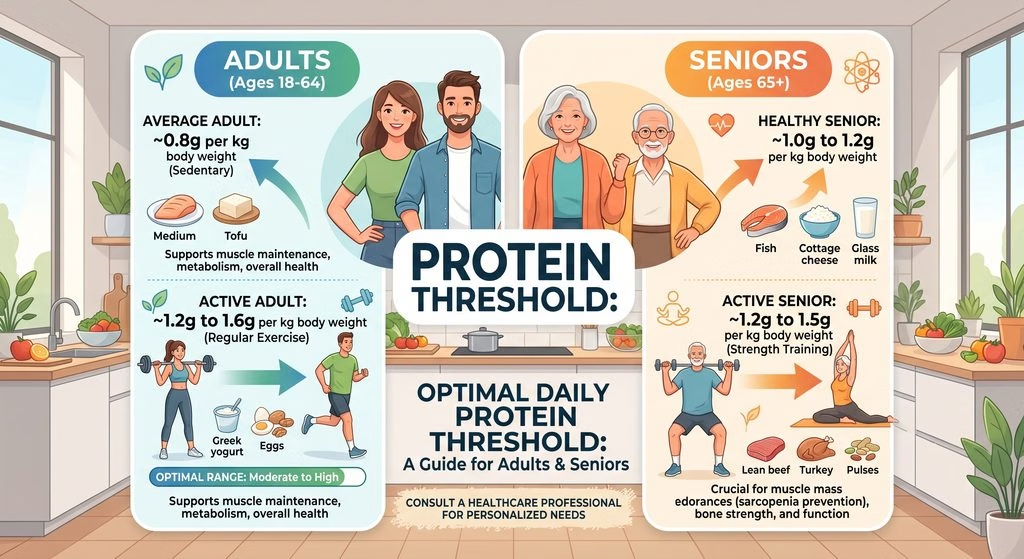
2. Hitting an Optimal Daily Protein Threshold
Resistance training creates the stimulus for muscle preservation, but dietary protein provides the biological bricks and mortar.
Many adults unknowingly fall into a state of chronic subclinical protein malnutrition. As we age, our bodies develop anabolic resistance, meaning aging muscle tissue requires higher concentrations of essential amino acids (particularly leucine) to trigger the same Muscle Protein Synthesis response that a younger body achieves with ease.
The Cost of Inadequate Protein
When your daily protein intake is low, your body breaks down existing skeletal muscle tissue to harvest amino acids for vital organ functions, enzyme creation, and immune defense. Over months and years, this accelerates muscle wasting and weakens connective tissues.
–How to Build the Habit:
- Anchor Every Meal with Protein: Ensure each meal contains 25 to 40 grams of complete protein (such as eggs, poultry, fish, Greek yogurt, lean meat, tofu, or high-quality protein isolate).
- Front-Load Your Day: Avoid the common trap of eating a low-protein breakfast (like plain toast or tea). Aim for 30 grams of protein in your morning meal to jump-start MPS early.
- Supplement Smartly: If your appetite is low or whole foods feel heavy, utilize a clean whey or plant-based protein shake between meals.
3. Training Functional Balance and Single-Leg Stability
Strength is useless if you cannot stabilize it. In clinical rehabilitation, falls are one of the single greatest threats to long-term physical independence. Every year, millions of older adults suffer fall-related hip fractures, often leading to a rapid decline in mobility.
Falls do not happen because someone suddenly forgets how to walk; they happen because of:
- Loss of ankle mobility and foot intrinsic muscle strength.
- Asymmetric strength between the left and right legs.
- Degraded proprioception (your brain’s ability to sense your body’s position in space).
If you only ever train with both feet planted symmetrically on the floor (such as standard seated machines), you miss the stabilizer muscles responsible for catching you when you trip.
How to Build the Habit:
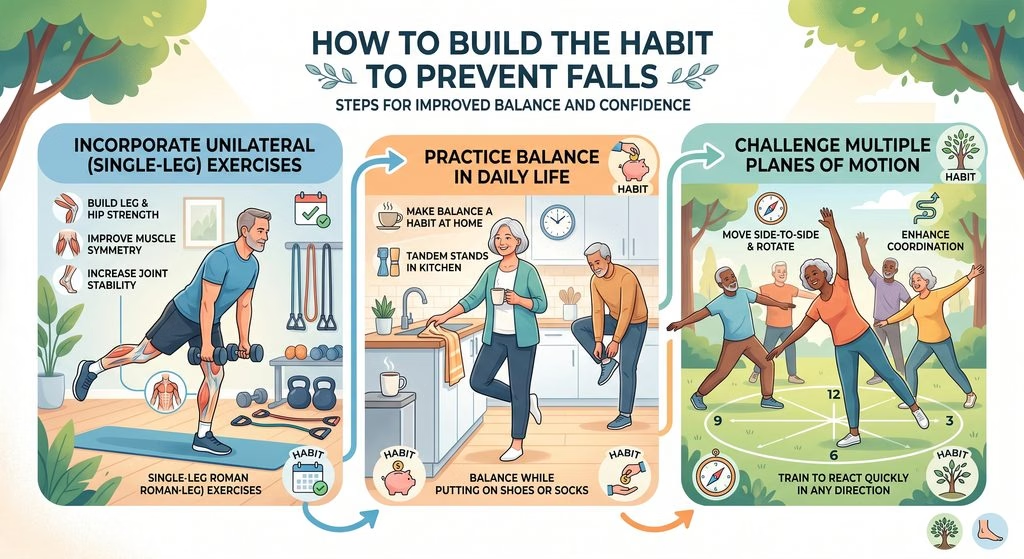
- Incorporate Unilateral (Single-Leg) Exercises: Add split squats, Bulgarian split squats, reverse lunges, and single-leg Romanian deadlifts into your weekly workouts.
- Practice Balance in Daily Life: Stand on one leg for 30 to 60 seconds while brushing your teeth, waiting in line, or preparing food.
- Challenge Multiple Planes of Motion: Incorporate side lunges (lateral plane) and rotational torso movements to build multi-directional stability.
4. Moving Joints Through Their Full Range Daily (Mobility Hygiene)
There is a major difference between flexibility (passive range of motion) and mobility (active, usable strength through a full range of motion).
When you spend your day in confined postures, such as sitting in a chair with your hips and knees fixed at 90 degrees, your joint capsules tighten, cartilage loses hydration, and the nervous system “deletes” neural access to ranges of motion you never use. Over time, you lose the ability to raise your arms overhead, deep squat, or rotate your thoracic spine without compensating through your lower back.
The Synovial Fluid Pump
Cartilage has no direct blood supply. It relies on full-range joint movement to circulate synovial fluid, which delivers nutrients, lubricates joint surfaces, and clears metabolic waste. Moving your joints through full ranges daily is literally joint lubrication.
How to Build the Habit:
- Adopt a 5-Minute Morning Mobility Routine:
- Cat-Cow Stretch: 10 controlled repetitions to articulate every spinal segment.
- Deep Bodyweight Squat Hold: 30 to 60 seconds at the bottom of a squat to open hips and ankles.
- Thoracic Rotations (Thread the Needle): 8 repetitions per side to free up the mid-back.
- Arm Circles & Wall Angels: To maintain shoulder girdle mechanics.
- Avoid Partial Repetitions in the Gym: When lifting weights, use the full, controlled range of motion that your joints safely allow, rather than loading heavy weights through short, jerky movements.
5. Prioritizing Deep Sleep and Nervous System Recovery
Many people believe that strength is built in the gym. In reality, exercise is a catabolic process, it breaks down muscle fibers and taxes your central nervous system. True strength, repair, and tissue remodeling occur during deep, restorative sleep.
During slow-wave (deep) sleep, your pituitary gland releases the majority of your daily Human Growth Hormone (HGH), which accelerates tissue repair, collagen synthesis, and cellular restoration.

The Damage of Chronic Sleep Deprivation
When you regularly sleep less than 7 hours per night:
- Circulating cortisol levels rise, promoting muscle catabolism (breakdown) and systemic inflammation.
- Reaction time and neuromuscular coordination drop, increasing injury risk during physical tasks.
- Insulin sensitivity declines, hindering your muscles’ ability to take up glucose and glycogen for fuel.
How to Build the Habit:
- Aim for 7 to 9 Hours of Sleep Nightly: Treat sleep as a non-negotiable athletic recovery tool.
- Create a Dark, Cool Sleep Environment: Keep your bedroom cool (around 65°F to 68°F / 18°C to 20°C) and completely dark to promote melatonin release.
- Implement a Digital Sunset: Turn off screens or use blue-light blockers 60 minutes before bed to allow your nervous system to down-regulate from sympathetic overdrive.
6. Staying Consistently Hydrated for Muscular Elasticity
Water is often forgotten in discussions about physical strength, yet skeletal muscle tissue is roughly 75% water.
Even mild subclinical dehydration (a 2% to 3% drop in body water) produces measurable declines in muscular endurance, peak power output, and cognitive processing speed. Furthermore, dehydrated fascia and tendons lose their elasticity, behaving more like dry, brittle rubber bands rather than supple, shock-absorbing springs. This dramatically elevates the risk of muscle strains, tendon tears, and joint irritation.
How to Build the Habit:
- Drink Water First Thing in the Morning: Rehydrate immediately upon waking with 500 mL of water to compensate for overnight fluid loss.
- Monitor Urine Color: Aim for a pale straw color throughout the day; dark amber indicates dehydration.
- Replenish Electrolytes: If you exercise intensely, sweat heavily, or work outdoors in hot weather, replenish sodium, potassium, and magnesium alongside plain water to maintain proper cellular fluid balance.
Comparing the Two Paths: Habit Breakdown
The table below illustrates how everyday habits compound over 10, 20, and 30 years to determine your physical capacity:
| Daily Factor | The “Weak Tomorrow” Path | The “Strong Tomorrow” Path |
| Exercise Mode | Inactivity or cardio only | 2–3x weekly resistance training + cardio |
| Protein Intake | Low, sporadic (<0.8 g/kg/day) | 1.2–1.6 g/kg/day distributed across meals |
| Balance Work | Avoided; only bilateral seated tasks | Single-leg exercises, active stability drills |
| Joint Mobility | Sedentary, confined ranges of motion | Daily full-range mobility hygiene |
| Sleep Quality | 5–6 hours, irregular schedule | 7–9 hours of deep, structured recovery |
| Hydration | Minimal water; high sugary drinks/caffeine | Consistent water and electrolyte balance |
| Long-Term Outcome | Sarcopenia, joint stiffness, high fall risk | Durability, joint integrity, lifelong independence |
Final Thoughts
Strength is not a genetic gift reserved for a lucky few; it is a biological adaptation that responds directly to how you treat your body every day.
You do not need to spend hours in the gym or drastically overhaul your entire life overnight. Start by committing to two strength sessions a week, adding a serving of protein to your breakfast, and taking 5 minutes to move your joints through their full range each morning.
The habits you practice today are building the body you will live in tomorrow. Choose strength, choose consistency, and invest in your functional longevity.
Expert Consultation
If you want to build a sustainable, science-backed strength and mobility routine, or if pre-existing joint pain, back stiffness, or postural limitations are holding you back, consulting a physical therapist is the most effective way to safeguard your physical future. At Tariq Medicare in Khanewal, Dr. M. Usman Barkat and the PhysioUBK clinical team provide comprehensive physical therapy evaluations, biomechanical assessments, and personalized strength rehabilitation programs. Whether you need to overcome chronic pain, improve your balance, or protect your functional independence for decades to come, visit us at Tariq Medicare or connect with us online at physioubk.com to schedule your consultation today.
Frequently Asked Questions
At what age do we start losing muscle mass naturally?
Natural age-related muscle loss (sarcopenia) typically begins in your early 30s at a rate of 3% to 8% per decade, with the rate of decline accelerating significantly after age 60 if progressive resistance training is not maintained.
Is walking enough to prevent age-related muscle weakness?
While walking is excellent for cardiovascular and metabolic health, it does not create enough mechanical tension to preserve upper body strength, spinal bone density, or fast-twitch muscle fibers. Combining walking with 2 to 3 days of progressive resistance training is necessary for full-body strength.
How much daily protein is needed to protect muscle health?
For optimal muscle preservation and healthy aging, aim for 1.2 to 1.6 grams of high-quality protein per kilogram of body weight daily (approx. 0.55 to 0.73 g/lb), distributed across 3 to 4 meals containing 25 to 40 grams of protein each.
Why is single-leg balance important for long-term mobility?
Single-leg balance trains ankle proprioception, core stabilizers, and lateral hip strength. This neuromuscular coordination is what prevents trips from turning into serious falls and hip fractures as you age.
How does deep sleep affect physical strength and recovery?
During slow-wave deep sleep, your body secretes human growth hormone (HGH) to repair damaged muscle fibers and build collagen in tendons. Chronic poor sleep elevates cortisol, which accelerates muscle tissue breakdown and impairs motor coordination.

Is Your Office Chair Causing Your Back Pain?
It’s 5 PM. You’ve been at your desk since 9, and your lower back is…

5 Morning Stretches for a Stiff Back: A 10-Minute Routine
You swing your legs out of bed, stand up — and your back feels like…
What is a Functional Capacity Evaluation (FCE) in Physical Therapy?
CLINICAL GUIDE & ASSESSMENT PROTOCOL An exhaustive, clinician-reviewed guide explaining the protocols, physical tolerance metrics,…
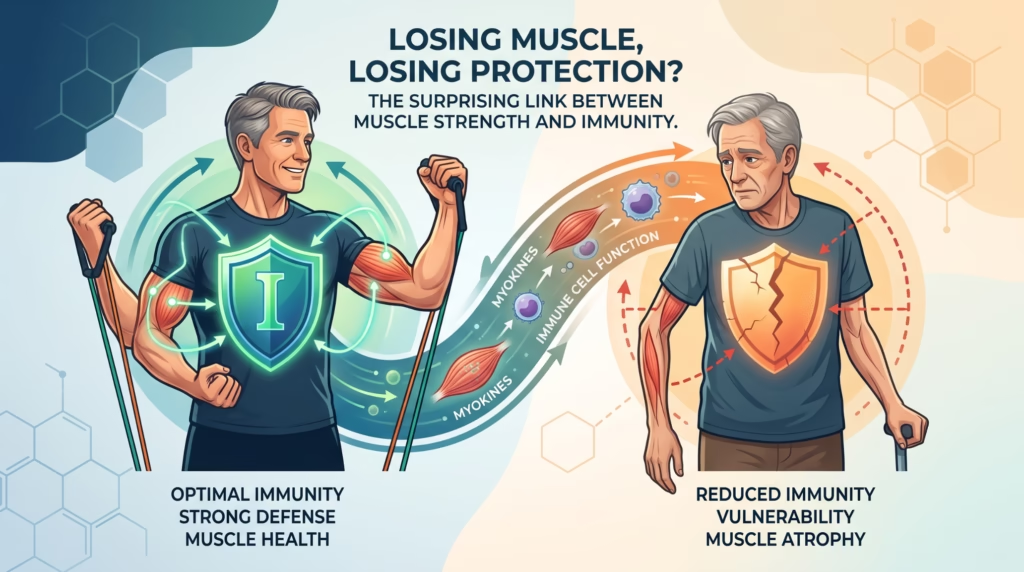
Losing Muscle, Losing Protection? The Surprising Link Between Muscle Strength and Immunity
When most people think of the immune system, they picture white blood cells, lymph nodes,…

Sleep Better, Think Better: Can a 20-Minute Workout Undo a Sleepless Night?
Waking up after a sleepless night of tossing and turning feels like trying to operate…
Strong Today, Weak Tomorrow? 6 Habits That Make the Difference
Physical strength often feels permanent when we have it. When you can effortlessly carry heavy…