
It’s 5 PM. You’ve been at your desk since 9, and your lower back is aching exactly the way it ached yesterday at 5 PM — and the day before that. The pain eases on weekends. It eases on holidays. Coincidence? Almost certainly not.
As a physiotherapist, I see this pattern constantly: back pain that follows the workday like a shadow. Let’s talk honestly about what your chair is doing to your back — and what actually fixes it.
The honest answer: it’s not just the chair
Here’s what most “ergonomic” articles won’t tell you: there is no perfect chair, and no perfect sitting posture. Research consistently shows that the problem isn’t sitting itself — it’s uninterrupted, static sitting.
Your spine is designed for movement. When you hold one position for hours, the discs in your lower back bear sustained pressure, your glutes and deep core muscles switch off, and your hip flexors shorten. That combination — not the chair alone — is what generates the 5 PM ache.
So the goal isn’t finding a magical chair. It’s building a setup and a routine that keeps you moving.
Signs your desk setup is the problem
- Pain builds steadily through the workday and peaks in the evening
- Weekends and holidays are noticeably better
- Standing up and walking around eases it within minutes
- Your pain is dull and achy rather than sharp or shooting
- You’ve changed nothing else — no injury, no new activity
If that checklist sounds like you, your workstation is at least a major contributor. Good news: it’s one of the most fixable causes of back pain there is.
The ideal sitting setup: a 7-point checklist
You don’t need expensive gear — you need correct geometry. Run through this once:
- Chair height: feet flat on the floor, knees at roughly 90 degrees (or slightly lower than hips).
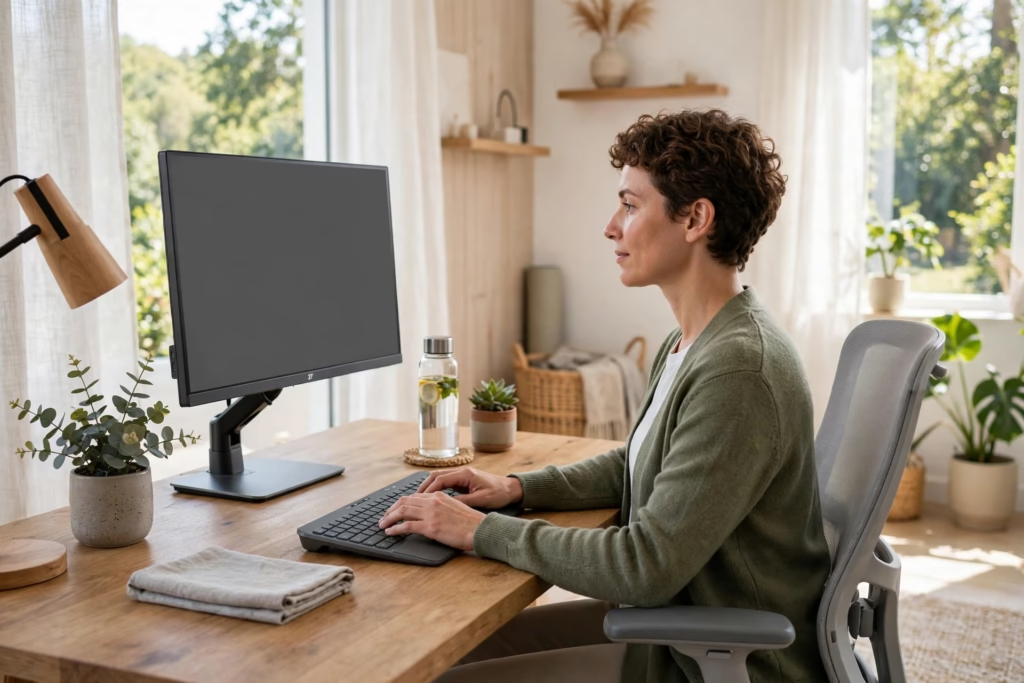
- Lumbar support: your lower back should touch the chair’s backrest. If there’s a gap, roll up a towel and place it at your belt line — this preserves your spine’s natural curve.
- Screen height: the top of your monitor at or just below eye level, about an arm’s length away. No craning down.
- Keyboard position: elbows at ~90 degrees, wrists straight, shoulders relaxed — not hunched.
- Mouse: close to your body, at the same level as the keyboard. Reaching forward all day strains the shoulder and neck.
- Phone: if you’re on calls constantly, use a headset or speaker. Cradling a phone between ear and shoulder is a neck-pain factory.
- Feet: flat on the floor (or a footrest). Dangling feet or crossed legs for hours twists the pelvis.
5 desk habits that protect your back
Setup is half the battle. These five habits are the other half:
- The 30-minute microbreak. Stand, walk, or simply change position every 30–45 minutes. Set a phone reminder — this single habit outperforms most ergonomic purchases.
- Walk on your breaks. A 5-minute walk every hour does more for your spine than any chair. Blood flow is the spine’s nutrition delivery system.
- Desk stretches. Every couple of hours: shoulder rolls (10x), chin tucks (10x), seated spinal twist (hold 20 seconds each side), and standing back extensions (5x). Takes two minutes.
- Use a lumbar roll. A rolled towel at your lower back costs nothing and maintains your lumbar curve through long sitting sessions.
- Alternate sitting and standing. If you have access to a raised surface, stand for calls or reading. Even 15 minutes per hour of standing breaks the static cycle.

What about standing desks?
Standing desks help — but they’re not magic either. Standing still all day creates its own problems (foot, knee, and lower-back complaints are common among all-day standers).
The evidence favors alternation: sit for a while, stand for a while, walk regularly. If you’re buying one, get a sit-stand desk, not a standing-only setup. And if a full desk isn’t in the budget, a kitchen counter or shelf for calls achieves most of the benefit for free.
Do you need an expensive ergonomic chair?
Honest answer: probably not. A mid-range chair with adjustable height and decent lumbar support is enough for most people. Beyond that, returns diminish fast — a Rs. 80,000 chair won’t save you if you sit motionless for 9 hours.
Movement beats furniture, every time. Spend the money on the habit (reminders, walking breaks), not the hardware.
When desk-related back pain needs a physiotherapist
Fix the setup, build the habits, give it two weeks. If the 5 PM ache persists — or if any of these show up — come see me:
- Pain that radiates into your buttock or leg (take our free Sciatica & Disc Risk Screener first)
- Numbness, tingling, or weakness
- Pain that doesn’t ease with movement and rest
- Morning stiffness lasting over an hour
Desk-driven back pain responds very well to treatment — usually a mix of manual therapy, postural retraining, and a home exercise plan. Read about back pain treatment in Khanewal, explore our posture correction & tech neck program, or book a consultation directly.
Frequently asked questions
What is the best sitting position for back pain?
Feet flat, knees at 90 degrees, lower back supported (towel roll works), screen at eye level. But more important than any single position: change positions every 30–45 minutes.
Are standing desks better for back pain?
They help when used in alternation with sitting. Standing all day causes its own problems. The best pattern is sit–stand–walk rotation through the day.
How often should I take breaks from sitting?
Every 30–45 minutes, stand or walk for at least a few minutes. A 5-minute walk every hour is an excellent baseline.
Can a bad office chair cause sciatica?
A bad setup alone rarely causes true sciatica, but prolonged sitting with poor lumbar support can aggravate an existing disc issue and produce sciatica-like leg symptoms. If pain radiates below the knee, get assessed.
What office chair should I buy for back pain in Pakistan?
Look for adjustable seat height, adjustable lumbar support, and a backrest that reaches your mid-back. You don’t need the most expensive model — correct setup and regular movement matter far more than the chair’s price tag.
Call or WhatsApp: +92 308 9333364 — Book your back assessment at Tariq Medicare Hospital, Khanewal.
Dr. Usman Barkat PT — Consultant Physiotherapist & Managing Director, Tariq Medicare Hospital, Khanewal. DPT, MS Physical Therapy, 8+ years of clinical experience.
Disclaimer: This article is for information only and isn’t a substitute for professional diagnosis. If you have radiating pain, numbness, or weakness, seek professional assessment promptly.