

Sports Rehabilitation and Sports Chemistry: The Molecular Blueprint of Athletic Recovery and Performance
The traditional approach to sports rehabilitation has long focused on the macro-level: treating joint restrictions, building muscle bulk, and applying structural support tape. However, in modern elite sports medicine, recovery is being completely rewritten from the inside out. For a clinical practitioner, an athlete’s body is a highly sophisticated, reactive chemical factory. True physical rehabilitation does not occur merely through manual therapy or set rep schemes; it happens at the cellular level, governed by the precise laws of sports chemistry and tissue bioenergetics. When an elite athlete suffers a soft-tissue injury or faces extreme training fatigue, their cellular systems undergo massive biochemical shifts.
By treating targeted physical exercise and recovery modalities as direct molecular therapies, clinical practitioners can manipulate these biological pathways. This clinical approach changes the paradigm from basic injury management to advanced athletic longevity. This comprehensive guide explores the intersection of biomechanical rehabilitation, tissue biochemistry, and longevity science to outline how understanding the molecular blueprint optimizes athletic recovery and performance.
1. The Bioenergetics of Athletic Performance and Muscle Fatigue
Every explosive sprint, sudden change of direction, and sustained endurance effort relies on a tightly orchestrated cascade of metabolic energy systems. To effectively guide an athlete’s physical rehabilitation, a clinician must first understand the microscopic energy demands placed on skeletal muscle tissue during maximum exertion. Skeletal muscles utilize stored adenosine triphosphate (ATP) as their primary currency for physical contraction, but these internal stores are highly limited.
During short, explosive bursts of maximal effort—such as a 100-meter sprint or a heavy Olympic lift—the body relies entirely on the anaerobic phosphagen system. This pathway utilizes phosphocreatine (PCr) to rapidly resynthesize ATP inside the sarcoplasm without requiring oxygen. Because PCr stores deplete within 10 seconds, low-intensity recovery windows are biochemically required to allow these phosphagen levels to resynthesize before the next explosive burst.
When physical exertion continues past this initial threshold, the metabolic demand shifts heavily to anaerobic glycolysis. This system breaks down stored muscle glycogen into glucose to generate ATP rapidly. A primary byproduct of this fast, oxygen-independent glycogen breakdown is the accumulation of pyruvate, which converts into lactate when local oxygen delivery cannot keep pace with the workload.
Continuous High-Intensity Exertion ──► Anaerobic Glycolysis ──► Pyruvate Accumulation ──► Hydrogen Ion (H+) Spike ──► Drop in Intracellular pH (Acidosis)
Along with lactate, a massive surge of hydrogen ions (H+) floods the working muscle tissue, causing an immediate drop in intracellular pH. This localized metabolic acidosis disrupts key enzymatic functions and interferes with calcium binding during muscle contractions. This chemical shift is the primary driver behind the sudden drop in muscular power and the “heavy legs” feeling experienced by athletes late in a match or intense training session.
Conversely, sustainable endurance performance is powered by aerobic respiration inside the mitochondria. This oxygen-dependent pathway breaks down carbohydrates and fatty acids to produce vast quantities of sustainable energy. A highly developed aerobic engine acts as a vital clearing mechanism during rehabilitation. It accelerates the clearance of accumulated metabolic waste, neutralizes hydrogen ions, and restores the intramuscular environment back to homeostatic baseline levels during active recovery periods.
2. The Biochemistry of Soft-Tissue Injury and Healing Phases
When an athlete experiences an acute soft-tissue injury, such as a hamstring tear or an ankle sprain, the structural mechanical breakdown triggers an immediate, highly coordinated three-phase biochemical healing cascade. An expert rehabilitation protocol must match these phases precisely, adapting physical stress to align with the underlying cellular environment.
[Phase 1: Acute Inflammatory] ──► Neutrophils & M1 Macrophages ──► Clear Cellular Debris & Structural Damaged Tissue
│
▼
[Phase 2: Proliferative Repair] ──► M2 Macrophages & Fibroblasts ──► Synthesize Weak Type III Collagen Matrix
│
▼
[Phase 3: Maturation Remodeling] ──► Controlled Mechanical Loading ──► Remodels Matrix into Strong Type I Collagen
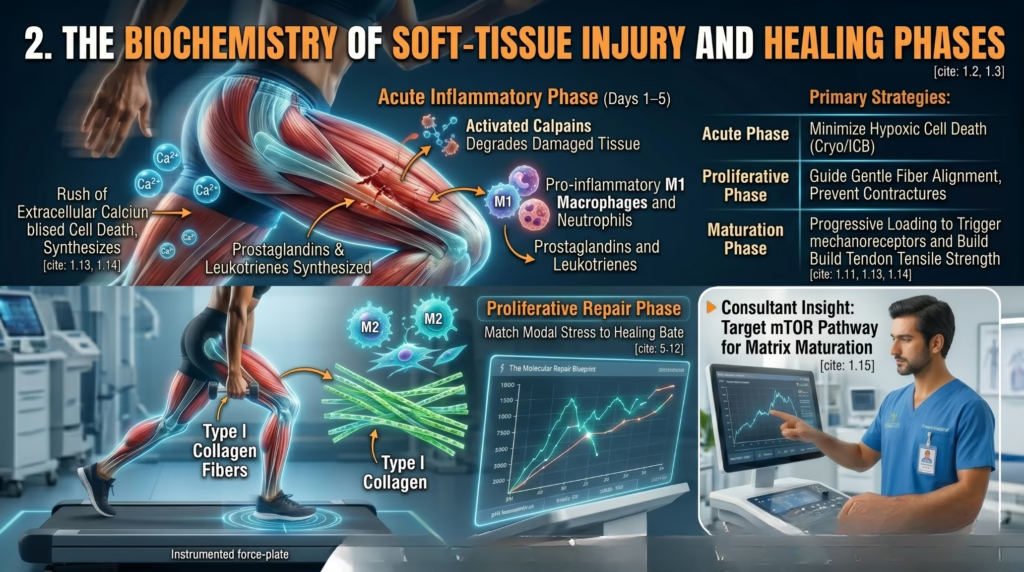
The Inflammatory Phase (Days 1–5)
The initial phase begins the moment mechanical trauma disrupts the cell membrane and surrounding capillary networks. This structural disruption allows extracellular calcium ions (Ca^{2+}) to flood uncontrollably into the damaged muscle cells. High internal calcium levels activate proteolytic enzymes called calpains, which actively degrade damaged structural proteins.
Simultaneously, the injured tissue releases pro-inflammatory chemical mediators, including histamines, prostaglandins, and leukotrienes. These signaling molecules increase local capillary permeability, allowing neutrophils and pro-inflammatory M1 macrophages to swarm the injury site. These immune cells perform phagocytosis, clearing out dead cellular debris and prepping the area for structural rebuilding. While excessive swelling must be managed to protect joint mechanics, completely suppressing this acute inflammatory cascade with high-dose NSAIDs can impair long-term tissue quality.
The Proliferative Phase (Days 5–21)
Once the cellular debris is cleared, the local environment transitions into the proliferative phase. Here, specialized immune cells transform into anti-inflammatory M2 macrophages. These regenerative cells secrete vital growth factors, including Transforming Growth Factor-beta (TGF-beta) and Vascular Endothelial Growth Factor (VEGF), which trigger angiogenesis—the formation of new capillary networks to restore oxygen delivery.
Concurrently, local fibroblasts migrate to the injury site and begin rapidly synthesizing a temporary extracellular matrix. This scaffolding is primarily composed of Type III collagen, which is structurally weak and disorganized. During this phase, rehabilitation must avoid aggressive mechanical forces while introducing gentle, pain-free mobility to guide initial fiber alignment without risking a re-tear.
The Maturation and Remodeling Phase (Day 21 onwards)
The final, longest phase of sports rehabilitation is the maturation and remodeling phase. Over weeks and months, the temporary Type III collagen matrix is systematically replaced by Type I collagen, which features high tensile strength and structural rigidity.
This critical biochemical transition relies entirely on the application of controlled mechanical loading. Progressive loading stimulates mechanoreceptors within the fibroblasts, turning on genetic pathways that cross-link the new collagen fibers along the primary lines of physical stress. Without structured, progressive resistance training, the healing scar tissue will remain weak and disorganized, drastically increasing the statistical risk of chronic re-injury.
3. Managing Overtraining, Tissue Stress, and Myokine Signaling
Overtraining syndrome (OTS) represents a systemic breakdown that occurs when an athlete’s cumulative exercise-induced muscle damage (EIMD) consistently outpaces their body’s natural cellular repair capacity. When training volume and intensity are chronically mismanaged, the localized microtrauma inside individual sarcomeres spills over into a chronic, low-grade systemic inflammatory state.
Chronic Excessive Training Volume ──► Unresolved Microtrauma ──► Chronic NF-κB Activation ──► Persistent Systemic Inflammaging
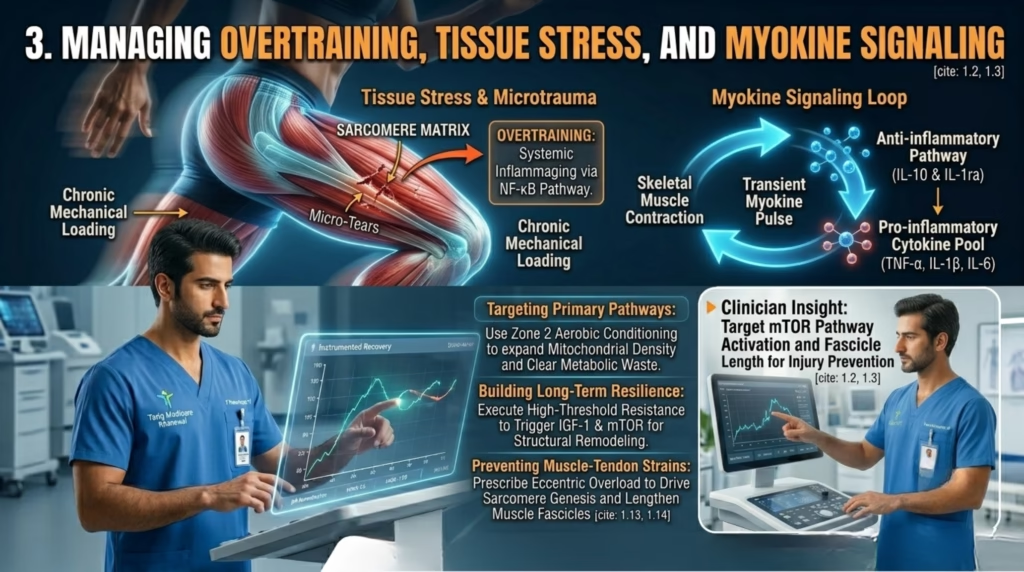
At the core of this chronic inflammatory state is the persistent activation of the nuclear factor kappa B (NF-kappa B) signaling pathway. NF-kappa B acts as a master genetic switch that turns on the transcription of pro-inflammatory cytokines, including tumor necrosis factor-alpha (TNF-alpha), interleukin-1 beta (IL-1beta), and chronic baseline interleukin-6 (IL-6). High baseline levels of these circulating cytokines create a toxic systemic environment that actively blocks normal muscle protein synthesis, degrades the extracellular matrix, and exhausts the central nervous system.
Conversely, regular, properly structured muscular contractions act as a potent anti-inflammatory therapy through a unique mechanism known as myokine signaling. Myokines are specialized signaling peptides synthesized and released directly by muscle fibers into the bloodstream in response to mechanical loading.
During structured exercise, contracting muscles release a brief, powerful pulse of intramuscular IL-6. While chronic baseline elevations of IL-6 are harmful, this transient, exercise-induced myokine pulse exerts a profoundly anti-inflammatory effect. It triggers the rapid upregulation of potent anti-inflammatory cytokines, specifically interleukin-10 (IL-10) and interleukin-1 receptor antagonist (IL-1ra), which work together to actively suppress systemic inflammation and accelerate cellular tissue repair.
4. Advanced Elite Recovery Modalities and Mechanical Loading Dynamics
To compress recovery timelines and ensure complete structural remodeling, elite sports rehabilitation utilizes advanced modalities designed to manipulate local tissue chemistry and cellular signaling.
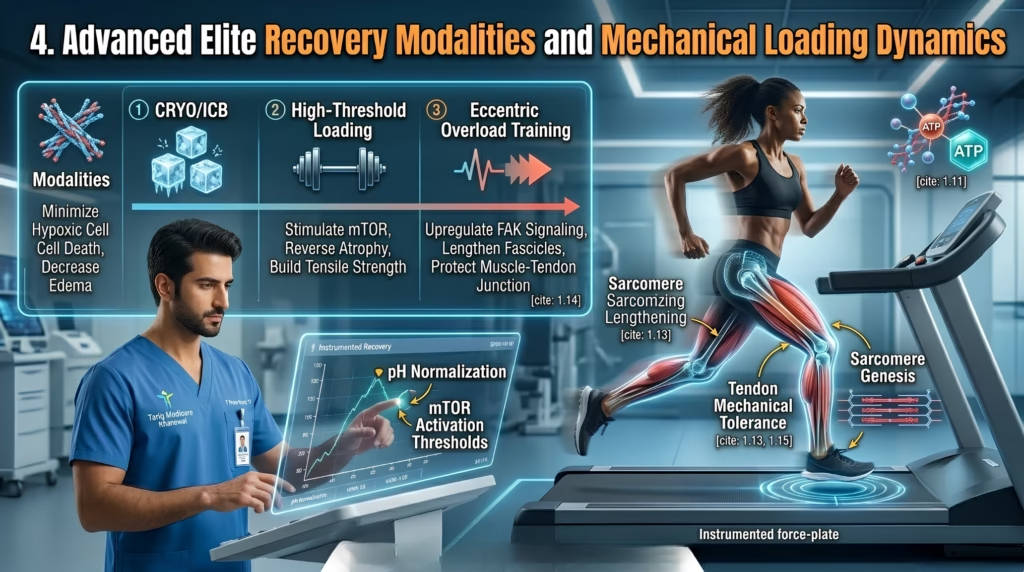
| Recovery Modality | Core Biomechanical/Chemical Target | Downstream Molecular Mechanism | Target Clinical Outcome |
| Cryotherapy / Ice Baths | Local Tissue Temperature; Capillary Vasoconstriction. | Minimizes secondary hypoxic cell death; reduces excessive edema. | Blunts acute swelling; protects surrounding healthy tissue. |
| High-Threshold Resistance | Fast-Twitch Type II Muscle Fibers; Mechanoreceptors. | Activates the intracellular mTOR pathway; stimulates IGF-1. | Reverses atrophy; builds structural tendon tensile strength. |
| Zone 2 Aerobic Conditioning | Mitochondrial Density; Local Capillary Networks. | Stimulates AMPK signaling and drives mitochondrial biogenesis. | Expands capillary beds; accelerates baseline metabolic waste clearance. |
| Eccentric Overload Training | Structural Sarcomere Matrix; Muscle-Tendon Junction. | Upregulates focal adhesion kinase (FAK) and collagen synthesis. | Lengthens muscle fascicles; reinforces tissue mechanical tolerance. |
Cryotherapy and Inflammation Control
Cold-water immersion immediately following high-intensity training triggers rapid peripheral vasoconstriction, drastically reducing localized blood flow to micro-damaged limbs. This cooling drop lowers the baseline metabolic rate of surrounding cells, protecting healthy adjacent tissue from secondary hypoxic damage caused by localized swelling.
By strategically limiting excessive edema, cryotherapy protects joint mechanoreceptors, reduces immediate pain perception, and allows athletes to initiate pain-free, active physical therapy protocols much sooner in the recovery timeline.
The mTOR Pathway and Progressive Resistance
Building long-term structural resilience requires activating the mammalian target of rapamycin (mTOR) pathway—the primary intracellular master regulator of muscle protein synthesis and structural cell growth. High-threshold resistance training and eccentric overload protocols place intense mechanical tension on the sarcolemma.
This physical tension stimulates localized mechanoreceptors, triggering a robust upregulation of insulin-like growth factor 1 (IGF-1) expression within the working muscle. This mechanical signaling cascade turns on the mTOR pathway, ensuring that muscle protein synthesis comfortably outpaces protein degradation to drive structural hypertrophic remodeling.
5. Precision Sports Rehabilitation Programs
Because every sport features distinct movement demands and injury risks, a generic approach to physical therapy is insufficient to optimize athletic performance. Designing a high-impact, precision rehabilitation program requires a systematic integration of multiple training stimuli tailored to an athlete’s specific cellular and functional presentation.
[Precision Program Design] ──► High-Threshold Loading (Builds Muscle/Tendon Resilience)
──► Zone 2 Aerobic Work (Expands Mitochondrial Clearance)
──► Eccentric Overload Protocols (Protects Against Sprinting Tears)
High-threshold loading is the primary tool used to rebuild structural tendon resilience and combat disuse atrophy during recovery. This modality targets fast-twitch Type II muscle fibers, which are preferentially lost during periods of post-injury immobilization. Prescribing specific loads between 70% and 85% of an athlete’s one-repetition maximum (1RM) provides the precise level of mechanical tension required to reinforce the structural matrix of both muscle fibers and connecting tendons.
Zone 2 aerobic conditioning focuses entirely on building metabolic flexibility and expanding peripheral capillary density. Zone 2 exercise is maintained at an intensity where lactate production perfectly matches lactate clearance, relying primarily on fat oxidation within the mitochondria. This steady-state training expands local capillary beds around recovering muscle fibers, optimizing the delivery of nutrient-rich blood and accelerating the removal of metabolic waste.
Finally, eccentric overload protocols are essential to protect athletes from devastating muscle-tendon strains during high-velocity movements. Eccentric training forces a muscle to lengthen under intense load, a mechanical stimulus that upregulates focal adhesion kinase (FAK) signaling. This process triggers sarcomere genesis—physically adding new sarcomeres in a series to lengthen the muscle fascicles. Lengthening the muscle fascicles increases its overall capacity to absorb high-velocity kinetic energy, protecting the tissue from tearing during sudden deceleration and cutting maneuvers.
6. The Role of Expert Clinical Supervision
- Elite athletes require meticulous biochemical and biomechanical screenings to safely identify hidden kinetic imbalances before returning to competition.
- Chronic tissue injuries like tendinopathies require precise load management to stimulate collagen remodeling without exceeding mechanical thresholds.
- Continuous monitoring of recovery metrics ensures that training volume matches the athlete’s individual cellular repair capacity.
- Extensive clinical experience allows a physical therapist to accurately differentiate between normal training fatigue and pathological tissue strain.
- Specialized rehabilitation plans must adjust exercise dosage dynamically based on the patient’s real-time systemic inflammation and pain levels.
- Managing athletic longevity programs at a structured clinic ensures access to proper diagnostics and professional monitoring.
- Visit physioubk.com to explore more evidence-based guides on sports performance, life chemistry, and advanced physical rehabilitation.
Summary of Molecular Responses to Rehabilitation Modalities
| Hallmark of Recovery | Primary Rehabilitation Stimulus | Downstream Intracellular Mediators | Net Physiological Result |
| Tissue Microtrauma | Controlled Eccentric Loading | Upregulated FAK signaling; sarcomere genesis | Lengthened muscle fascicles and increased mechanical energy absorption. |
| Metabolic Acidosis | Active Aerobic Recovery | Increased local blood flow and cellular oxygenation | Accelerated hydrogen ion clearance and rapid intramuscular pH normalization. |
| Mitochondrial Fatigue | Zone 2 and HIIT Protocols | AMPK activation; PGC-1alpha master regulator | Enhanced mitochondrial biogenesis and optimized cellular ATP synthesis. |
| Tissue Atrophy | High-Threshold Resistance | Localized IGF-1 synthesis; mTOR activation | Accelerated muscle protein synthesis and restored structural tissue density. |
Conclusion: Redefining Recovery Through Sports Chemistry
Sports rehabilitation is a complex biological journey, and its progression can be dramatically optimized by combining precise physical loading with an understanding of sports chemistry. Exercise is a vital molecular therapy that directly alters cellular bioenergetics, drives structural tissue remodeling, and clears systemic inflammatory markers. From accelerating collagen cross-linking during tissue healing to leveraging myokine signaling to combat training fatigue, structured movement preserves the foundational frameworks of athletic performance. By targeting the primary biochemical drivers of tissue degeneration and repair, precision physical therapy redefines what it means to recover completely.
As sports science continues to advance, personalized, evidence-based protocols remain the gold standard for athletic longevity care. Balancing intense physical training with structured, scientifically backed recovery allows every athlete to unlock their body’s true regenerative potential. Dr. Usman Barkat PT and the dedicated clinical team at Tariq Medicare Khanewal are committed to leading this modern transition. Protect your structural health, optimize your athletic performance, and discover your personalized physical longevity strategy by visiting Physioubk.com today.
Book your appointment now and get assessment of your potential.
What is a Functional Capacity Evaluation (FCE) in Physical Therapy?
CLINICAL GUIDE & ASSESSMENT PROTOCOL An exhaustive, clinician-reviewed guide explaining the protocols, physical tolerance metrics,…
Losing Muscle, Losing Protection? The Surprising Link Between Muscle Strength and Immunity
When most people think of the immune system, they picture white blood cells, lymph nodes,…

Sleep Better, Think Better: Can a 20-Minute Workout Undo a Sleepless Night?
Waking up after a sleepless night of tossing and turning feels like trying to operate…
Strong Today, Weak Tomorrow? 6 Habits That Make the Difference
Physical strength often feels permanent when we have it. When you can effortlessly carry heavy…

The 5 Best Deep Core Exercises for Chronic Lower Back Pain
Lower back pain is the leading cause of disability worldwide. Millions of people wake up…

Better Posture, Less Pain: 7 Bad Habits That Are Hurting Your Spine
In our modern world, back and neck pain have become almost universal human experiences. We…