
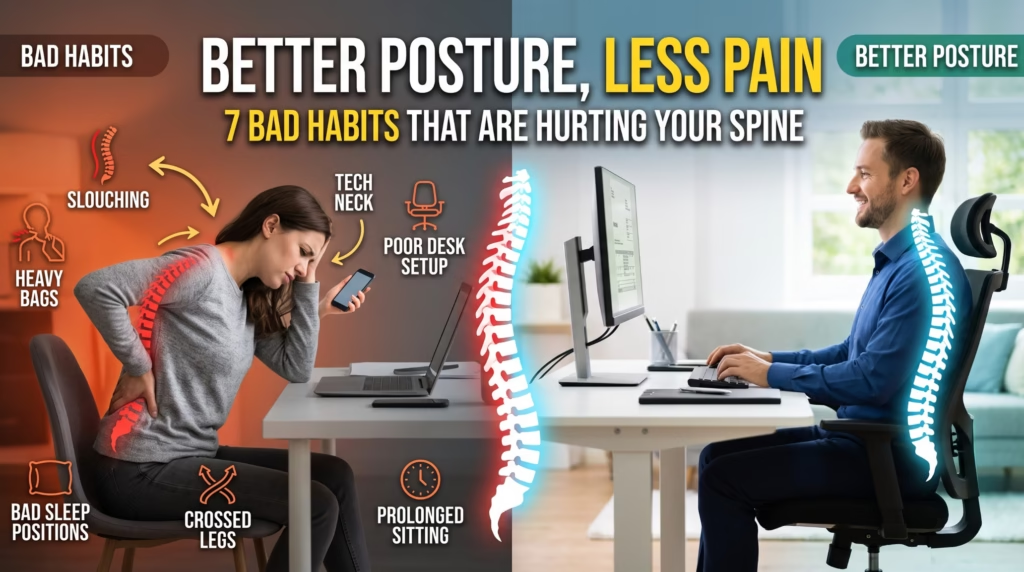
In our modern world, back and neck pain have become almost universal human experiences. We spend hours every day hunched over laptops, slumping into soft couches, peering down at smartphones, and driving through heavy traffic. While we often blame a heavy lifting incident or a sudden awkward movement for our back trouble, the true culprit is usually far more subtle: daily postural habits.
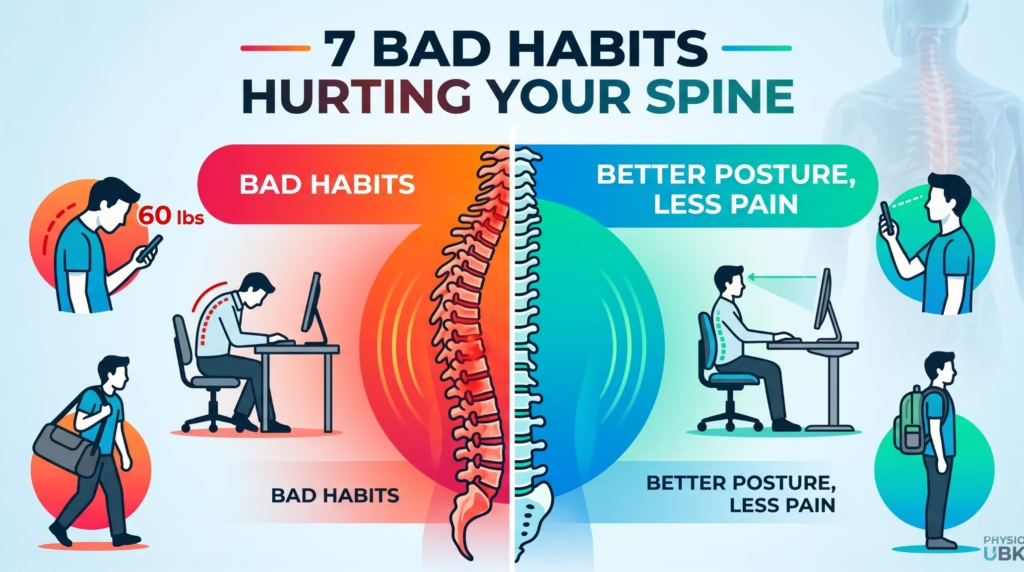
Your spine is an engineering marvel designed to support your body’s weight, absorb physical shocks, and protect your nervous system. However, repetitive stress, prolonged static positions, and poor movement patterns can wear down spinal discs, strain ligaments, and cause chronic muscular imbalances.
The good news is that posture is not fixed, it is a collection of habits. By identifying the subtle daily routines that compromise your spinal alignment, you can eliminate back pain, improve your mobility, and protect your long-term health.
Here are 7 common bad habits that are hurting your spine, along with evidence-based, actionable solutions to fix them.
The Anatomy of Posture: Why Alignment Matters
To understand how daily habits damage your spine, it helps to examine its natural architecture. When viewed from the side, a healthy adult spine is not straight; it features four natural curves that form an “S” shape:
- Cervical Curve: An inward curve at the neck.
- Thoracic Curve: An outward curve at the upper and mid-back.
- Lumbar Curve: An inward curve at the lower back.
- Sacral Curve: An outward curve at the base of the spine.
These natural curves act like a spring, distributing mechanical stress across your muscles, ligaments, and intervertebral discs.
When you maintain proper alignment (often referred to as a neutral spine), your body weight is evenly distributed, minimizing muscular strain. However, when poor habits flatten or exaggerate these curves, your muscles must work twice as hard to keep you upright. Over time, this extra stress leads to muscle fatigue, joint inflammation, disc degeneration, and nerve compression.
7 Bad Habits Hurting Your Spine (and How to Fix Them)
1. “Text Neck”: Looking Down at Your Phone for Extended Hours
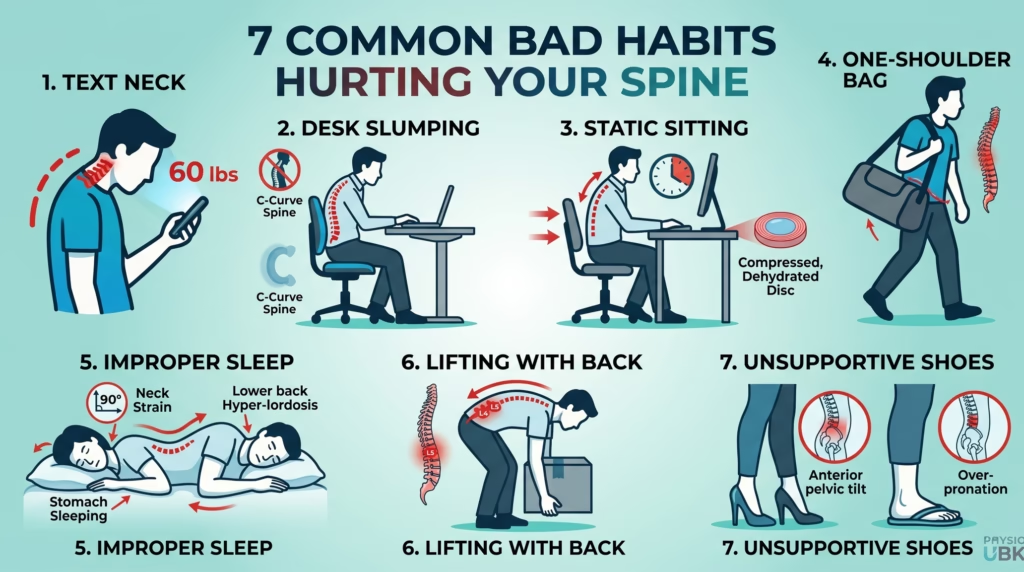
One of the most pervasive modern posture habits is bending your neck forward to scroll through smartphones or tablets. Known in physical therapy as “Text Neck,” this posture places an immense mechanical strain on your cervical spine.
An adult head weighs approximately 10 to 12 pounds in a neutral position. However, as you tilt your head forward, gravitational leverage increases the effective weight on your neck muscles and cervical discs exponentially:
- 15° tilt: ~27 lbs of force
- 30° tilt: ~40 lbs of force
- 45° tilt: ~49 lbs of force
- 60° tilt: ~60 lbs of force
Flexing your neck at a 60-degree angle for hours every day is the physical equivalent of carrying an 8-year-old child on the back of your neck. This constant strain leads to chronic upper back tightness, tension headaches, early neck arthritis, and cervical disc herniations.
How to Fix It:
- Bring the Screen to Eye Level: Raise your phone or tablet up toward eye level using your hands or a phone stand rather than dropping your chin to your chest.
- Tuck Your Chin: Perform “chin tucks” throughout the day, gently pull your head straight back (creating a slight double chin) to align your ears directly over your shoulders.
- Follow the 20-20-20 Rule: Every 20 minutes, look away from your screen at an object 20 feet away for 20 seconds, and roll your shoulders back.
2. Slumping at Your Desk (The “C-Curve” Spine)
For office workers, students, and remote professionals, prolonged sitting is often unavoidable. The problem arises when sitting turns into slumping, a position where your pelvis tilts backward, your lumbar curve flattens out, and your shoulders round forward into a “C” shape.
When you slump:
- Pressure on your lumbar intervertebral discs increases by up to 50% compared to standing.
- Your chest muscles (pectoralis major and minor) become tight and shortened, while your upper back muscles (rhomboids and middle trapezius) become weak and overstretched.
- Your diaphragm becomes compressed, preventing deep, abdominal breathing.
How to Fix It:
- Support Your Lumbar Curve: Place a rolled-up towel or a dedicated lumbar support pillow in the small of your lower back to maintain your natural inward curve.
- Adjust Your Workstation: Set your chair height so your feet rest flat on the floor with your knees at a 90-degree angle. Position your computer monitor so the top third of the screen is at eye level.
- Engage Your Core: Sit forward on your sit bones rather than your tailbone, lightly pulling your belly button toward your spine to support your lower back.
3. Prolonged Static Sitting Without Movement
Even if you maintain “perfect” posture at your desk, remaining completely still for hours at a time is inherently harmful to your spinal health.
Intervertebral discs do not have a direct blood supply. Instead, they rely on a process called fluid imbibition, a pumping action created by movement, to absorb water, oxygen, and essential nutrients while expelling metabolic waste. When you sit motionlessly for long periods, your discs lose fluid, become compressed, and suffer accelerated wear and tear.
Furthermore, static sitting causes your hip flexors (iliopsoas) to shorten and tighten, pulling on your lumbar spine when you stand up and causing lower back pain.
How to Fix It:
- Set “Movement Snacks”: Set a timer to stand up, stretch, or walk for 2 to 3 minutes every 30 to 45 minutes.
- Use a Sit-Stand Desk: Alternate between 30 minutes of sitting and 15–20 minutes of standing throughout your workday.
- Incorporate Micro-Mobility: Perform gentle seated spinal twists, cat-cow stretches, or ankle rolls while at your desk.
4. Carrying Heavy Bags on One Shoulder
Whether it is a heavy computer bag, a purse, or a single-strap gym bag, carrying a load on one side of your body disrupts your body’s lateral balance.
To compensate for a heavy weight on your right shoulder, your nervous system automatically elevates that shoulder and tilts your spine to the left. This asymmetric loading forces the muscles on one side of your spine (specifically the quadratus lumborum and erector spinae) to contract continuously, leading to muscle spasms, pelvic asymmetry, and spinal misalignment.
How to Fix It:
- Switch to an Ergonomic Backpack: Use a two-strap backpack with padded shoulder straps, wearing both straps tightly so the bag sits close to your body near your upper back.
- Lighten Your Load: Audit your bag weekly and clear out unnecessary items. Keep total bag weight below 10% of your body weight.
- Alternate Sides: If you must use a single-strap bag or briefcase, switch shoulders every 10 to 15 minutes to balance muscle activation.
5. Sleeping on an Unsupportive Mattress or Pillow Setup
We spend approximately one-third of our lives sleeping, making sleep posture a critical factor in spinal health. Sleeping in positions that twist or bend your spine out of alignment for 7 to 8 hours straight can lead to severe morning stiffness and chronic pain.
Common sleep posture mistakes include:
- Stomach Sleeping: Forces your neck to turn 90 degrees to one side for hours, stressing cervical joints, while causing your lower back to arch excessively.
- Using Extra High Pillows: Propels your neck into forward flexion, straining upper back muscles.
- An Old, Sagging Mattress: Fails to support your pelvis and shoulders, causing your spine to sag like a hammock.
How to Fix It:
- Side Sleepers: Use a pillow that keeps your head level with your spine, and place a firm pillow between your knees to keep your hips and lower back aligned.
- Back Sleepers: Place a small pillow under your knees to relax your hip flexors and relieve pressure on your lower back.
- Replace Aging Mattresses: If your mattress is more than 8 to 10 years old or leaves visible body impressions, upgrade to a medium-firm mattress that supports natural alignment.
6. Lifting with Your Back Instead of Your Legs
From lifting heavy grocery bags and gym weights to picking up toddlers or moving furniture, bending at the waist with rounded lower back is one of the fastest ways to cause an acute spinal injury.
When you bend forward at your waist with a rounded lower back (flexed lumbar spine), the spinal ligaments and outer layers of your intervertebral discs (annulus fibrosus) must support the weight. If you lift a heavy object in this position, the pressure inside your discs spikes dramatically, pushing the soft inner gel (nucleus pulposus) backward, a primary trigger for disc bulges and herniations.
How to Fix It:
- Master the Hip Hinge: Push your hips back and bend your knees, keeping your chest up and lower back in its natural arch.
- Keep the Load Close: Hold heavy objects as close to your body as possible, preferably near your belly button, to minimize leverage on your lower back.
- Avoid Twisting While Lifting: Turn your entire body using your feet rather than twisting your spine while carrying a heavy load.
7. Wearing Unsupportive Footwear (High Heels & Flat Shoes)
Your feet serve as the foundation of your entire kinetic chain. What you wear on your feet directly dictates the alignment of your ankles, knees, hips, and spine.
Two footwear extremes routinely disrupt spinal mechanics:
- High Heels: Shift your center of gravity forward, forcing your pelvis to tilt forward (anterior pelvic tilt) and increasing the inward curve of your lower back (hyper-lordosis). This compresses the facet joints of your lower spine.
- Completely Flat, Unsupportive Shoes (e.g., cheap flip-flops or worn-out flats): Provide zero arch support, causing your feet to roll inward (over-pronation). This rotation travels up your legs, tilting your pelvis and causing functional lower back pain.
How to Fix It:
- Choose Supportive Daily Footwear: Look for shoes with adequate arch support, cushioned midsoles, and a firm heel counter.
- Limit High Heel Duration: Save high heels or unsupportive footwear for short events, and wear cushioned walking shoes during commutes.
- Use Orthotic Inserts: If you have flat feet or high arches, custom or over-the-counter orthotic inserts can help stabilize your gait and align your spine.
Simple Daily Exercises to Reset Your Posture
Incorporating 5 minutes of targeted movement into your daily routine can reverse the effects of poor posture:
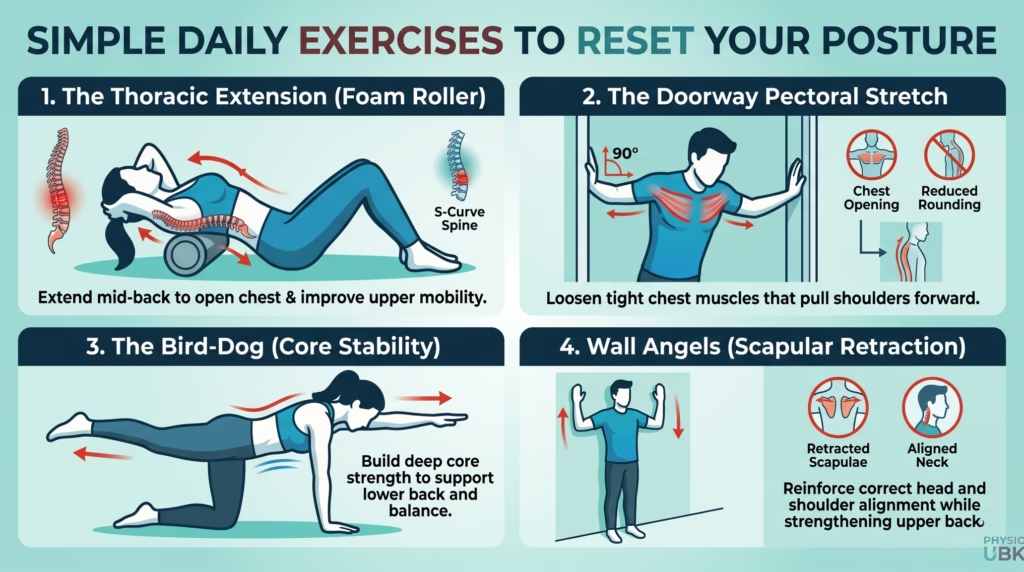
1. The Thoracic Extension (Foam Roller)
Lie on your back with a foam roller placed horizontally under your upper back. Clasp your hands behind your head and gently lean back over the roller to open up your chest and extend your mid-back.
2. The Doorway Pectoral Stretch
Stand in a doorway, place your forearms on the doorframe at a 90-degree angle, and step one foot forward until you feel a gentle stretch across your chest and shoulders. Hold for 30 seconds.
3. The Bird-Dog
Get on your hands and knees. Simultaneously extend your right arm forward and left leg backward until they are parallel to the floor, engaging your core. Hold for 3 seconds, return to center, and switch sides. Repeat 10 times per side to build deep core stability.
Final Thoughts
Poor posture is rarely the result of a single bad day; it is the cumulative effect of small, unmanaged habits over months and years. By becoming aware of how you sit, stand, move, and sleep, you can take active control of your spinal health.
Start small: pick one bad habit from this list to address this week. Whether it is raising your phone screen, placing a pillow behind your lower back, or taking regular movement breaks, small changes in your daily routine will yield massive dividends for your back health, energy levels, and overall well-being.
Expert Consultation
If you are experiencing persistent back stiffness, neck pain, or posture-related discomfort, consulting a physical therapist is essential for building a safe, structured rehabilitation program. At Tariq Medicare in Khanewal, Dr. M. Usman Barkat and the PhysioUBK clinical team provide expert, individualized physical therapy evaluations tailored to your spine and joint health needs. Whether you are managing chronic lower back pain, recovering from movement restrictions, or seeking a personalized posture correction strategy, visit us at Tariq Medicare or connect with us online at physioubk.com to schedule your consultation today.
What is a Functional Capacity Evaluation (FCE) in Physical Therapy?
CLINICAL GUIDE & ASSESSMENT PROTOCOL An exhaustive, clinician-reviewed guide explaining the protocols, physical tolerance metrics,…

Losing Muscle, Losing Protection? The Surprising Link Between Muscle Strength and Immunity
When most people think of the immune system, they picture white blood cells, lymph nodes,…

Sleep Better, Think Better: Can a 20-Minute Workout Undo a Sleepless Night?
Waking up after a sleepless night of tossing and turning feels like trying to operate…
Strong Today, Weak Tomorrow? 6 Habits That Make the Difference
Physical strength often feels permanent when we have it. When you can effortlessly carry heavy…

The 5 Best Deep Core Exercises for Chronic Lower Back Pain
Lower back pain is the leading cause of disability worldwide. Millions of people wake up…
Better Posture, Less Pain: 7 Bad Habits That Are Hurting Your Spine
In our modern world, back and neck pain have become almost universal human experiences. We…
Poor posture often develops from small everyday habits that we barely notice. From prolonged sitting to looking down at our phones, these habits can gradually place extra stress on the spine. Great reminder that small changes in posture and movement can make a big difference for long-term spine health! 💙
Hey! This is my first visit to your blog! We are a team of volunteers and starting a new project in a community in the
same niche. Your blog provided us useful information to work on. You
have done a marvellous job!
Look at my blog :: Fix It PT