
The Clinical Case for Chair Yoga poses for seniors Fitness
As the human body matures, the musculoskeletal system undergoes predictable, age-related physiological changes. Articular cartilage thins, synovial fluid production naturally decreases, and the elastic properties of myofascial tissue diminish. These factors collectively contribute to joint stiffness, reduced range of motion (ROM), and an elevated risk of mechanical falls.
Traditional floor-based yoga provides immense value, but for older adults managing conditions like severe knee osteoarthritis, total joint replacements, spinal stenosis, or orthostatic hypotension, transitioning to and from the floor poses a significant barrier, and a clinical safety hazard.
Chair yoga for older adults solves this structural dilemma. By utilizing a stable chair as a biomechanical support system, seniors can engage in multi-planar spinal movement, targeted muscle activation, and progressive stretching without exposing themselves to axial overload or acute balance failures.
The Biomechanics of Modified Asanas: How It Protects the Joints
From a physiotherapy perspective, chair-seated movements act as an excellent closed-kinetic-chain tool. When a senior sits firmly in a chair, the chair absorbs a massive percentage of their ground reaction force. This unloads the major weight-bearing joints, specifically the knees and hips, allowing for isolated stretching and stabilization of secondary muscle groups.
Standard Floor Yoga vs. Chair-Modified Yoga Biomechanics
| Biomechanical Parameter | Standard Floor Yoga | Chair-Modified Yoga | Geriatric Clinical Benefit |
| Weight-Bearing Load | Full body weight on joints | Substantially reduced by the seat | Preserves degenerated articular surfaces. |
| Fall Risk Index | High (during standing balance shifts) | Near Zero (stable 4-point base) | Eliminates fear of falling; maximizes compliance. |
| Spinal Axial Loading | Unsupported structural alignment | Supported lumbar pelvic rhythm | Reduces compression on arthritic facet joints. |
| Positional Transitions | Complex floor-to-standing shifts | Seated or stable chair-assisted shifts | Eliminates dizziness from orthostatic shifts. |
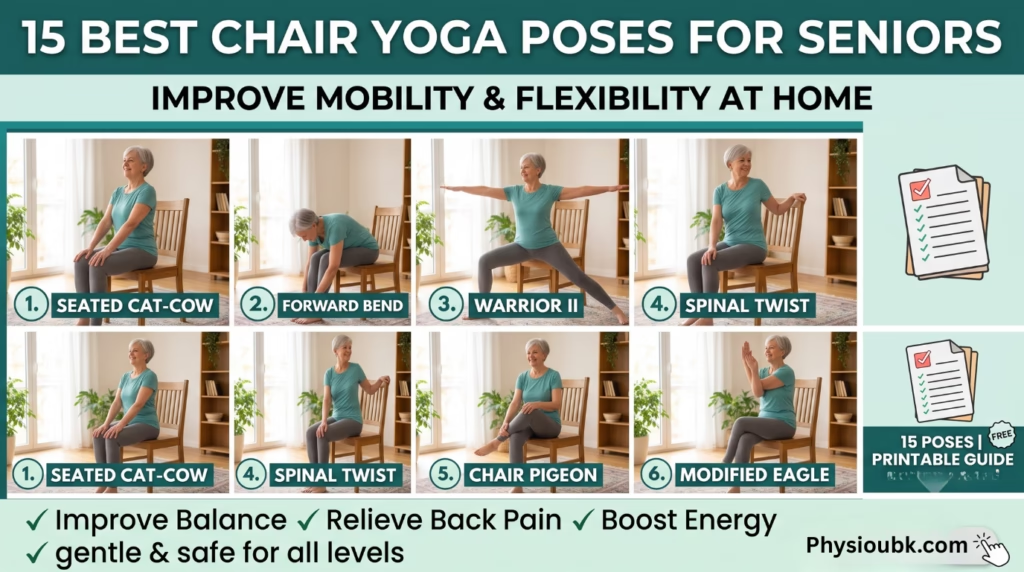
15 Best Chair Yoga Poses for Seniors
To achieve optimal therapeutic outcomes, these poses are divided into three core functional categories: Spinal Decompression & Mobility, Lower Body Flexibility & Joint Space Maintenance, and Chair-Assisted Stability & Balance.
Phase 1: Spinal Decompression & Mobility
1. Seated Mountain Pose (Tadasana)
- Execution: Sit tall at the edge of the chair with feet flat on the floor, hip-width apart. Engage the core, roll the shoulders back, and place hands flat on the thighs with palms up.
- Clinical Benefit: Establishes optimal postural alignment, activates deep core stabilizers, and encourages diaphragmatic breathing to enhance vital lung capacity.
2. Seated Cat Pose (Marjaryasana)
- Execution: Inhale deeply, then exhale as you round your spine, tucking your chin toward your chest and drawing your belly button inward toward the chair back.
- Clinical Benefit: Promotes gentle flexion of the thoracic and lumbar spine, hydrating intervertebral discs and relieving muscular tension in the erector spinae.
3. Seated Cow Pose (Bitilasana)
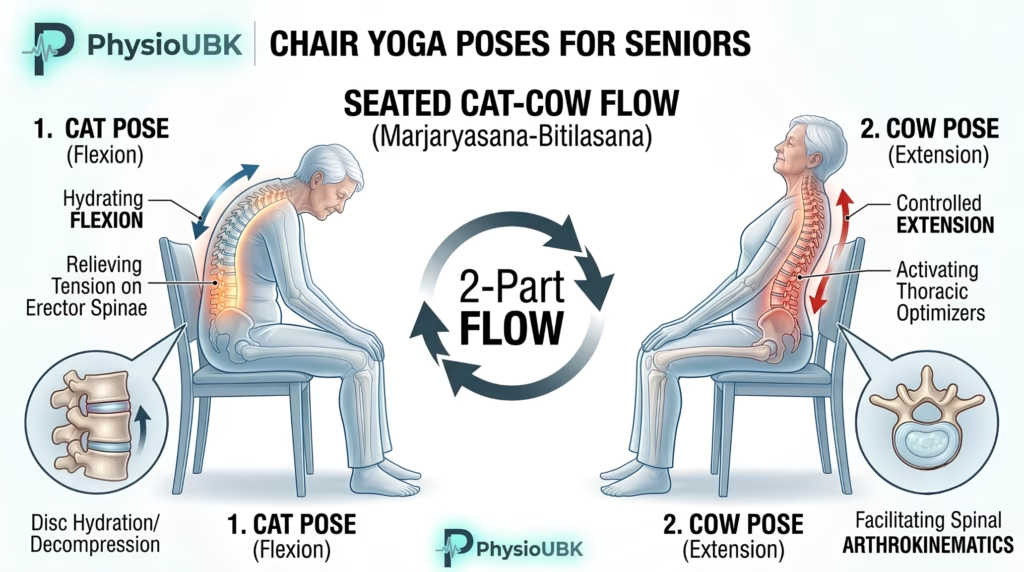
- Execution: Inhale as you arch your back, lifting your chest upward and pulling your shoulder blades gently together down your back.
- Clinical Benefit: Introduces controlled extension to the thoracic spine, counteracting the chronic hyper-kyphosis (forward slouching) common in desk-bound lifestyles or aging populations.
4. Seated Spinal Twist (Ardha Matsyendrasana)
- Execution: Place your left hand on your right knee. Inhale to lengthen your spine, and exhale as you gently rotate your torso to the right, holding the back of the chair for support. Repeat on the other side.
- Clinical Benefit: Restores rotational range of motion in the thoracic vertebrae while gently stretching the paraspinal muscles.
5. Seated Lateral Flexion (Side Stretch)
- Execution: Hold the left side of the chair seat with your left hand for stability. Inhale and extend your right arm upward, then exhale as you lean gently to the left. Switch sides.
- Clinical Benefit: Opens up the intercostal muscles, enhances ribcage expansion for deeper respiration, and elongates the quadratus lumborum muscle in the lower back.
Phase 2: Lower Body Flexibility & Joint Space Maintenance
[Seated Hips Locked at 90°] ──> [Gentle Asana Traction] ──> [Restored Joint Space] ──> [Reduced Osteoarthritis Pain]
6. Seated Pigeon Pose (Eka Pada Rajakapotasana)
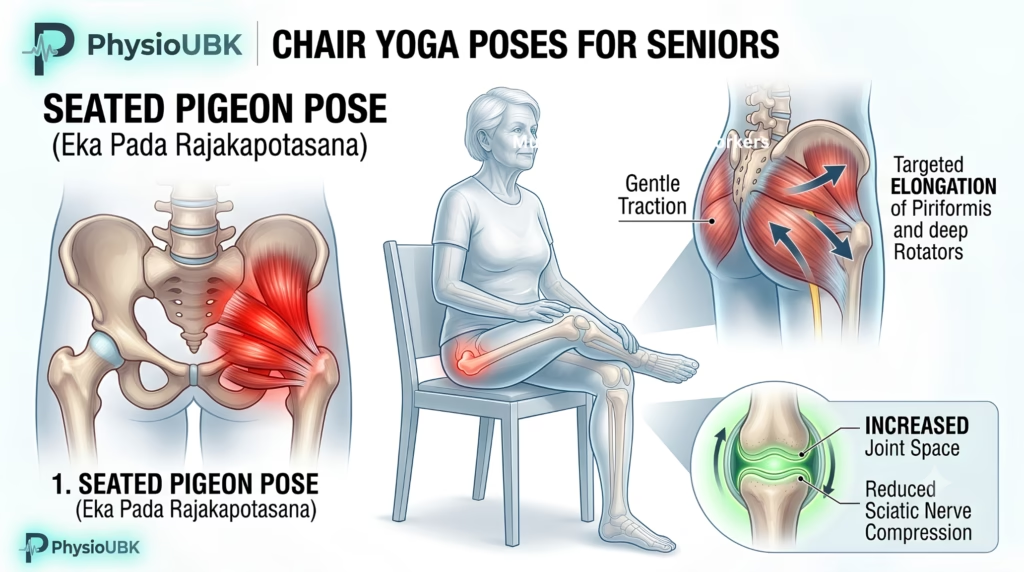
- Execution: Cross your right ankle over your left knee, keeping the right foot flexed to protect the knee joint. Inhale to sit tall, and if comfortable, hinge slightly forward from the hips. Repeat on the opposite side.
- Clinical Benefit: Targets the deep hip rotators (including the piriformis) and gluteal complexes, alleviating sciatic-like nerve compressions and freeing up hip mobility.
7. Seated Eagle Pose (Garudasana)
- Execution: Cross your right thigh tightly over your left thigh. Cross your left arm over your right arm at the elbows, bringing your palms or backs of hands to touch. Lift elbows to shoulder height.
- Clinical Benefit: Stretches the upper back musculature (rhomboids and trapezius) while gently introducing adduction flexibility to the outer hips.
8. Seated Extended Side Angle (Utthita Parsvakonasana)
- Execution: Widen your stance significantly. Rest your right forearm onto your right thigh, rotate your chest upward, and extend your left arm diagonally toward the ceiling.
- Clinical Benefit: Strengthens the quadriceps and core stabilizers while providing a deep, continuous myofascial stretch from the outer ankle up to the fingertips.
9. Seated Hamstring Stretch (Modified Uttanasana)
- Execution: Extend your right leg straight out in front of you, resting the heel on the floor with toes flexed upward. Keep a straight back as you gently hinge forward at the hips.
- Clinical Benefit: Safely elongates tight hamstring tendons without rounding the lumbar spine, which directly reduces the pulling forces that contribute to lower back strains.
10. Seated Warrior I (Virabhadrasana I)
- Execution: Turn your body sideways on the chair so your right thigh is supported by the seat. Extend your left leg straight back behind you with your toes tucked, and raise both arms overhead.
- Clinical Benefit: Offers exceptional, safe lengthening of the psoas and tight hip flexor muscles, directly counteracting the biomechanical damage caused by prolonged sitting.
Phase 3: Chair-Assisted Stability & Balance
🩺 Clinical Insight
Balance exercises for seniors must target neuromuscular pathways. By using the chair as a safety net during standing or semi-supported poses, we trigger proprioceptive feedback loops, teaching the brain and ankles to react and stabilize without exposing the patient to unchecked fall risks.
11. Seated Warrior II (Virabhadrasana II)
- Execution: Sit facing forward, then widen your legs out to the sides. Point your right toes completely to the right and keep your left leg extended wide. Stretch your arms out horizontally at shoulder height, gazing over your right hand.
- Clinical Benefit: Builds dynamic endurance in the deltoids while promoting deep, passive opening of the groin and pelvic floor.
12. Chair-Supported Tree Pose (Vrksasana)
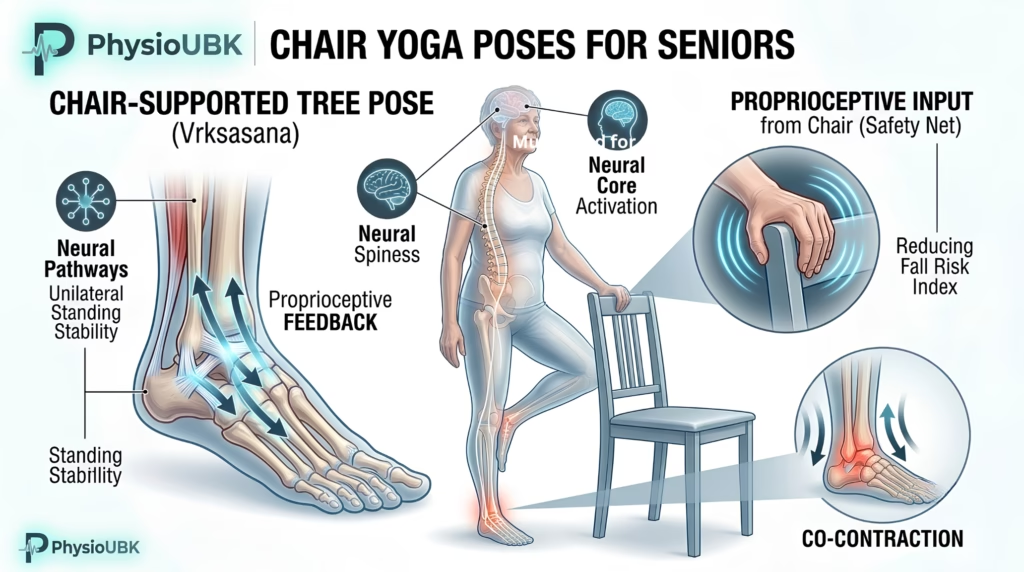
- Execution: Stand upright behind or next to the chair, holding the backrest firmly with one hand. Root into your inside leg, and place the sole of your outside foot against the ankle or calf of the standing leg. Hold for 5–10 breaths, then switch sides.
- Clinical Benefit: Enhances unilateral standing balance, strengthens the ankle stabilizers (peroneals and tibialis anterior), and builds lateral hip stability.
13. Chair-Assisted Goddess Pose (Utkata Konasana)
- Execution: Widen your feet into a broad stance with toes turned outward at roughly a 45-degree angle. Lower down into a wide squat, utilizing the chair seat directly underneath you as a safety buffer. Bring arms into a “cactus” position.
- Clinical Benefit: Activates the vastus medialis oblique (VMO) muscles of the knee, improves hip abduction, and builds eccentric lower-limb power.
14. Chair-Supported Downward-Facing Dog (Adho Mukha Svanasana)
- Execution: Stand facing the backrest of the chair. Place your hands firmly on the backrest and slowly walk your feet backward until your torso is parallel to the floor, creating a flat back. Press your hips away from the chair.
- Clinical Benefit: Provides traction and decompression throughout the entire spinal column while simultaneously stretching the calves, hamstrings, and latissimus dorsi muscles.
15. Goddess Relaxation Pose (Savasana Modified)
- Execution: Return to a fully seated position, leaning completely back against the chair support. Let your feet rest wide apart on the floor, place your hands gently on your lap with your palms facing up, and close your eyes.
- Clinical Benefit: Lowers systemic cortisol levels, shifts the autonomic nervous system out of sympathetic “fight-or-flight” into parasympathetic recovery, and allows heart rate mechanics to normalize.
The Borg CR10 Scale: Structuring Effort for Older Adults
To maintain an uncompromised level of clinical safety, seniors should monitor their training intensity using the Borg CR10 Scale of Perceived Exertion. During gentle yoga for seniors, individuals should aim to remain strictly within a light to moderate effort window, ensuring their breathing is full and steady, and they feel zero sharp joint pain.
Modulating Yoga Intensity via the Borg Scale
| Exertion Score | Intensity Tier | Physiological Presentation | Safety Protocol |
| 0–1 | Resting Pace | Normal resting respiration; zero stretch sensation. | Increase focus on alignment. |
| 2–3 | Light to Moderate | Mild, comfortable muscle elongation felt. | Optimal Target Zone |
| 4–5 | Brisk / Deep Stretch | Deep, heavy breathing; strong muscle tension felt. | Proceed with caution. |
| 6+ | Overexertion | Sharp pain, joint pinching, or loss of breath control. | Immediate Halt / Regress Pose |
Reclaiming Autonomous Mobility
Integrating modified asanas into a daily routine offers a profound, low-risk strategy for preserving functional freedom. By managing mechanical stress through chair structures, older adults can actively combat structural shortening, lubricate degenerative joints, and refine their balance reflexes safely.
Info Box
This clinical movement guide was compiled by the PhysioUBK Editorial Team. Physioubk.com is an international authority in physical medicine, dedicated to translating complex biomechanics, human kinetics, and advanced sports rehab science into clear resources for audiences worldwide.
For deep-dive exercise prescription strategies or to explore multi-specialty medical care options at Tariq Medicare Khanewal, stay connected to our updated health network.
Ayesha Tariq
Analytical Chemist | Guest Writer
Ayesha Tariq is a professional analytical chemist who explores the fascinating intersections of molecular chemistry, human physiology, and physical well-being. Writing at the crossroads of laboratory science and clinical life, she specializes in breaking down complex biochemical pathways, from cellular metabolism to tissue inflammation, into accessible, actionable insights for both healthcare professionals and patients. Her periodic contributions bridge the gap between microscopic chemical reactions and their profound impact on daily medical and physical health.

Tech Neck: 5 Desk Habits That Hurt Your Neck
Your head weighs about 5 kg. Tilt it forward 60 degrees to look at your…
Knee Pain Treatment in Khanewal: Walk, Climb, and Squat Without Fear
A few weeks ago a schoolteacher in her early fifties walked into my clinic and…
How to Choose the Right Pillow for Neck Pain
“Best pillow for neck pain” is one of the fastest-rising health searches in Pakistan —…

The Best Sleeping Positions for Sciatica Pain
There’s a special cruelty to sciatica at night. The day was manageable — then you…
Sciatica or Piriformis Syndrome? How to Tell the Difference
“Doctor sahab, mujhe sciatica hai” — I hear this almost daily. But here’s the thing:…
Kamar Dard Ka Ilaj: When Home Remedies Aren’t Enough
Kamar dard Pakistan mein itna aam hai ke taqreeban har ghar mein koi na koi…