
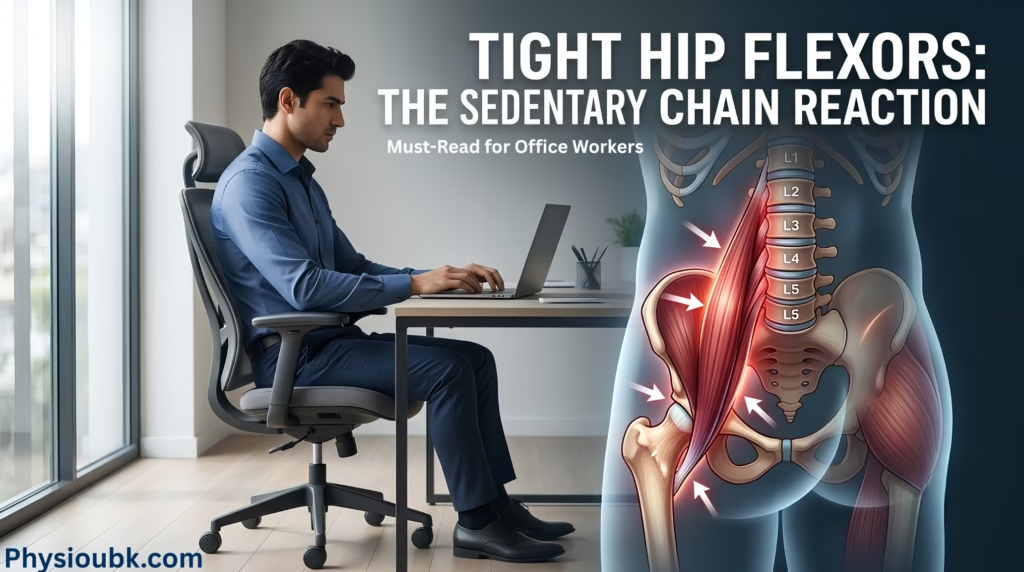
How Tight Hip Flexors Muscles Become the Hidden Musculoskeletal Problem of Long Hours Sitting
Sitting All Day? Your Hip Flexors Could Be Paying the Price
It’s 8:30 AM on a Monday. You settle into your office chair, open your laptop, and dive into emails. Meetings blur into deadlines, and before you know it, six to eight hours have passed with almost zero movement.
For millions of office workers, programmers, and digital professionals, this sedentary grind is unavoidable. But while your mind is working overdrive, your body is undergoing a silent physical adaptation.
One of the first regions to suffer is your hip flexors—the vital muscle engine connecting your lumbar spine and pelvis to your upper thigh. These muscles lift your legs, stabilize your pelvis, support structural posture, and control functional movements like walking and climbing stairs.
When kept in a shortened state for hours, they lose their elasticity. What begins as minor stiffness when you stand up can rapidly evolve into muscular imbalances, hip flexor pain, severe lower back discomfort, and painful muscular spasms.
From a professional physiotherapy perspective, tight hip flexors aren’t just an isolated muscle issue. They trigger a biomechanical chain reaction that alters your entire movement pattern.
Understanding the Hip Flexors: The Kinetic Hub
The hip flexors are a highly coordinated network of muscles working in unison to manage hip flexion and pelvic stabilization.
1: Major Hip Flexor Muscles & Biomechanics
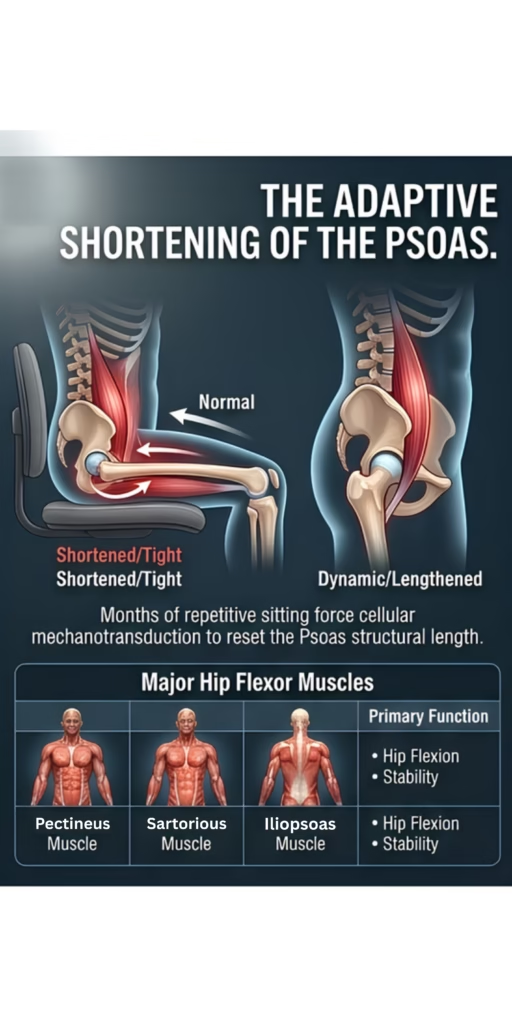
| Muscle | Primary Function | Clinical Importance |
| Psoas Major | Hip flexion & lumbar spine stability | Direct link to posture & lower back mechanical stress. |
| Iliacus | Assists hip flexion | Partners with the psoas during walking and gait progression. |
| Rectus Femoris | Hip flexion & knee extension | Essential for dynamic leg lifting, stair climbing, and running. |
| Sartorius | Assists hip & knee movement | Supports multi-planar functional daily activities. |
When healthy, these tissues continuously lengthen and contract. However, prolonged sitting forces them into a chronic state of adaptive shortening.
How Prolonged Sitting Rewrites Your Biomechanics
When you sit, your hips rest at a rigid 90-degree angle. This keeps the hip flexors continuously compressed. Over months of repetitive sitting, your nervous system tells these muscles to structurally adapt to this shortened length—a process driven by altered cellular mechanotransduction.
2: The Timeline of Prolonged Sitting
| Time Sitting | Changes in the Body | Possible Clinical Effects |
| 30–60 Mins | Dropped muscle activity & localized circulation | Mild stiffness upon standing. |
| 2–4 Hours | Continuous tissue shortening | Reduced soft tissue flexibility. |
| 6–8 Hours | Gluteal neural inhibition occurs | Muscular imbalances & weak hip extension. |
| Months to Years | Structural pelvic tilt shifts | Chronic hip pain, lumbar strain, and joint wear. |
🔄 The Sedentary Chain Reaction
Long Hours of Sitting──► Adaptive Hip Flexor Shortening──► Gluteal Amnesia (Inactivity)} ──► Anterior Pelvic Tilt──► Lower Back \ Hip Joint Strain}
🩺 Clinical Insight
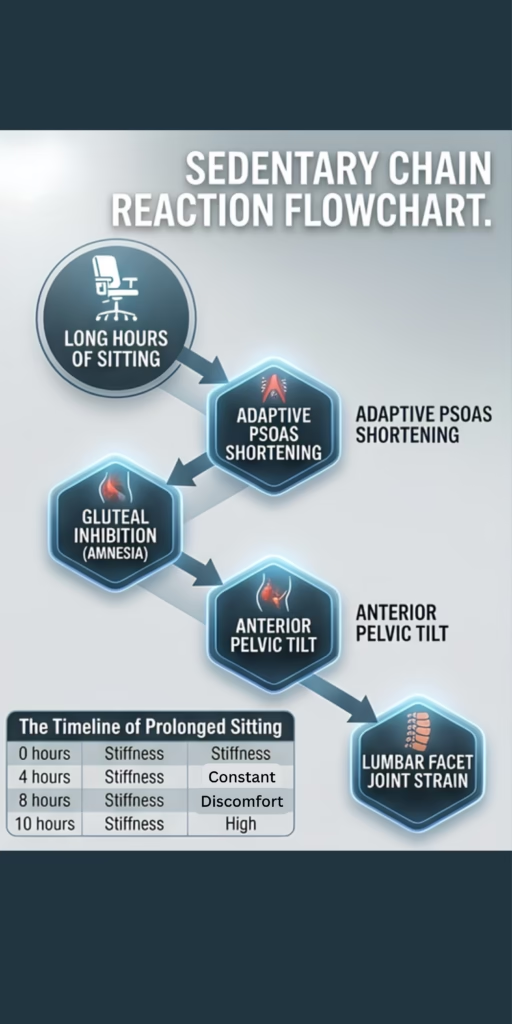
Many patients assume hip pain originates deep inside the joint structure. In clinical practice, we consistently find that the pain is actually a byproduct of movement dysfunction. Tight hip flexors shut down the glutes, forcing surrounding tissues to compensate long before real pain surfaces.
Why Tight Hip Flexors Trigger Lower Back Pain
As your hip flexors tighten, they exert a forward pull on your pelvis, inducing an exaggerated arch in your lower back known as an anterior pelvic tilt. This structural shift misaligns how weight and force travel down your spine.
This results in structural mechanical stress on your lumbar muscles, ligaments, and facet joints. Common clinical warning signs include:
- Intense morning stiffness across the lower back.
- An inability to stand completely upright immediately after sitting.
- Localized muscular spasms in the lumbar and groin area.
- A shortened walking stride (reduced hip extension).
The Cross-Over Link: Can Tight Hips Cause Piriformis Pain?
While tight hip flexors do not directly damage the sciatic nerve, they heavily influence piriformis pain. It may cause the Sciatica symptoms radiate nerve pain along the lower leg. Click here for detail expert insight associated with Sciatica,
When your hip flexors tighten and turn off your primary glute muscles, your body looks for secondary stabilizers to keep you balanced. The piriformis muscle is forced to work overtime to stabilize the hip joint. This chronic overload causes the piriformis to hypertrophy or spasm, potentially irritating the sciatic nerve and mimicking sciatica.
3: Tight Hip Flexors vs. Piriformis Symptoms
| Feature | Tight Hip Flexors | Piriformis-Related Pain |
| Pain Location | Front of the hip, crease of the leg, or groin. | Deep, localized buttock discomfort. |
| Movement Block | Limited hip extension (stretching leg back). | Pain during internal hip rotation. |
| Primary Trigger | Extended hours of desk work or prolonged sitting. | Glute weakness and pelvic compensation. |
The Physiotherapist’s Role in Restoring Hip Mobility
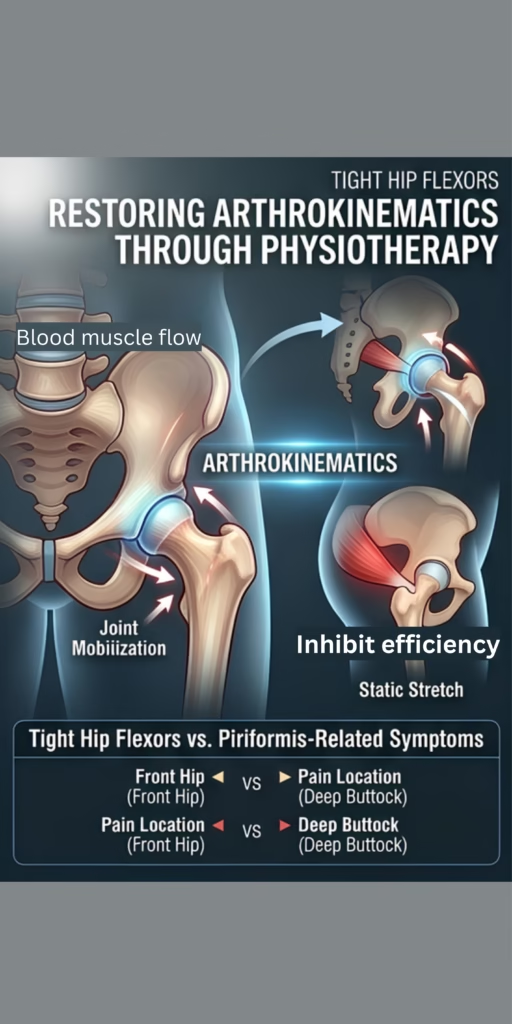
Physiotherapy offers a structured approach to not just masking symptoms, but actively releasing tight hip flexors and restoring normal function.
- Advanced Manual Therapy: Beyond standard deep tissue massage, physiotherapists employ targeted techniques such as myofascial release (MFR) to break down fascial restrictions in the hip complex and joint mobilization to restore proper arthrokinematics. They may also utilize Proprioceptive Neuromuscular Facilitation (PNF)—a sophisticated stretching technique—which uses a contract-relax cycle to leverage the Golgi tendon organ reflex, allowing for deeper, safer muscle elongation than standard static stretching.
- Graded Corrective Protocols: Physiotherapy is not just about ‘stretching’; it involves a structured progression from mobility to stability. Therapists often start with low-load, static stretching to decrease muscle tone, then advance to dynamic mobility exercises that improve tissue extensibility under functional tension. Furthermore, they introduce eccentric strengthening of the hip flexors in lengthened positions, which builds the structural resilience needed to tolerate long durations of activity.
- Neuromuscular Re-education & Movement Correction: A critical issue is ‘gluteal amnesia’—where the glutes are effectively inhibited by the shortened hip flexors. Physiotherapists use targeted motor control drills, such as specific hip-hinge patterns and pelvic control exercises, to re-establish the mind-muscle connection. By teaching the patient to recruit the gluteal complex effectively during functional movements, the workload is shifted away from the hip flexors, allowing them to return to a natural, relaxed state.
- Holistic Ergonomic & Lifestyle Integration: Because the primary driver is often sedentary behavior, physiotherapists provide actionable environmental changes. This includes optimizing workstation geometry (e.g., seat depth, lumbar support positioning) to minimize hip flexion stress, implementing ‘movement snacks’ (short, high-frequency activity breaks) to reset neural pathways, and educating patients on the importance of maintaining an upright, neutral pelvic posture while seated.
The Biochemistry of Inactivity: Cellular Energy Failure
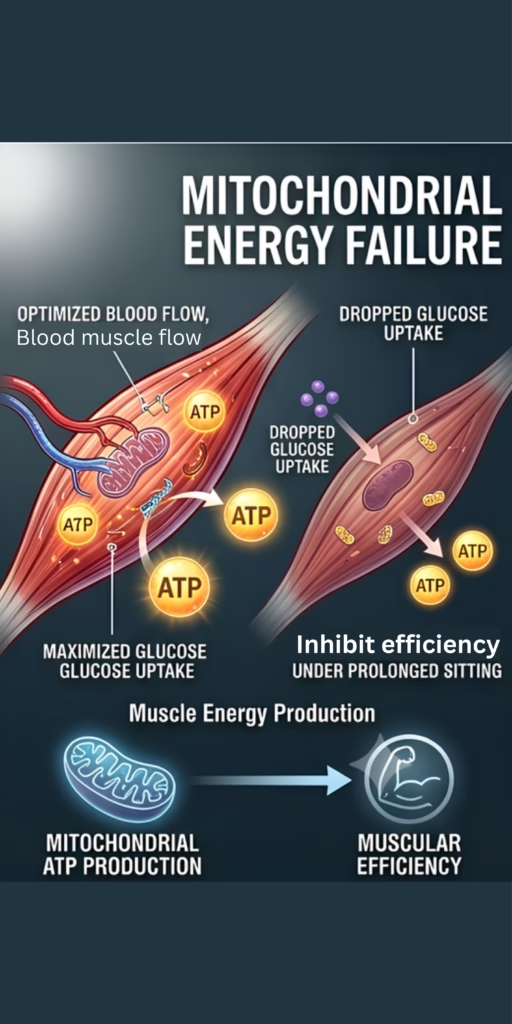
The impact of prolonged sitting goes far deeper than tight joints—it alters the way your muscle cells generate energy.
Every single muscle movement relies heavily on Adenosine Triphosphate (ATP) production. Regular dynamic movement patterns open up blood flow, accelerate glucose uptake, and stimulate mitochondrial activity to keep your tissues energized and healthy.
When you sit completely still for hours, these cellular pathways slow down dramatically. While metabolic function doesn’t stop completely, the lack of muscle contraction limits local glucose uptake and drops mitochondrial ATP efficiency.
Sedentary Sitting──► Minimal Contraction──► Dropped Glucose Uptake──► Decreased ATP Efficiency──► Premature Muscular Fatigue
This localized bioenergetic deficit explains why office workers experience profound physical fatigue and heavy stiffness at the end of the day, even if their work was purely intellectual.
Reclaiming Your Movement
Addressing hip flexor tightness through professional physiotherapy is not merely about comfort; it is essential for preserving long-term musculoskeletal health and functional mobility. By proactively releasing adaptive shortening and restoring natural biomechanical balance, individuals can mitigate chronic pain and ensure their bodies remain resilient against the demands of a sedentary professional life.

Tech Neck: 5 Desk Habits That Hurt Your Neck
Your head weighs about 5 kg. Tilt it forward 60 degrees to look at your…
Knee Pain Treatment in Khanewal: Walk, Climb, and Squat Without Fear
A few weeks ago a schoolteacher in her early fifties walked into my clinic and…

How to Choose the Right Pillow for Neck Pain
“Best pillow for neck pain” is one of the fastest-rising health searches in Pakistan —…

The Best Sleeping Positions for Sciatica Pain
There’s a special cruelty to sciatica at night. The day was manageable — then you…

Sciatica or Piriformis Syndrome? How to Tell the Difference
“Doctor sahab, mujhe sciatica hai” — I hear this almost daily. But here’s the thing:…

Kamar Dard Ka Ilaj: When Home Remedies Aren’t Enough
Kamar dard Pakistan mein itna aam hai ke taqreeban har ghar mein koi na koi…