
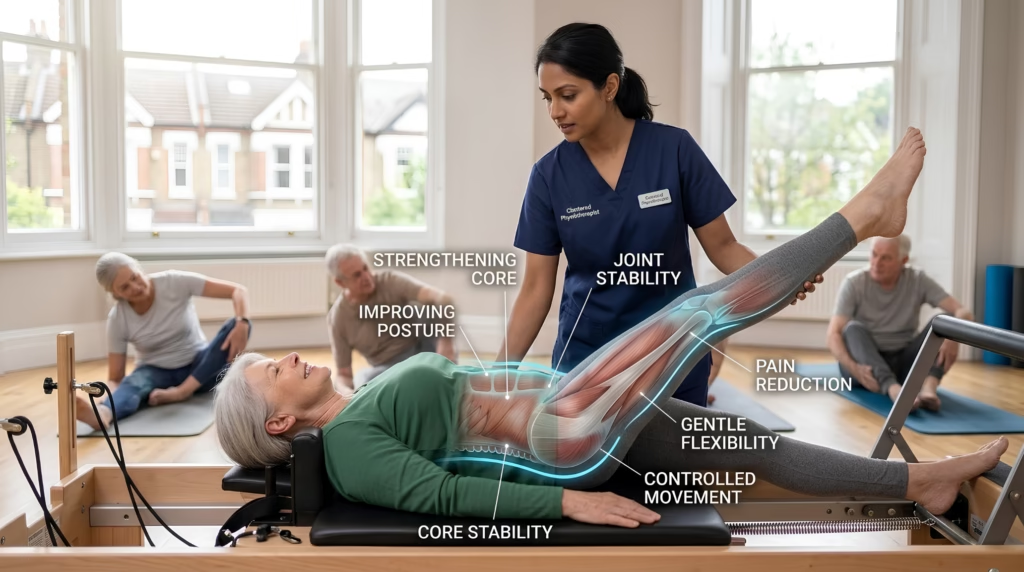
The Clinical Imperative for Controlled Lumbo-Pelvic Stability
As the human body ages, preserving functional independence hinges directly upon maintaining structural control of the lumbo-pelvic-hip complex (the “core”). Age-related declines in muscle mass (sarcopenia) often target the deep local stabilizing muscles, specifically the transversus abdominis, lumbar multifidus, and pelvic floor. When these structural systems weaken, global superficial muscles are forced to overcompensate, creating a cascade of chronic lower back pain, degenerative posture shifts, and spatial imbalance.
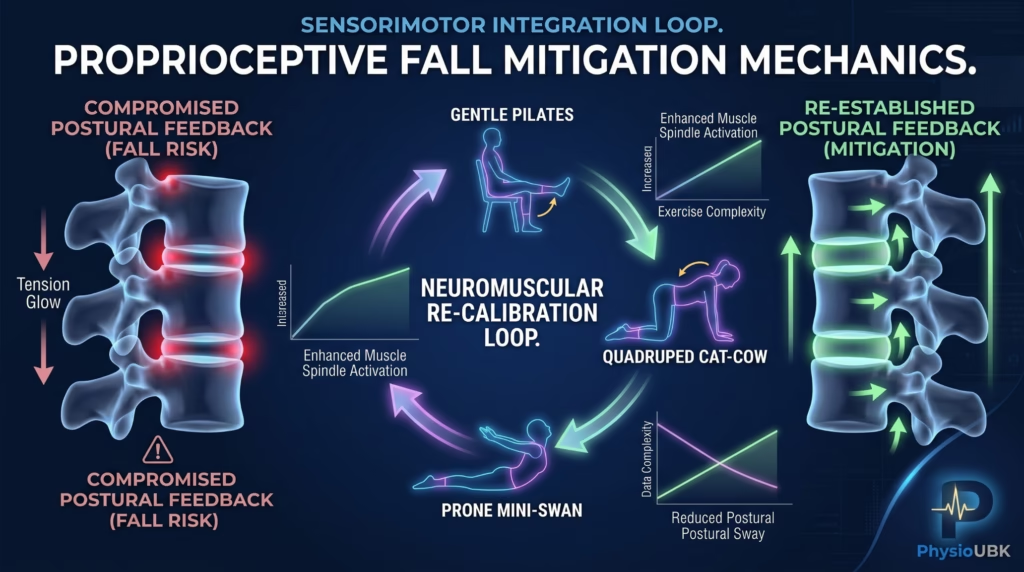
Traditional high-velocity strength training or deep spinal loading models present excessive shear forces to aging spinal segments. Gentle Pilates for Seniors provides an ideal alternative. By removing rapid directional shifts and utilizing slow, spring-assisted or gravity-neutral planes, this low-impact method recalibrates central movement control patterns safely. This approach stabilizes arthritic joints, supports structural spine health, and re-establishes healthy kinetic foundations.
Biomechanical Mechanics: Protecting the Aging Spine
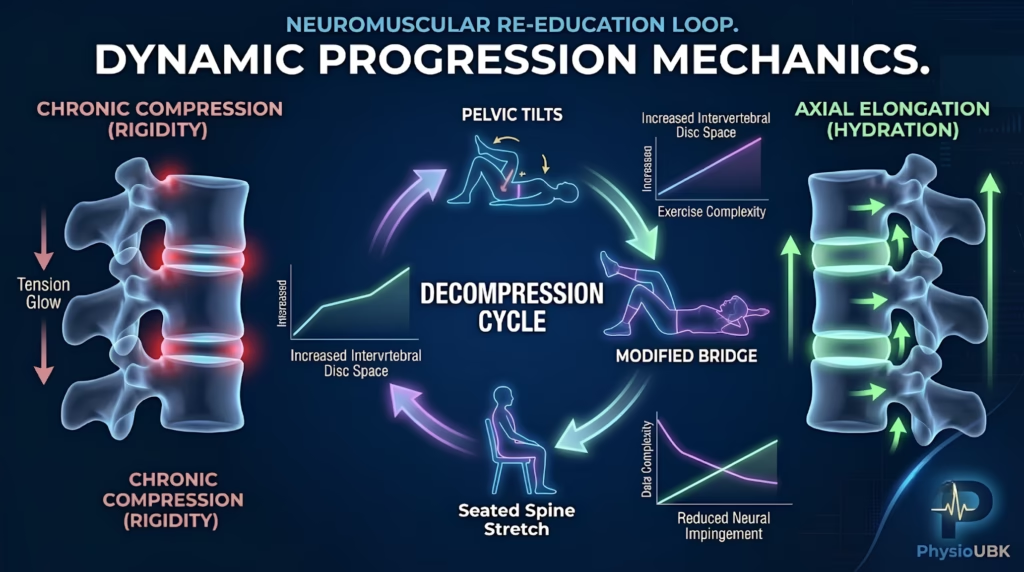
From a physiotherapy and rehabilitative lens, the magic of specialized pilates rests within its strict adherence to core alignment principles. Every sequence focuses heavily on spinal axial elongation, gently creating microscopic joint separation to minimize loading compression along degenerative facet joints and thinning spinal discs. its totally different form the Reformer Pilates. For detail analysis, read out 10 Key Benefits of Reformer Pilates for Strength, Flexibility, and Posture
Standard Core Fitness vs. Gentle Pilates Biomechanics
| Biomechanical Parameter | Standard General Fitness (e.g., Crunches) | Gentle Pilates Modification | Geriatric Clinical Protection |
| Spinal Loading Force | High intra-discal pressure / loading flexions | Axial elongation / neutral alignment | Minimizes risk of structural vertebral compression. |
| Muscle Activation Tier | Rectus abdominis (superficial dominance) | Transversus abdominis & pelvic floor deep layers | Stabilizes the deep structural layers supporting the spine. |
| Joint Shear Force | High kinetic impact through joints | Zero-impact, smooth closed-chain resistance | Eliminates micro-trauma across osteoarthritic cartilage. |
| Neuromuscular Pacing | Fast, momentum-driven movements | Decelerated, breath-synchronized control | Maximizes motor unit recruitment and proprioception. |
Core Gentle Pilates Movements for Older Adults
To build structural endurance and balance safely, these modified exercises progress systematically from local pelvic floor activation to dynamic, stable limb patterns.
Phase 1: Local Stabilizer Activation
1. Supple Pelvic Tilts
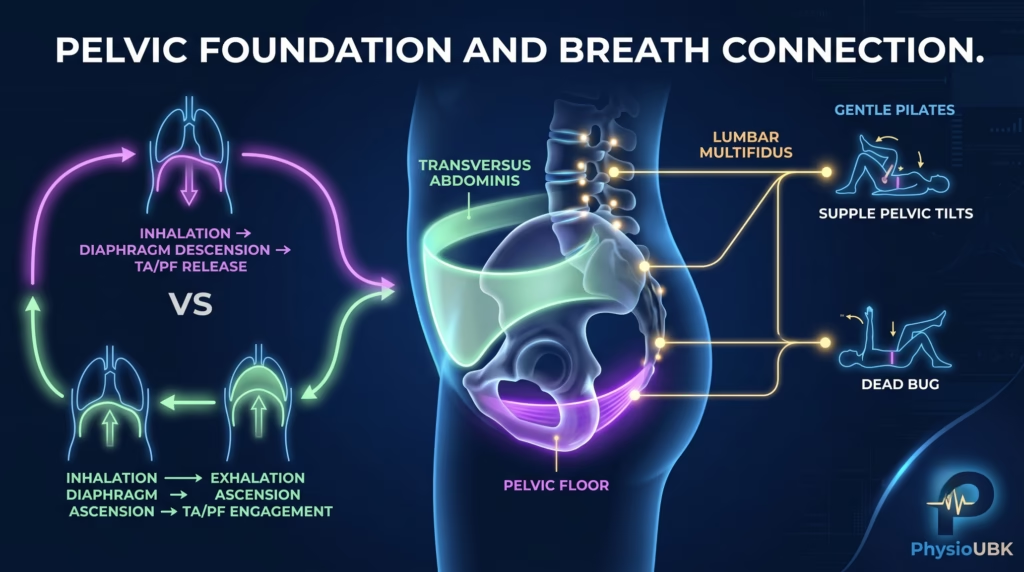
- Biomechanical Execution: Lie supine with knees bent at 90 degrees, feet flat on a cushioned mat. Inhale deeply into the ribcage, and on the exhale, gently engage the lower lower abdominal wall to press the lumbar spine flat into the floor matting. Hold for three seconds, then smoothly return to a neutral pelvis.
- Clinical Impact: Safely breaks up lumbar fascia rigidity, fires up the deep transversus abdominis, and reinforces correct pelvic orientation without shear strain.
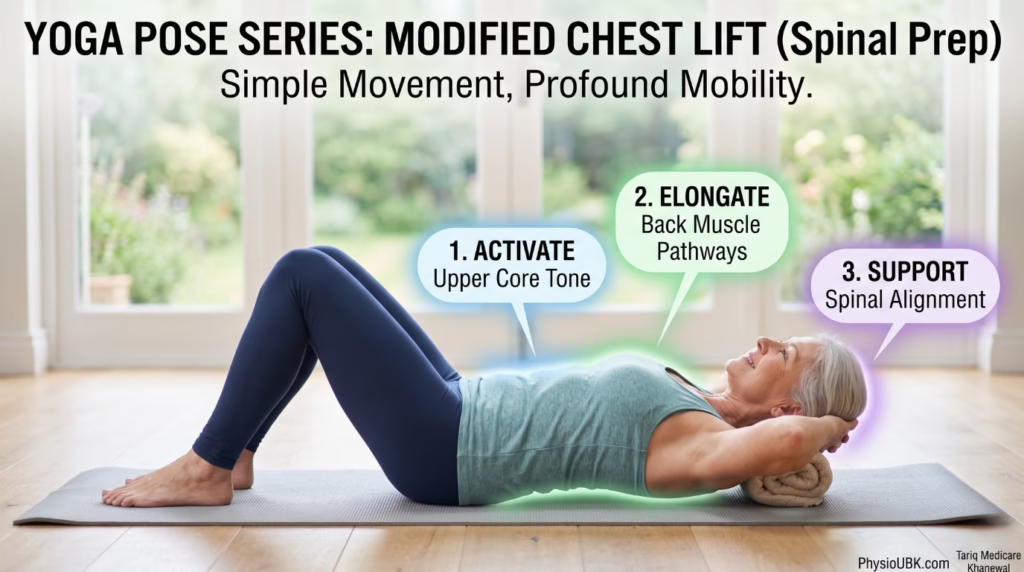
2. Modified Chest Lift (Spinal Prep)
- Biomechanical Execution: Remaining supine, interlace fingers loosely behind the base of the skull to take the neck load. Inhale to prepare, then exhale to glide the ribs down toward the hip bones, lifting just the head and shoulders slightly off the mat.
- Clinical Impact: Targets upper abdominal tone while actively length-stretching tight thoracic paraspinal muscle pathways.
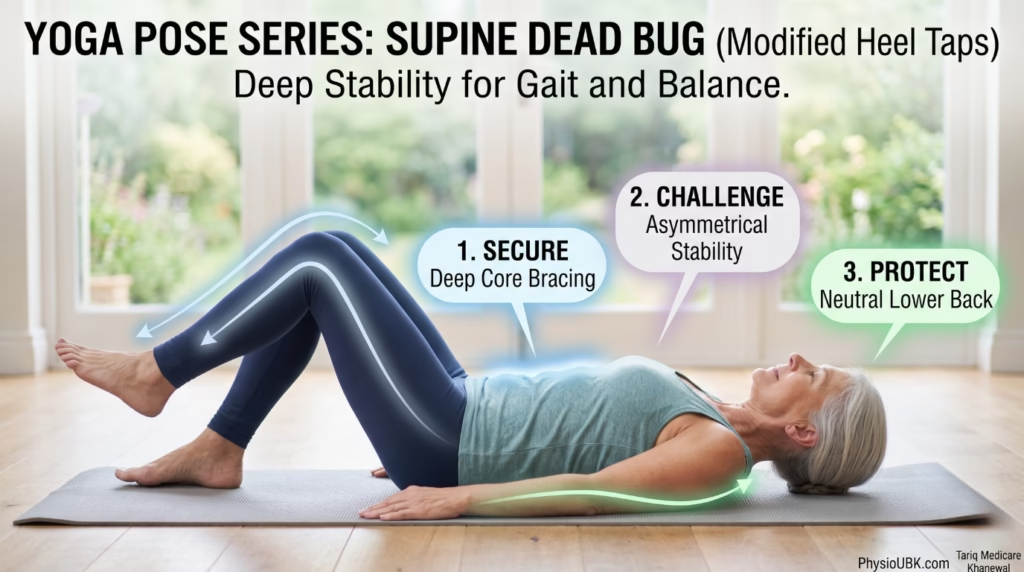
3. Supine Dead Bug (Alternating Heel Taps)
- Biomechanical Execution: Lift both legs into a bent, modified tabletop position. Keeping a perfectly stable, unmoving neutral lower back, slowly lower one heel to lightly tap the floor, then lift back up using the core. Alternate sides slowly.
- Clinical Impact: Challenges deep stability via asymmetrical limb loading, boosting practical gait and balance coordination.
Phase 2: Spinal Articulation & Mobility
[Deep Diaphragmatic Breath] ──> [Transversus Abdominis Engagement] ──> [Segmental Spinal Mobilization] ──> [Decompressed Nerve Paths]
4. Modified Bridge Sequence (Pelvic Lift)
- Biomechanical Execution: Flat on the back, slowly peel the spine up away from the floor matting one single vertebra at a time, raising hips into a straight incline from knees to shoulders. Inhale at the top peak, then slowly melt back down to the floor.
- Clinical Impact: Fires up the posterior chain (gluteals and hamstrings) to correct weak posture while encouraging structural spinal articulation.
5. Quadruped Cat-Cow Flow
- Biomechanical Execution: On hands and knees, smoothly arch the upper back toward the ceiling like a stretching cat, then reverse the curve downward to shine the chest forward into a gentle cow position.
- Clinical Impact: Distributes hydration across joint spaces throughout the spine while reducing deep paraspinal muscle stiffness.
6. Seated Spine Stretch Forward
- Biomechanical Execution: Sit tall on the floor or a supportive chair with legs straight. Inhale to grow tall, then exhale as you reach forward toward your toes, curving your spine into a soft, round C-shape curve.
- Clinical Impact: Stretches tight hamstrings and the deep lower back fascia safely, reducing tension pull along the sacrum.
Phase 3: Extremity Integration & Balance
🩺 Clinical Insight
Fall prevention profiles require robust proprioceptive activation. By introducing controlled, low-impact limb extensions against an anchored torso, we force the nervous system to coordinate core bracing with functional movement patterns.
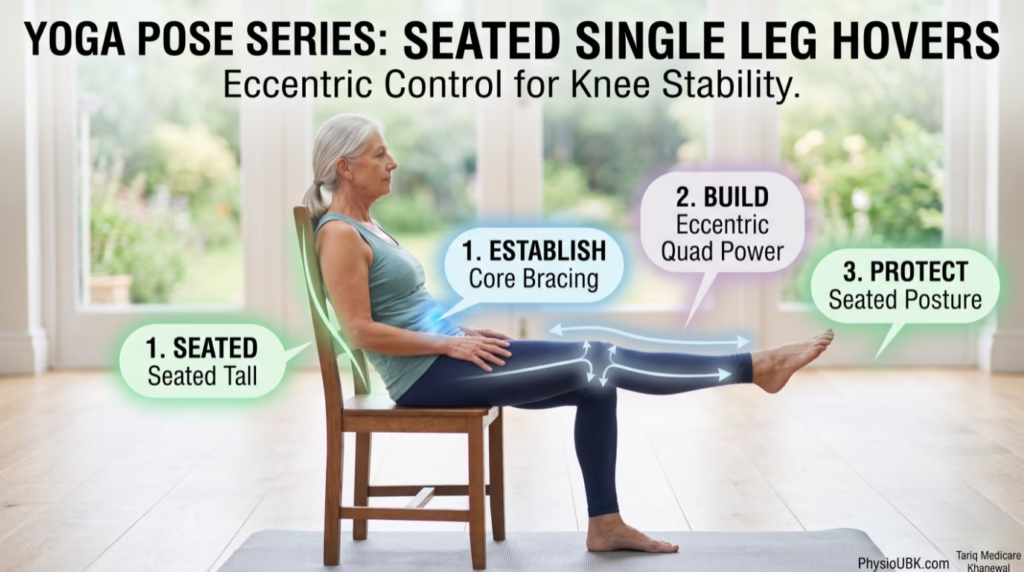
7. Seated Single Leg Hovers
- Biomechanical Execution: Seated tall in a sturdy chair, lock the core muscles. Lift one foot two inches off the floor, straightening the knee out in front. Hold for five seconds, then drop down slowly. Alternating sides.
- Clinical Impact: Builds necessary eccentric quad power to support knee joint stability and ease up independent stair climbing.
8. Prone Mini-Swan Extension
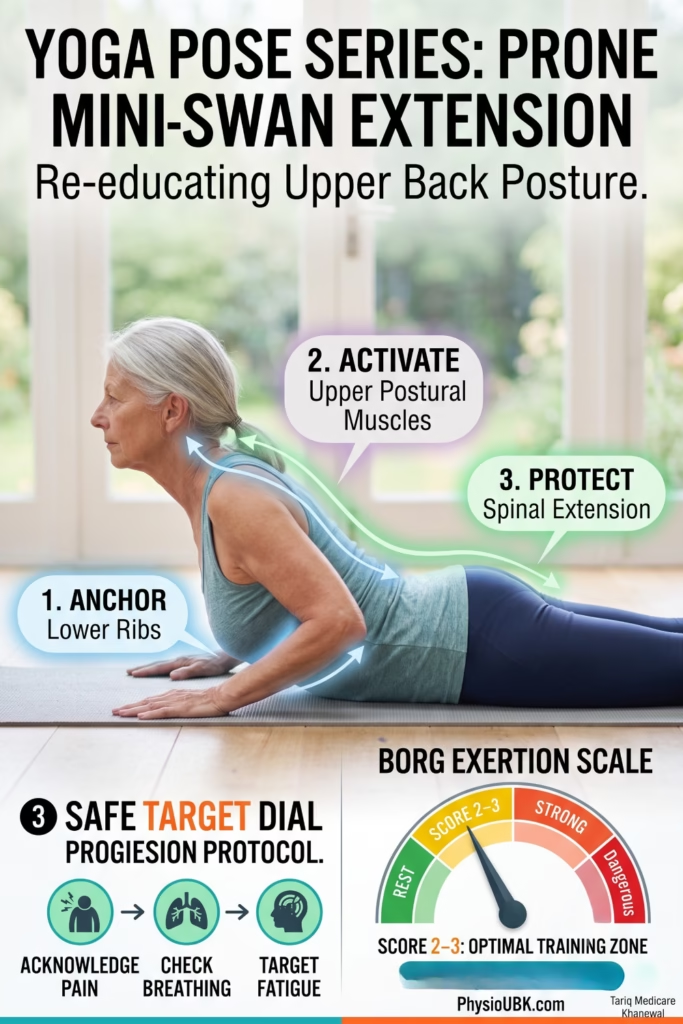
- Biomechanical Execution: Lie face down with hands flat by the shoulders. Keeping the lower ribcage anchored to the mat, gently use the upper back muscles to lift the nose and chest forward and up slightly.
- Clinical Impact: Re-educates weakened postural muscles to pull the upper back out of chronic slouched positioning.
Safe Progression Management: The Borg CR10 Protocol
To maximize safety, older participants should check their level of work against the Borg CR10 Scale of Perceived Exertion. During these exercises, the training goal is to operate exclusively within the Score 2–3 (Light to Moderate) tier. If a movement triggers sharp joint pinching, pain, or breaks smooth breathing, the routine should immediately be regressed or stopped.
Borg Intensity Tracking for Geriatric Pilates
| Exertion Rating | Target Intensity Tier | Musculoskeletal Feedback | Operational Safety Guideline |
| 0–1 | Rest Pace | Zero muscle activation felt; standard rest. | Focus closer on precision and breath. |
| 2–3 | Light to Moderate | Deep, comfortable engagement felt without pain. | Ideal Targeted Training Zone. |
| 4–5 | Brisk Effort | Muscle fatigue begins to show; structural form drops. | Reduce range of motion to protect form. |
| 6+ | Overexertion | Acute pinching, joint pain, or holding breath. | Immediate Stop & Discontinue. |
Securing Functional Freedom
Preserving baseline physical capability doesn’t require high-strain workouts or heavy lifting. Through the controlled principles of Gentle Pilates for Seniors, aging individuals can successfully reinforce their pelvic foundations, improve spine health, and move with steady, confident ease.
Info Box
This clinical movement resource was curated by the PhysioUBK Editorial Team. Physioubk.com is a leading digital voice in physical medicine, dedicated to translating sports recovery science, biomechanics, and structural physical health profiles into actionable guides for an international audience. For deep-dive clinical advice or to find advanced care options at Tariq Medicare Khanewal, stay connected to our updated medical platform.

Tech Neck: 5 Desk Habits That Hurt Your Neck
Your head weighs about 5 kg. Tilt it forward 60 degrees to look at your…
Knee Pain Treatment in Khanewal: Walk, Climb, and Squat Without Fear
A few weeks ago a schoolteacher in her early fifties walked into my clinic and…
How to Choose the Right Pillow for Neck Pain
“Best pillow for neck pain” is one of the fastest-rising health searches in Pakistan —…

The Best Sleeping Positions for Sciatica Pain
There’s a special cruelty to sciatica at night. The day was manageable — then you…
Sciatica or Piriformis Syndrome? How to Tell the Difference
“Doctor sahab, mujhe sciatica hai” — I hear this almost daily. But here’s the thing:…
Kamar Dard Ka Ilaj: When Home Remedies Aren’t Enough
Kamar dard Pakistan mein itna aam hai ke taqreeban har ghar mein koi na koi…