The Ergonomic Crisis: The Pathology of the Desk Worker
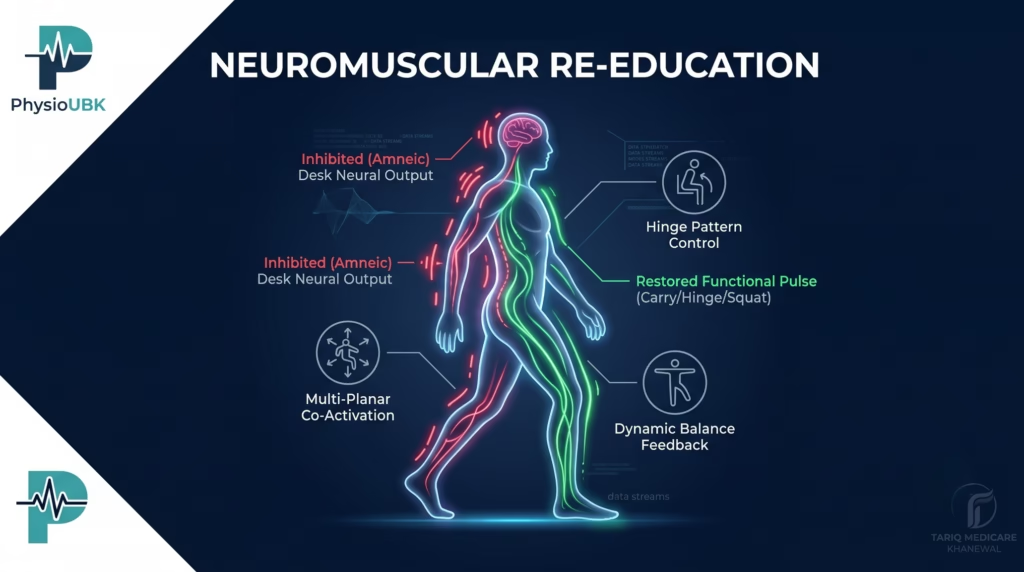
The modern desk environment is a biomechanical trap. Sitting for eight to ten hours a day forces the human kinetic chain into a state of chronic, maladaptive compensation for which functional fitness is necesary. The gluteal muscles experience prolonged neural inhibition (gluteal amnesia), the hip flexors adaptively shorten, and the thoracic spine rounds into a fixed hyper-kyphosis.
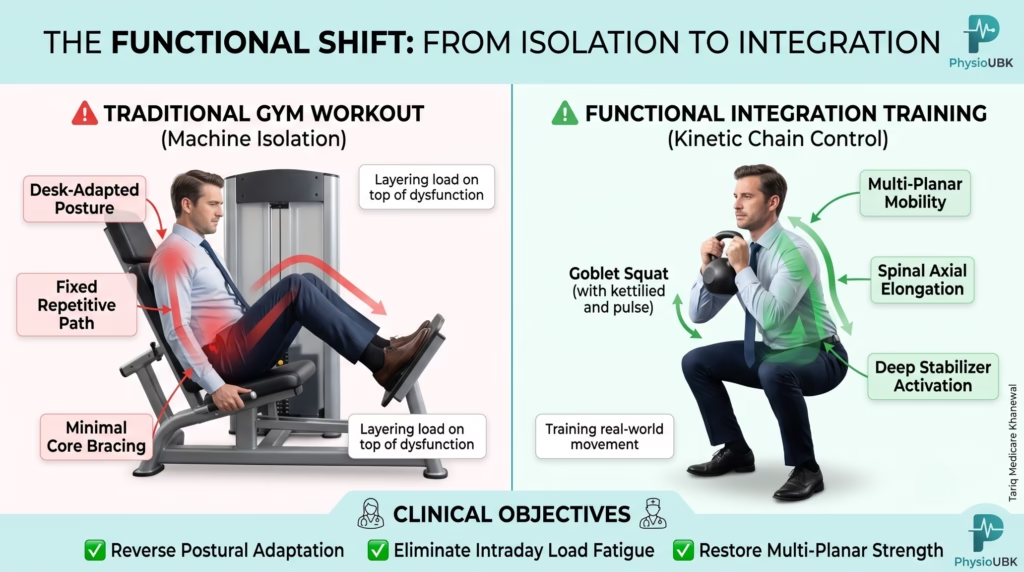
When a desk-bound professional takes this structurally compromised body into a traditional gym and sits on an isolated chest press or leg extension machine, they aren’t fixing the problem, they are layering load on top of dysfunction. Traditional exercise models isolate single muscle groups in fixed, linear paths.
This is exactly why functional fitness is replacing traditional exercise. Instead of training a muscle in isolation, functional fitness trains movements, forcing the body to work as a unified, coordinated system.
Biomechanical Mechanics: Isolation vs. Integration
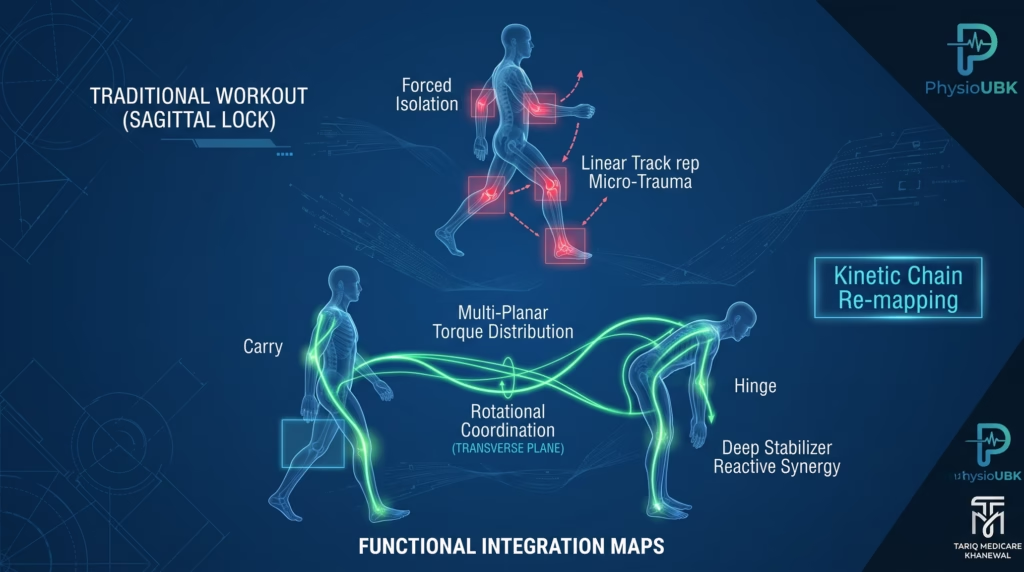
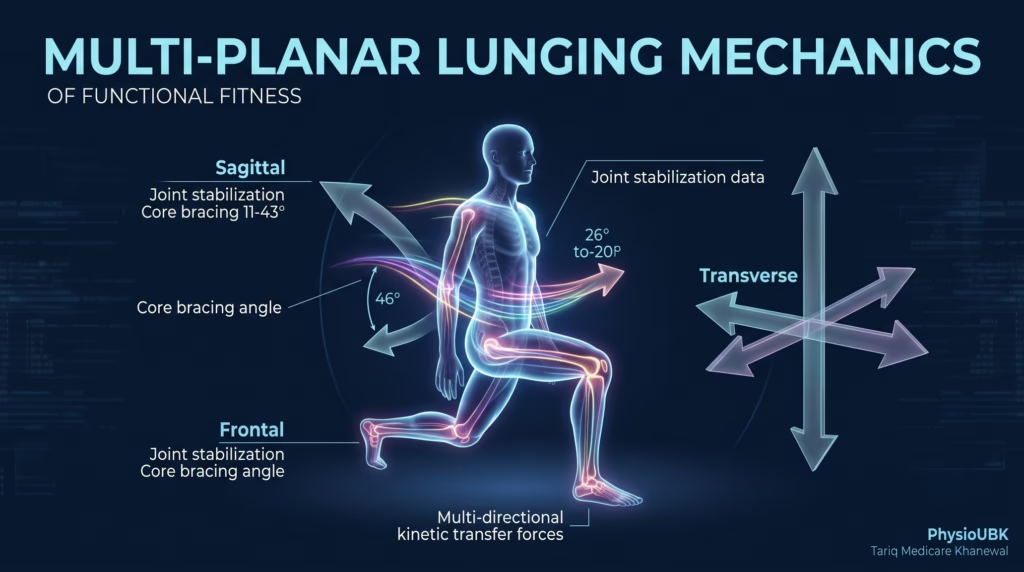
From a physiotherapy and biomechanical perspective, traditional machine-based gym workouts overlook a critical rule of human movement: real life happens in three dimensions. Machines restrict you to the sagittal plane (forward and backward). Functional fitness, however, integrates the frontal plane (side-to-side) and transverse plane (rotation), mimicking the erratic, multi-planar physical demands of daily life.
Isolation Machines vs. Functional Kinetic Integration
| Biomechanical Parameter | Traditional Gym Workouts (Machines) | Functional Integration Training | Desk-Worker Clinical Benefit |
| Movement Plane | Unidirectional (strictly Sagittal or Frontal) | Multi-planar (Sagittal, Frontal, & Transverse) | Restores rotational capacity and dynamic multi-directional stability. |
| Joint Loading | Fixed axis / Artificial guided path | Free-form / High variable axis control | Eliminates micro-trauma from repetitive, forced machine paths. |
| Core Activation | Low (the machine seat stabilizes your body) | High (constant reactive trunk bracing) | Re-educates deep stabilizers to naturally support the spine while sitting. |
| Neuromuscular Load | Low motor unit recruitment | High proprioceptive & balance demands | Re-establishes broken brain-to-muscle patterns caused by prolonged sitting. |
Core Functional Movement Progressions for Office Workers
To successfully transition from rigid isolation training to dynamic integration, desk workers should focus on movements that actively reverse the “desk shape” by restoring hip extension, thoracic rotation, and core bracing.
Phase 1: Postural Reset & Foundational Patterns
1. The Goblet Squat (with Pulse)
- Biomechanical Execution: Hold a kettlebell or dumbbell vertically against your chest. With feet shoulder-width apart, drive your hips back and down, keeping your torso upright and knees tracking over your toes. Pause at the bottom for a small “pulse” to stretch the hip adductors, then drive through your heels to stand.
- Clinical Impact: Actively co-contracts the gluteals and hamstrings while forcing the thoracic extensors to stay engaged, counteracting the slouched desk posture.
2. Half-Kneeling Woodchops (Cable or Band)
- Biomechanical Execution: Drop into a half-kneeling position perpendicular to a cable column or resistance band anchor. Grasp the handle with both hands and pull diagonally down and across your body, rotating through your mid-back while keeping your hips locked dead ahead.
- Clinical Impact: Targets the internal and external obliques in the transverse plane, re-introducing vital rotational stability that desk workers lose from static sitting.
3. Single-Arm Farmer’s Carries
- Biomechanical Execution: Hold a heavy kettlebell or dumbbell in one hand by your side. Stand completely vertical, avoiding any sideways leaning. Walk forward slowly in a straight line, maintaining a perfectly level pelvis and shoulder line.
- Clinical Impact: Creates an intense anti-lateral flexion demand on the spine, firing up the quadratus lumborum and deep core stabilizers to protect the lower back.
Phase 2: Posterior Chain & Balance Integration
[Prolonged Sitting] ──> [Gluteal Amnesia / Tight Hips] ──> [Functional Hinge & Carry] ──> [Restored Pelvic Alignment]
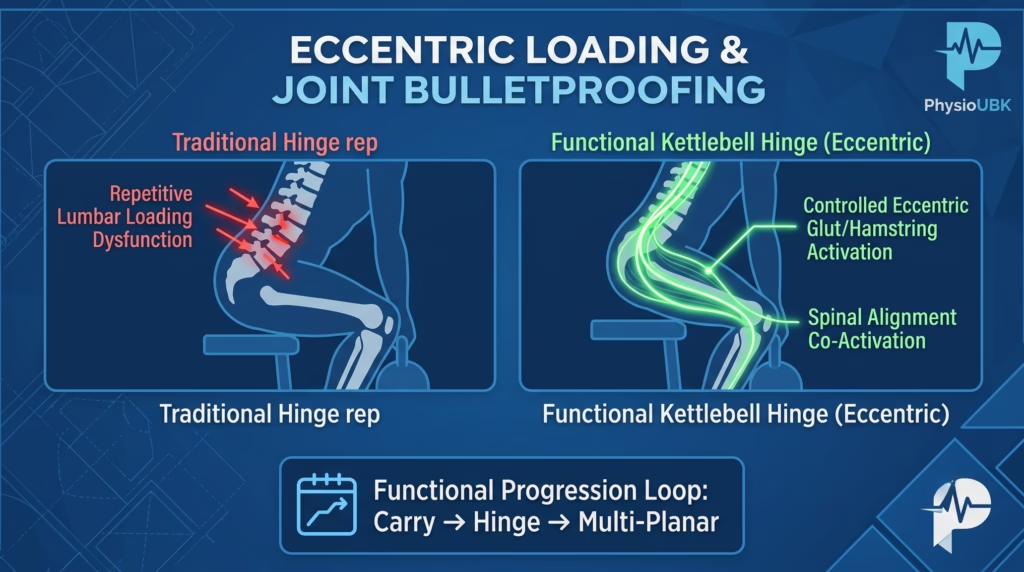
4. The Romanian Deadlift (RDL)
- Biomechanical Execution: Soften your knees slightly, lock your shoulder blades together, and push your hips straight back toward the wall behind you as you lower a weight along your shins. Squeeze your glutes tightly to pull your torso back to vertical.
- Clinical Impact: Directly treats gluteal amnesia by loading the hamstrings and glutes in a stretched position, reducing the strain placed on the lumbar spine.
5. Supported Single-Leg RDL
- Biomechanical Execution: Stand on one leg, holding a weight in the opposite hand. Keep a light touch on a wall or rig with your free hand for balance. Hinge at your hip, extending your non-working leg straight out behind you until your torso is parallel to the floor.
- Clinical Impact: Addresses left-to-right muscular imbalances and builds lateral hip stability (gluteus medius) to significantly improve walking mechanics and posture.
Managing Intraday Load: The Borg CR10 Scale
When desk workers transition to functional fitness, they often mistake intensity for efficacy. Because functional movements challenge stabilizing tissues that have been dormant all day, keeping tabs on your exertion is vital.
Utilize the Borg CR10 Scale of Perceived Exertion to gauge your effort. Your baseline workouts should live comfortably within the Score 3–4 (Moderate to Brisk) window. If your form breaks, or you feel localized pinching in your joints rather than general muscle work, it is a clear structural cue to scale back.
Borg Intensity Tracking for Functional Progressions
| Exertion Rating | Target Intensity Tier | Musculoskeletal Feedback | Operational Safety Guideline |
| 0–2 | Warm-Up / Reset | Minimal muscle fatigue; focus on mobility. | Ideal for early morning or midday posture resets. |
| 3–4 | Moderate to Brisk | Deep muscular engagement; clean movement mechanics. | Target Training Zone for building real-world resilience. |
| 5–6 | Heavy Exertion | Form starts to waver under fatigue; breathing is rapid. | Limit to final sets; prioritize form over adding weight. |
| 7+ | High Structural Risk | Compensation kicks in; lower back arches or joints pinch. | Immediate Stop. Regress weight or movement pattern. |
Restoring Functional Freedom
Your body was designed to bend, twist, lift, and carry across variable environments, not to stay locked into a single chair or a fixed gym machine track. By swapping out isolated gym routines for integrated movement patterns, desk professionals can easily erase chronic fatigue, bulletproof their joints against injury, and move through life with fluid, painless confidence.
Info Box
This movement resource was curated by the PhysioUBK Editorial Team. Physioubk.com is a leading digital voice in physical medicine, dedicated to translating sports recovery science, biomechanics, and structural physical health profiles into actionable guides for an international audience. For deep-dive clinical advice or to find advanced care options at Tariq Medicare Khanewal, stay connected to our updated medical platform.
Book your appointment now for your complete functional fitness assessment!

Tech Neck: 5 Desk Habits That Hurt Your Neck
Your head weighs about 5 kg. Tilt it forward 60 degrees to look at your…
Knee Pain Treatment in Khanewal: Walk, Climb, and Squat Without Fear
A few weeks ago a schoolteacher in her early fifties walked into my clinic and…

How to Choose the Right Pillow for Neck Pain
“Best pillow for neck pain” is one of the fastest-rising health searches in Pakistan —…

The Best Sleeping Positions for Sciatica Pain
There’s a special cruelty to sciatica at night. The day was manageable — then you…

Sciatica or Piriformis Syndrome? How to Tell the Difference
“Doctor sahab, mujhe sciatica hai” — I hear this almost daily. But here’s the thing:…
Kamar Dard Ka Ilaj: When Home Remedies Aren’t Enough
Kamar dard Pakistan mein itna aam hai ke taqreeban har ghar mein koi na koi…