

You set your alarm, get a solid seven or eight hours of sleep, and expect to wake up feeling recharged, energized, and ready to take on the day. Instead, you swing your legs over the side of the bed and feel like your joints have turned to cement. Your lower back aches, your neck feels locked, and your shoulders are pulled tightly toward your ears i.e., body stiffness.
If this sounds familiar, you are far from alone. Morning body stiffness is one of the most common complaints among office workers sitting at desks all day, active adults recovering from workouts, and individuals managing chronic musculoskeletal pain.
While it is easy to blame “getting older,” morning stiffness is rarely just about age. It is a sign that your muscles, joints, fascia, and nervous system are responding to specific habits, environmental factors, or underlying physiological changes.
In this comprehensive guide, we will break down the mechanics behind morning stiffness, explore eight of the most common root causes, and provide practical, evidence-based solutions to help you wake up feeling loose, mobile, and pain-free.
The Science: Why Does the Body Stiffen Up Overnight?
To understand why your joints and muscles feel rigid in the morning, it helps to look at what happens to your anatomy while you sleep.
When you are awake and moving, your joints are constantly lubricated by synovial fluid, a viscous fluid that acts as your body’s internal lubricant. Physical movement acts like a pump, circulating synovial fluid throughout your joint capsules to reduce friction between cartilage and bone.
When you lie still for 6 to 8 hours during sleep:
- Synovial fluid settles and thickens: Without movement, joint fluid becomes thicker and less effective at reducing friction, leading to a temporary sensation of gel-like joint resistance known clinically as the gelastic phenomenon.
- Fascia dehydrates and tightens: Fascia, the connective tissue network wrapping around every muscle, bone, and organ in your body, requires movement and hydration to glide smoothly. Overnight, microscopic cross-links can form in immobilized fascia, making muscles feel tight upon waking.
- Circadian inflammatory response: During sleep, your immune system recalibrates. Natural anti-inflammatory hormones, such as cortisol, reach their lowest levels in the early morning hours, which can allow baseline systemic inflammation to flare up right before you wake up.
Fortunately, for most people, this stiffness isn’t permanent, it is reversible once you address the daily triggers causing it.
8 Common Causes of Morning Stiffness (and How to Fix Them)
1. Poor Sleep Posture and Alignment
Your sleep position plays a massive role in how your spine and joints feel when you wake up. Spending 7 to 8 hours in an awkward position places continuous, low-grade mechanical stress on your spinal ligaments, intervertebral discs, and surrounding muscles.
The Culprits:
- Stomach sleeping: Forces your neck to remain rotated at an extreme angle for hours while flattening the natural curve of your lower back.
- Side sleeping without support: Allows your top leg to slide forward, rotating your pelvis and torquing your lower spine.
- Wrongs pillows or mattresses: A pillow that is too high or too flat distorts neck alignment, while a sagging mattress fails to support the natural “S-curve” of your spine.
The Fix:
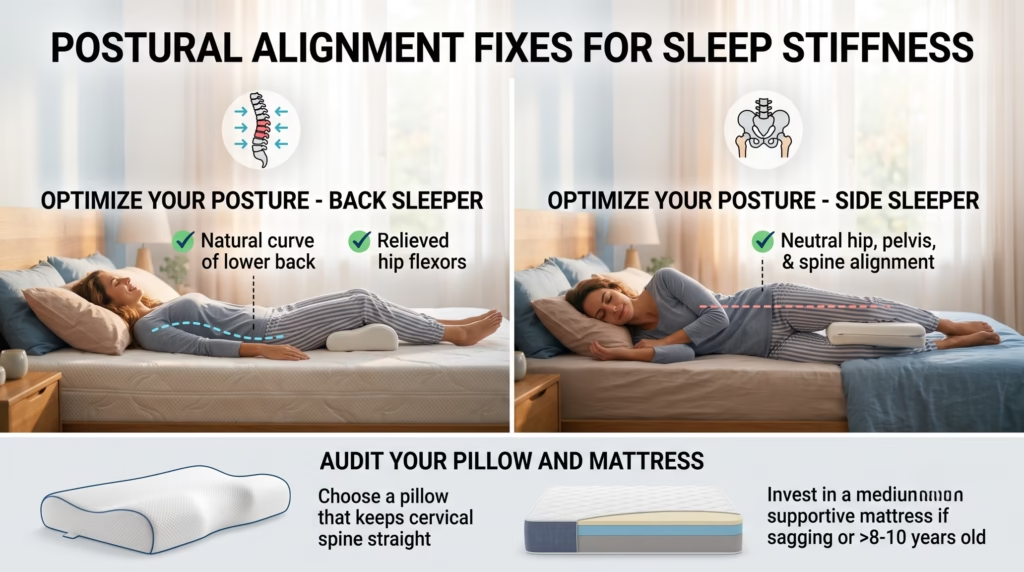
- Optimize your posture:
- Back sleepers: Place a small pillow under your knees to maintain the natural curve of your lower back and relieve pressure on your hip flexors.
- Side sleepers: Place a firm pillow between your knees and ankles to keep your hips, pelvis, and spine neutrally aligned.
- Audit your pillow and mattress: Choose a pillow that keeps your cervical spine straight (parallel to the mattress if you are a side sleeper). If your mattress is more than 8 to 10 years old or shows visible sagging, it may be time to invest in a medium-firm supportive mattress.
2. Daytime Sedentary Habits (The “Desk Worker’s Trap”)
If you spend 8+ hours a day seated at a computer, your body adapts to that prolonged folded position. Sitting keeps your hip flexors, hamstrings, and pectoral (chest) muscles shortened, while your gluteal muscles and upper back postural stabilizers become deactivated and lengthened.
When you sleep, those already tight, shortened tissue structures stay immobilized for another 8 hours. The result? You wake up with an intensely stiff lower back, tight hips, and rounded shoulders.
The Fix:
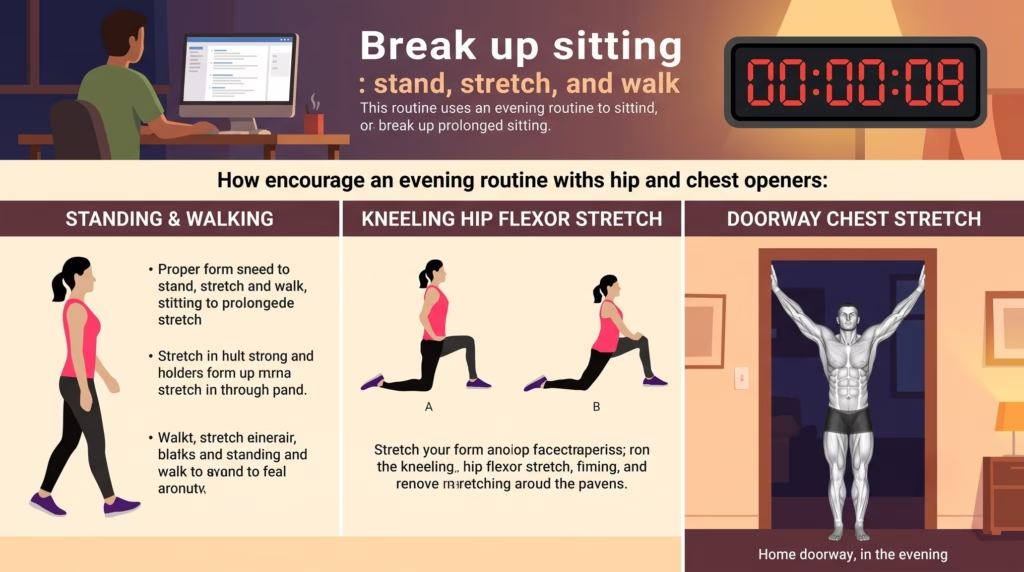
- Break up prolonged sitting: Set a timer to stand, stretch, or walk for 2 to 3 minutes every 45 to 60 minutes during your workday.
- Perform evening hip and chest openers: Spend 5 minutes before bed opening up the tissues you compressed all day. Try the Kneeling Hip Flexor Stretch and the Doorway Chest Stretch to reset muscle length before sleep.
3. Dehydration and Inadequate Overnight Fluid Levels
Your intervertebral discs, the shock-absorbing pads between your spinal vertebrae, are composed primarily of water. Throughout the day, gravity compresses your spine, squeezing small amounts of water out of these discs. Overnight, when lying prone or supine, your spinal discs naturally rehydrate and re-expand.
If you go to bed dehydrated, your body lacks the fluid necessary to properly hydrate these discs and surrounding fascial layers. Dehydrated fascia becomes sticky rather than slippery, preventing smooth tissue glide when you try to move in the morning.
The Fix:

- Maintain consistent hydration: Drink water consistently throughout the day rather than chugging a large amount right before bed (which will only interrupt your sleep cycle with bathroom trips).
- Start your morning with water: Keep a glass of room-temperature water on your nightstand and drink it immediately upon waking to kickstart system hydration.
4. Natural Circadian Inflammation Dips
Inflammation follows a circadian rhythm controlled by your body’s internal clock. Anti-inflammatory chemicals and hormones like cortisol naturally drop to their lowest concentrations around 3:00 AM to 4:00 AM.
If you have underlying low-grade systemic inflammation, driven by poor diet, elevated stress, or lack of quality deep sleep, the early morning cortisol drop allows inflammatory cytokines to circulate unchecked, causing joint lining irritation and muscle ache upon waking.
The Fix:

- Adopt an anti-inflammatory evening routine: Avoid high-sugar, heavily processed foods and alcohol close to bedtime, as these spur nighttime inflammatory cascades.
- Prioritize deep sleep quality: Ensure your bedroom is cool, dark, and quiet to encourage deep sleep stages (Slow Wave Sleep), which is when your body releases tissue-repairing growth hormone.
5. Overtraining or Unaddressed Delayed Onset Muscle Soreness (DOMS)
For active adults, athletes, or gym-goers, morning stiffness is frequently tied to exercise recovery. Intense strength training, running, or high-intensity interval training (HIIT) causes microscopic tears in muscle fibers.
During the repair process, micro-inflammation peaks anywhere from 24 to 48 hours post-workout. When you lie still overnight, muscle metabolic waste products accumulate in immobilized tissue, leaving you feeling exceptionally tight the next morning.
The Fix:

- Incorporate active recovery: Do not jump straight from an intense workout to sitting at a desk or lying on the couch. Include a 10-minute cool-down walk followed by light mobility work.
- Refuel properly: Consume adequate protein and magnesium-rich foods (or supplements) in the evening to support muscle tissue repair and nerve relaxation overnight.
6. Chronic Stress, Anxiety, and Involuntary Muscle Guarding
When you carry mental stress, your sympathetic nervous system (“fight-or-flight”) remains chronically elevated. This causes your brain to send low-level electrical signals to your muscles, keeping them in a constant state of mild contraction or “muscle guarding.”
If you fall asleep stressed, your body rarely lets go of this muscular tension. You may clench your jaw, elevate your shoulders, or brace your lower back muscles involuntarily all night long.
The Fix:

- Down-regulate your nervous system before bed: Dedicate 10 minutes before sleep to activities that activate your parasympathetic (“rest-and-digest”) nervous system.
- Practice diaphragmatic breathing (Box Breathing): Inhale slowly through your nose for 4 seconds, hold for 4 seconds, exhale through your mouth for 4 seconds, and hold for 4 seconds. Repeat for 5 minutes to release physical muscle tension.
7. Cold Sleeping Environments and Drafts
While sleeping in a cool room (around 18–20°C / 65–68°F) is ideal for sleep depth, exposure to cold air drafts directly hitting exposed skin or thin covers can cause involuntary muscular contraction.
Cold temperatures cause blood vessels near the skin to constrict (vasoconstriction) to conserve core heat. Reduced localized blood flow to your neck, back, or joints leaves tissues cold, less pliable, and tight by morning.
The Fix:

- Keep large muscle groups covered: Ensure your neck, shoulders, and lower back stay adequately covered if you sleep with air conditioning or open windows.
- Warm up your environment: If you wake up stiff in colder months, take a warm shower immediately after getting out of bed to rapidly increase local cutaneous blood flow.
8. Undiagnosed Musculoskeletal or Joint Conditions
In some cases, morning stiffness is a symptom of an underlying medical or joint condition that requires professional evaluation.
Common Conditions Include:
- Osteoarthritis (OA): Wear-and-tear joint changes causing morning stiffness that typically lasts less than 30 minutes and improves quickly with light movement.
- Inflammatory Arthritis (e.g., Rheumatoid Arthritis, Ankylosing Spondylitis): Autoimmune joint conditions characterized by severe morning stiffness that often lasts longer than 45 to 60 minutes and requires medical intervention.
- Myofascial Pain Syndrome: Chronic trigger points in muscle bands that lock up when kept static for hours.
The Fix:
- Track how long your stiffness lasts each morning. If your joint stiffness consistently takes more than 45 to 60 minutes to subside, schedule an evaluation with a medical practitioner or physical therapist.
Quick Summary Table: Causes vs. Rapid Solutions
| Cause | Key Indicator | Rapid Fix |
| Poor Sleep Posture | Waking with localized neck/back stiffness | Use knee pillows; align pillow height |
| Sedentary Lifestyle | Tight hip flexors & rounded shoulders | Take daytime movement breaks; evening mobility |
| Dehydration | Generalized dull muscle aching & dry skin | Drink water immediately upon waking |
| Overnight DOMS | Focal muscle soreness after exercise | Cool-down light cardio; magnesium/protein intake |
| High Mental Stress | Jaw clenching, high shoulders, shallow breath | 5-minute pre-bed diaphragmatic breathing |
| Cold Drafts | Sudden neck or back spasticity | Keep shoulders/spine covered; warm morning shower |
The 5-Minute “Bed-to-Floor” Morning Mobility Routine
Instead of forcing your body through intense stretches the moment you wake up, perform this gentle, progressive 5-minute physical therapy sequence to wake up your nervous system and circulate synovial fluid.
Step 1: In Bed (2 Minutes)
1. Pelvic Tilts
- How: Lie flat on your back with knees bent and feet flat on the mattress. Gently flatten your lower back against the bed by contracting your abdominals, hold for 2 seconds, then arch your back slightly.
- Repetitions: 10–12 smooth tilts.
- Why: Gently warms up the lumbar spine and pelvis without load.
2. Single Knee-to-Chest Hug
- How: Pull one knee toward your chest while keeping the other foot flat or extended. Hold for 3 to 5 seconds, switch sides.
- Repetitions: 5 per leg.
- Why: Relieves gluteal and lower back fascial tension.
Step 2: On the Floor / Edge of Bed (3 Minutes)
3. Seated Cat-Cow
- How: Sit on the edge of your bed with feet planted flat on the floor. Hands on knees. Inhale as you arch your back and roll your shoulders back (Cow). Exhale as you round your spine and tuck your chin (Cat).
- Repetitions: 8 to 10 fluid repetitions.
- Why: Restores segment-by-segment spinal mobility in flexion and extension.
4. Thoracic Windmills / Open Books
- How: Lie on your side on a floor mat with knees bent at 90 degrees. Extend both arms straight in front of you. Reach your top arm up and open it across your body toward the floor behind you, following your hand with your eyes.
- Repetitions: 5 controlled reps per side.
- Why: Unlocks middle back (thoracic) stiffness caused by sitting or desk work.
5. Standing World’s Greatest Stretch / Standing Hip Hinge
- How: Stand tall, reach your hands overhead, then gently hinge at your hips (keeping knees slightly soft) to reach toward your toes until you feel a gentle hamstring stretch.
- Repetitions: 5 slow hinges.
- Why: Activates posterior chain muscles and prepares your spine for standing weight bearing.
When Should You See a Physical Therapist?
While mild, short-lived morning stiffness is easily managed with posture fixes and daily movement, certain warning signs warrant a visit to a healthcare provider or physical therapist.
Seek Professional Evaluation If:
- Your morning stiffness consistently lasts longer than 45 to 60 minutes.
- The stiffness is accompanied by joint swelling, redness, or heat to the touch.
- You experience sharp, shooting pain down your legs or arms (radiculopathy).
- You experience numbness, tingling, or weakness in your hands, legs, or feet.
- Your stiffness significantly limits your ability to perform basic daily activities like putting on shoes, driving, or walking.
A tailored physical therapy evaluation can help pinpoint precise joint restrictions, muscle imbalances, and postural habits, giving you an individualized rehab plan to eliminate morning stiffness for good.
Final Thoughts
Feeling stiff in the morning does not have to be normal. Your body is designed to move freely, and waking up with joint and muscle rigidity is simply a message that your tissues need better alignment, hydration, mobility, or recovery support.
By making a few small adjustments to your sleep position, staying hydrated, taking movement breaks during your workday, and spending just 5 minutes on a gentle morning mobility routine, you can restore fluid motion to your body and start every day feeling agile and ready to thrive.

Losing Muscle, Losing Protection? The Surprising Link Between Muscle Strength and Immunity
When most people think of the immune system, they picture white blood cells, lymph nodes,…

Sleep Better, Think Better: Can a 20-Minute Workout Undo a Sleepless Night?
Waking up after a sleepless night of tossing and turning feels like trying to operate…
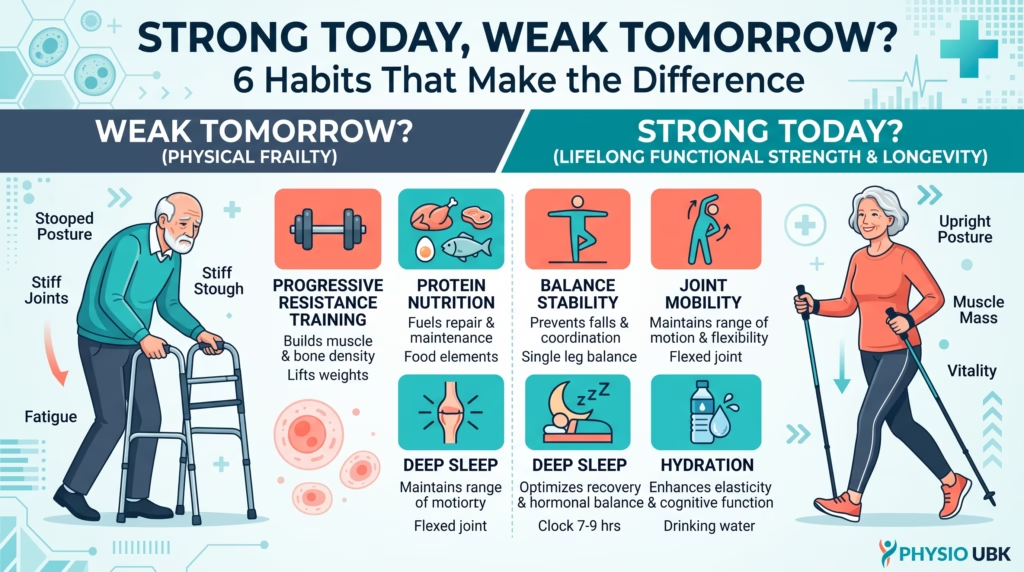
Strong Today, Weak Tomorrow? 6 Habits That Make the Difference
Physical strength often feels permanent when we have it. When you can effortlessly carry heavy…

The 5 Best Deep Core Exercises for Chronic Lower Back Pain
Lower back pain is the leading cause of disability worldwide. Millions of people wake up…

Better Posture, Less Pain: 7 Bad Habits That Are Hurting Your Spine
In our modern world, back and neck pain have become almost universal human experiences. We…

GLP-1 Weight-Loss Drugs: What They Mean for Muscle Health
The landscape of metabolic medicine and weight management has undergone a historic transformation. Medications like…