
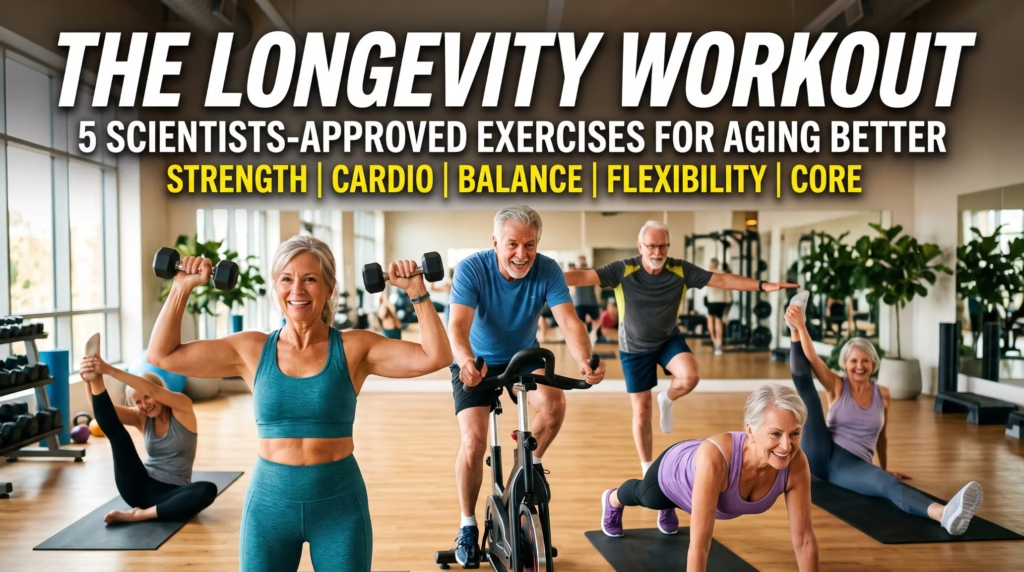
Getting older is inevitable, but how we age is largely within our control. For years, exercise advice for older adults focused almost exclusively on gentle walks or moderate cardio. While walking remains fantastic for cardiovascular health, sports science and geriatric medicine have revealed a broader truth: to truly preserve independence, protect brain function, and maintain mobility well into your 70s, 80s, and beyond, your body requires a specific combination of physical stimuli.
Enter the concept of the “Longevity Workout.” Rather than training for aesthetic goals or short-term fitness challenges, longevity-focused exercise targets the fundamental physiological markers of aging: muscle loss (sarcopenia), bone density decline (osteopenia), metabolic slowdown, diminished balance, and vascular stiffening.
Whether you are a busy 45-year-old desk worker looking to counteract decades of sitting, or a retiree determined to keep up with grandchildren and travel comfortably, these five science-backed exercises serve as the foundational pillars for healthier, more resilient aging.
1. The Goblet Squat: Protecting Functional Independence
If there is a single movement pattern that dictates your quality of life in later years, it is the ability to lower your center of gravity and stand back up without assistance. Sitting down on a chair, getting up from the couch, or picking up something off the floor all rely on the functional biomechanics of a squat.
As we age, we naturally lose muscle mass, a process known as sarcopenia, at a rate of roughly 3% to 8% per decade after age 30, with the loss accelerating significantly after age 60. The leg muscles, particularly the quadriceps and glutes, are often the first to lose functional strength.
The Science Behind It
Studies published in journals such as the Journal of American Geriatrics Society consistently highlight leg strength as one of the strongest predictors of mobility, fall prevention, and overall mortality in aging populations. Squatting engages the largest muscle groups in the lower body, triggering a systemic neuromuscular response that stimulates muscle growth and maintains hip and knee joint integrity.
Using a Goblet Squat variation, where a light weight (a dumbbell or kettlebell) is held close to the chest, helps act as a counterbalance. This posture keeps your torso more upright, reducing stress on the lumbar spine while engaging core stability muscles.
How to Perform It Safely
- Starting Position: Stand with feet slightly wider than hip-width apart, toes turned out slightly (10 to 15 degrees). Hold a light dumbbell, kettlebell, or even a water bottle vertically against your chest.
- The Movement: Inhale deeply, brace your midsection, and begin the movement by pushing your hips backward as if sitting into a chair.
- Depth: Lower yourself until your thighs are parallel to the floor (or as low as comfort and joint health allow without rounding your lower back).
- The Drive: Press firmly through your whole foot, especially your heels and mid-foot, to drive yourself back up to the standing position. Squeeze your glutes at the top.
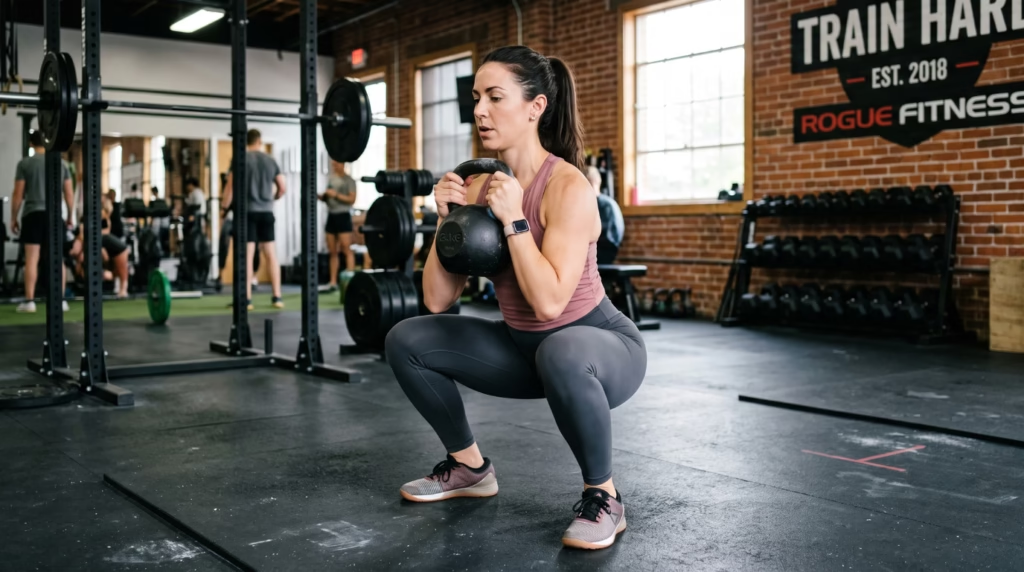
Modification for Beginners: If free-standing squats cause knee discomfort or balance concerns, perform Chair Stand-Ups (Box Squats). Place a sturdy dining chair behind you, squat down until your glutes lightly touch the seat, pause briefly, and push through your feet to stand back up.
2. Farmer’s Carries: Grip Strength and Total-Body Stability
It might look deceptively simple, just picking up two heavy objects and walking with them, but the Farmer’s Carry is one of the most comprehensive full-body exercises in existence.
The Science Behind It
Grip strength is not just an indicator of hand health; epidemiologists consider it a vital biomarker for biological age. Long-term studies, such as the landmark PURE (Prospective Urban Rural Epidemiology) study, examined over 140,000 adults across 17 countries and discovered that grip strength was a stronger predictor of all-cause mortality and cardiovascular disease than systolic blood pressure.
Farmer’s carries train functional grip while simultaneously taxing core stability, shoulder girdle endurance, posture, and gait mechanics. Holding load while moving forces your deep core stabilisers (the transverse abdominis and quadratus lumborum) to keep your spine neutral, counteracting the slouched, forward-head posture common in office workers and older adults.
How to Perform It Safely
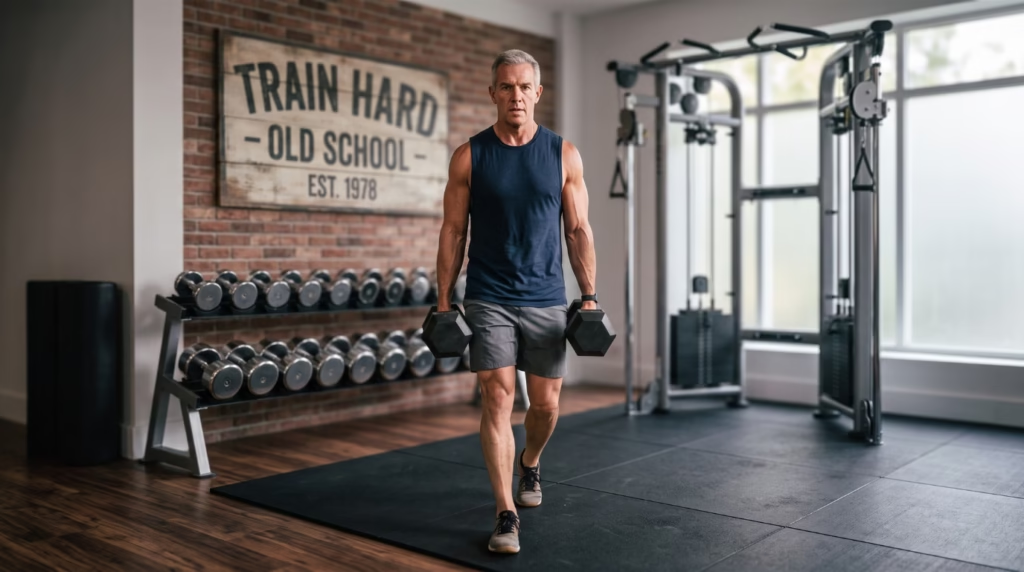
- Setup: Place two equal weights (dumbbells, kettlebells, or heavy grocery bags) on the floor alongside your feet.
- Lift: Hinge at your hips with a flat back, bend your knees, squeeze the handles tightly, and stand up straight using your legs.
- The Walk: Pull your shoulder blades back and down (away from your ears). Walk forward in a controlled, straight line using natural strides. Keep your torso tall, do not lean forward, backward, or side-to-side.
- Duration: Walk for 30 to 60 seconds (or 30 to 50 paces), set the weights down with control, rest, and repeat.
Pro-Tip: Focus on “packing” your shoulders down into your back pockets. Avoid shrugging your shoulders upward toward your neck during the walk.
3. Zone 2 Cardio (Cycling, Rucking, or Brisk Incline Walking): The Cellular Fountain of Youth
While high-intensity interval training (HIIT) gets a lot of media attention, the true hero of metabolic longevity is low-to-moderate intensity aerobic exercise, clinically referred to as Zone 2 training.
The Science Behind It
Zone 2 corresponds to an exercise intensity where your body relies almost exclusively on fat oxidation and aerobic metabolism, rather than burning stored carbohydrates (glycogen). At this specific effort level, your body stimulates the production and efficiency of mitochondria, the energy powerhouses inside your cells.
As we age, mitochondrial function naturally declines, contributing to insulin resistance, metabolic syndrome, fatigue, and systemic inflammation. Regular Zone 2 training increases mitochondrial density, builds a resilient cardiovascular system, lowers resting heart rate, and improves arterial flexibility without placing excessive stress on your joint structures or nervous system.
Finding Your Zone 2 Intensity
You do not need an expensive laboratory gas analyzer to find your Zone 2 zone. Use the simple “Talk Test”:
- You should be breathing noticeably harder than at rest, but still able to comfortably speak in full, complete sentences without gasping for air between words.
- If you can only speak in short, broken phrases, you have been pushed into Zone 3 or higher.
Recommended Modalities
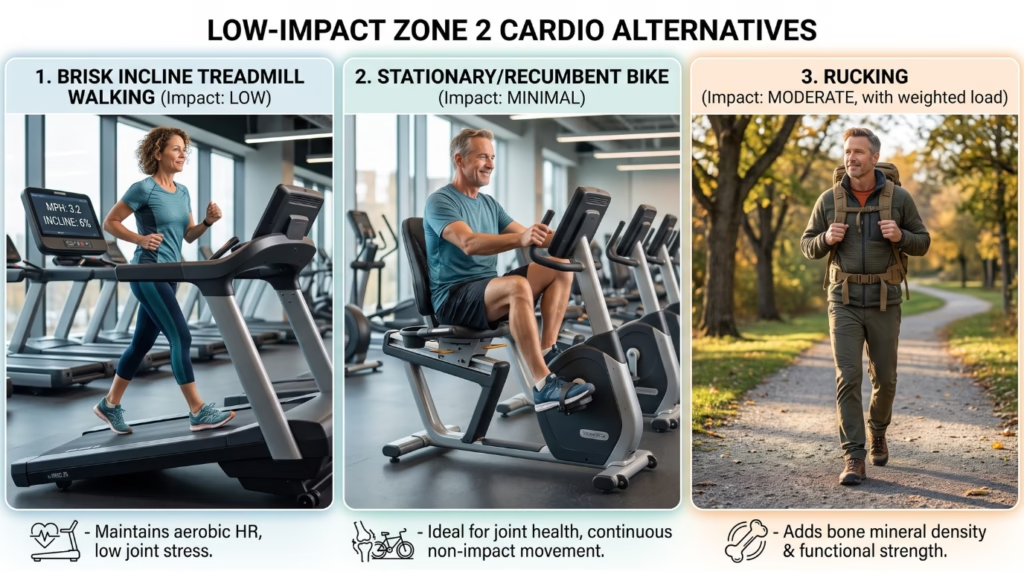
- Brisk Incline Treadmill Walking: Walking at 3.0 to 3.5 mph on a 3% to 6% incline keeps the impact low while elevating heart rate appropriately.
- Stationary Cycling or Recumbent Bike: Excellent for those managing hip or knee osteoarthritis.
- Rucking: Walking with a weighted backpack (starting with 5–10 lbs). This adds a gentle strength component to your aerobic walk, boosting bone mineral density.
Target Volume: Aim for 150 to 200 minutes per week, divided into 30- to 45-minute sessions.
4. The Deadbug: Core Anti-Extension & Spine Protection
A strong core is often misunderstood as having visible abdominal muscles. In reality, core strength for longevity is about spinal stability, motor control, and load distribution.
Traditional sit-ups and crunches repeatedly flex the lumbar spine, which can agitate age-related disc degeneration or spinal stenosis. The Deadbug provides superior abdominal activation while keeping your spine safely stabilized in a neutral, supported position on the floor.
The Science Behind It
The primary function of the core muscles is to prevent unwanted movement in the spine rather than create it. The Deadbug trains “anti-extension”, teaching your nervous system to stabilize your pelvis and lower back while your limbs move independently. This movement pattern translates directly to safer lifting, walking, and bending in daily life, significantly reducing the risk of acute lower back injuries.
How to Perform this Longevity workout Safely
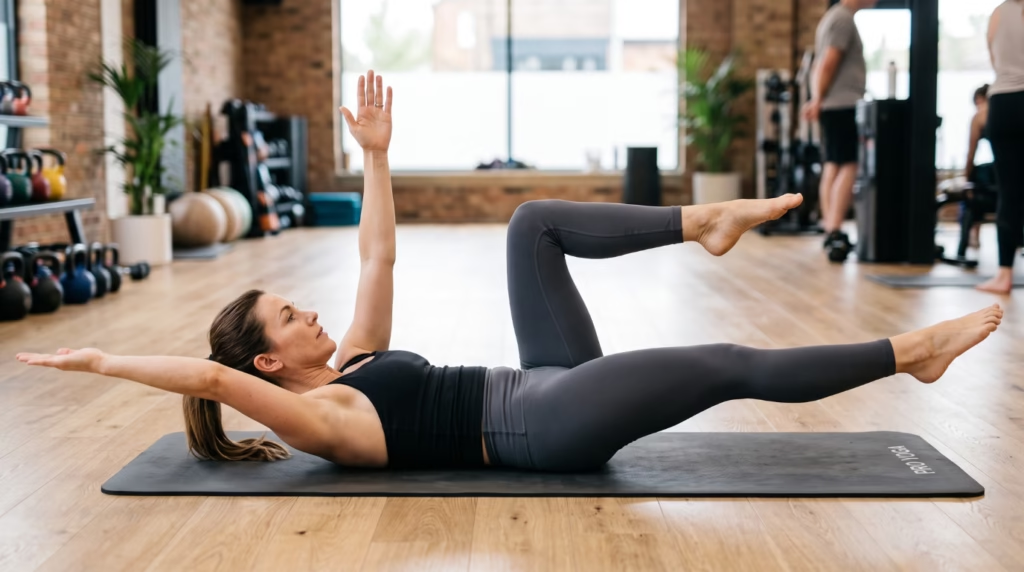
- Starting Position: Lie flat on your back on an exercise mat. Raise your arms straight up toward the ceiling. Bend your knees to a 90-degree angle so your shins are parallel to the floor (tabletop position).
- The Cue: Gently tilt your pelvis back to press your lower back completely flat against the mat. There should be no space between your lower back and the floor throughout the movement.
- The Movement: Slowly lower your right arm backward overhead while simultaneously extending your left leg straight out toward the floor. Stop just before your hand and foot touch the ground.
- Return: Exhale and pull your arm and leg back to the starting position. Repeat on the opposite side (left arm, right leg).
- Volume: Perform 8 to 12 slow, controlled reps per side.
Modification for Beginners: If extending the opposite arm and leg simultaneously causes your back to arch off the mat, modify by keeping your arms still and simply tapping one heel to the floor at a time.
5. Single-Leg Romanian Deadlift (RDL): Balance, Hinge, and Fall Prevention
Falls are the leading cause of injury and loss of independence among older adults worldwide. While balance exercises are often thought of as standing on one foot on a foam pad, combining balance with posterior chain strength (hamstrings, glutes, and spinal erectors) yields far greater longevity dividends.
The Single-Leg Romanian Deadlift (RDL) trains hip hinging, unilateral hip stability, foot/ankle strength, and spatial awareness simultaneously.
The Science Behind It
As we spend more time sitting at desks or in vehicles, the posterior chain becomes underactive, while the hip flexors tighten. This imbalance distorts gait mechanics and weakens the gluteal complex, the primary engine for walking, climbing stairs, and standing. Furthermore, single-leg exercises force the stabilizer muscles in the ankles and hips (such as the gluteus medius) to work overtime, strengthening the rapid neuromuscular adjustments necessary to catch yourself if you trip or slip.
How to Perform It Safely
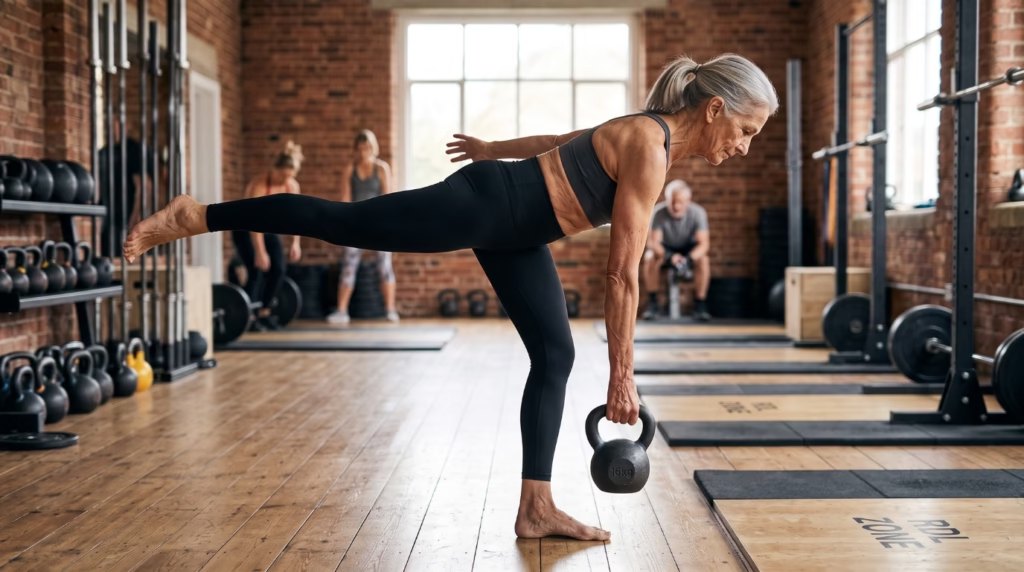
- Setup: Stand tall with your feet hip-width apart. Shift your weight onto your right foot, keeping a subtle, soft bend in your right knee.
- The Hinge: Keeping your back flat and chest open, hinge forward at your hips. Allow your left leg to lift behind you in a straight line with your torso, acting as a natural balance lever.
- Depth: Lower your torso until it is roughly parallel to the ground (or as far as your hamstring flexibility permits without rounding your spine). Keep your hips square to the floor, do not let your hips rotate open to the side.
- Return: Drive through your standing heel and squeeze your right glute to return to an upright standing position.
- Volume: Perform 6 to 10 controlled reps per leg.
Modification (The Kickstand RDL): Balance can take time to build. If balance is a struggle, keep the toes of your non-working leg lightly touching the floor behind you like a “kickstand” (about 70% weight on the front leg, 30% on the back toes). This allows you to train the hip hinge safely while gradually developing single-leg stability.
Structuring Your Weekly Longevity Routine
To gain the maximal health benefits without overtraining or causing joint fatigue, balance these five exercises across a consistent weekly routine.
Sample Weekly Blueprint
| Day | Primary Focus | Workout Components |
| Monday | Total-Body Strength | • Goblet Squats (3 sets of 8–10 reps) • Farmer’s Carries (3 sets of 45 seconds) • Deadbug (3 sets of 10 reps/side) |
| Tuesday | Zone 2 Aerobic | • 30–45 mins Brisk Incline Walk or Cycling (Talk Test Pace) |
| Wednesday | Active Recovery / Mobility | • Light walking, gentle joint mobility, stretching |
| Thursday | Total-Body Strength | • Single-Leg RDLs (3 sets of 8 reps/side) • Goblet Squats or Chair Stand-Ups (3 sets of 10 reps) • Farmer’s Carries (3 sets of 45 seconds) |
| Friday | Zone 2 Aerobic | • 30–45 mins Rucking or Outdoor Cycling |
| Saturday | Mixed Aerobic & Core | • 30 mins Zone 2 Cardio + 3 sets of Deadbugs |
| Sunday | Full Rest | • Rest, sleep recovery, family time |
3 Essential Golden Rules for Training Over 45
- Prioritize Consistency Over Intensity: The biological benefits of exercise build up gradually over time. Lifting excessively heavy weights once a week with poor form increases injury risk; lifting manageable weights 2–3 times a week with precise movement patterns creates lifelong joint durability and metabolic strength.
- Never Work Through Sharp Joint Pain: Muscle fatigue and a mild “burn” during exercise are normal; sharp, stabbing, or pinpoint joint pain is not. Listen to your body’s feedback. Modify depth, reduce weight, or swap to a simpler variation whenever joint pain arises.
- Support Exercise with Protein and Hydration: As we age, our bodies experience anabolic resistance, meaning we require slightly higher quality protein intake to repair and synthesize muscle tissue after workouts. Aim to include a clean source of protein (e.g., eggs, lean meats, fish, tofu, or dairy) alongside adequate hydration after every training session.
Final Thoughts
Aging gracefully isn’t about chasing youth; it’s about preserving capacity. The capacity to travel without assistance, carry your own groceries, play on the floor with loved ones, and move through the world without fear of falling or feeling fragile.
By integrating the Goblet Squat, Farmer’s Carry, Zone 2 Cardio, Deadbug, and Single-Leg RDL into your routine, you aren’t just working out, you are investing in a healthier, stronger, and more independent future. Start slow, master the form, remain consistent, and let science work in your favor.
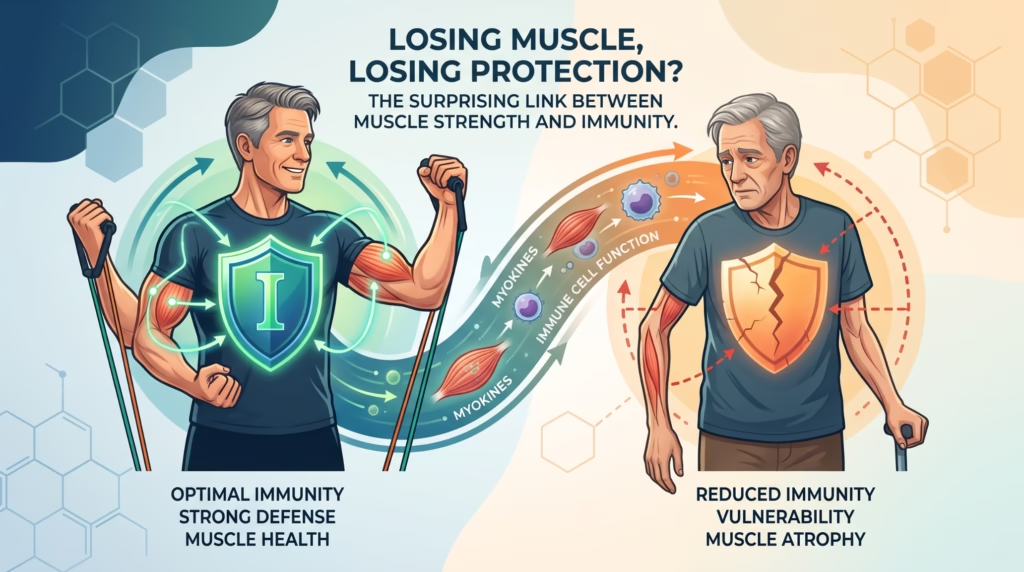
Losing Muscle, Losing Protection? The Surprising Link Between Muscle Strength and Immunity
When most people think of the immune system, they picture white blood cells, lymph nodes,…
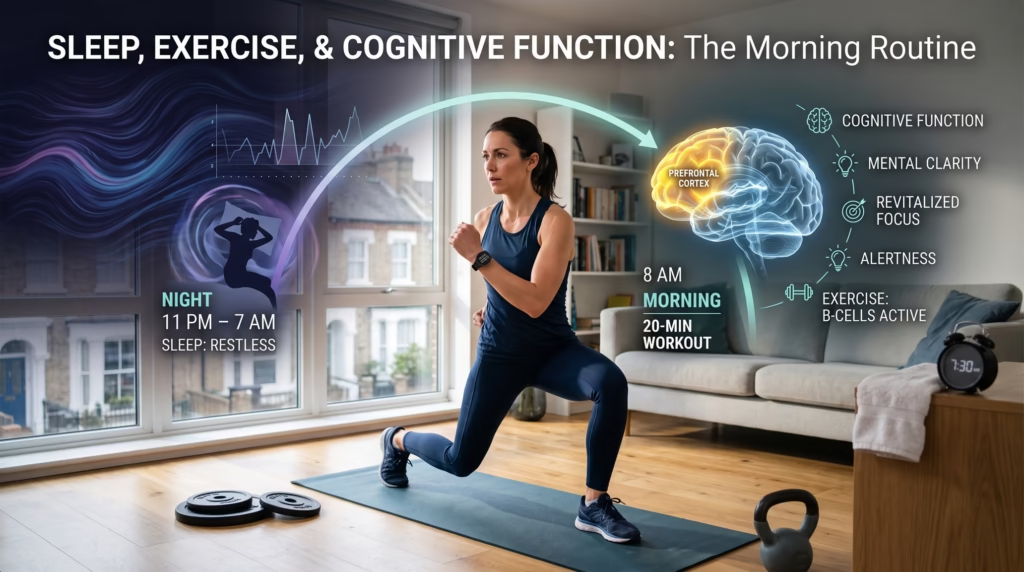
Sleep Better, Think Better: Can a 20-Minute Workout Undo a Sleepless Night?
Waking up after a sleepless night of tossing and turning feels like trying to operate…
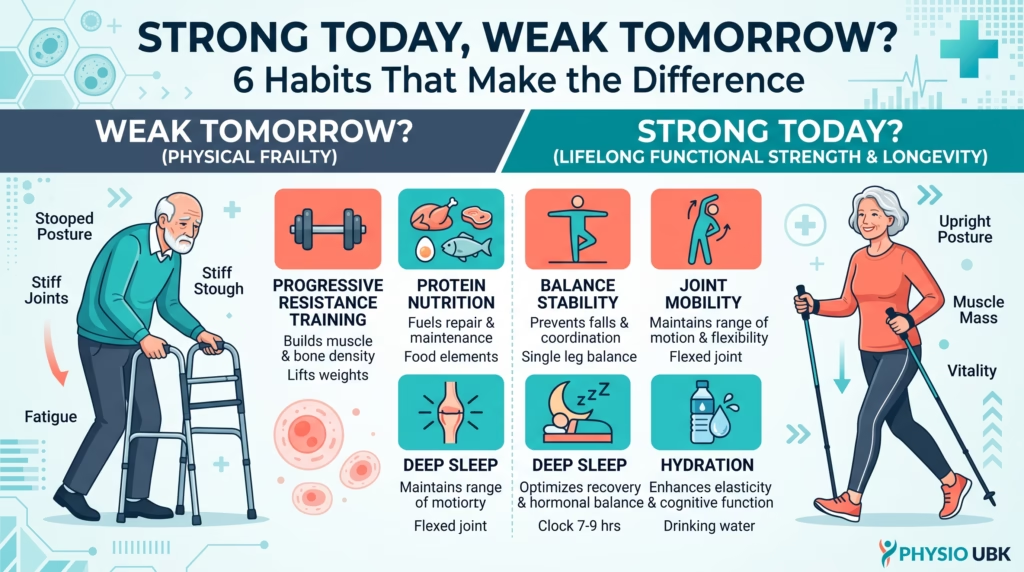
Strong Today, Weak Tomorrow? 6 Habits That Make the Difference
Physical strength often feels permanent when we have it. When you can effortlessly carry heavy…
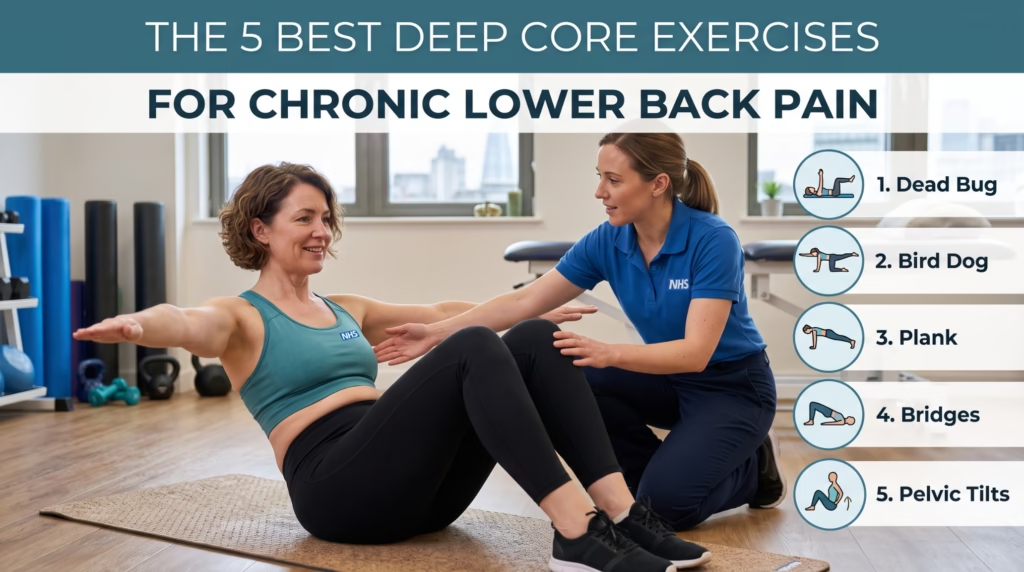
The 5 Best Deep Core Exercises for Chronic Lower Back Pain
Lower back pain is the leading cause of disability worldwide. Millions of people wake up…
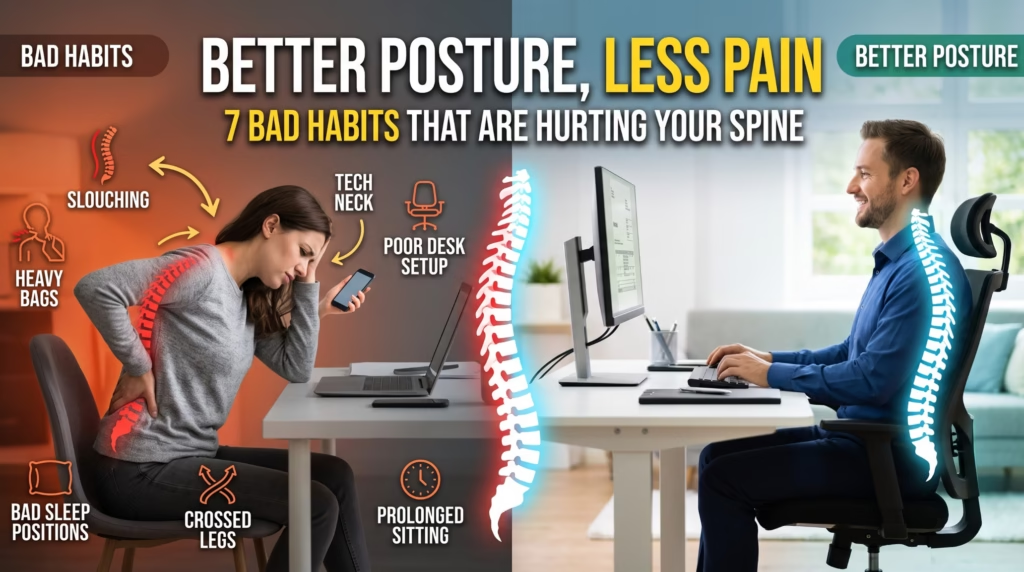
Better Posture, Less Pain: 7 Bad Habits That Are Hurting Your Spine
In our modern world, back and neck pain have become almost universal human experiences. We…
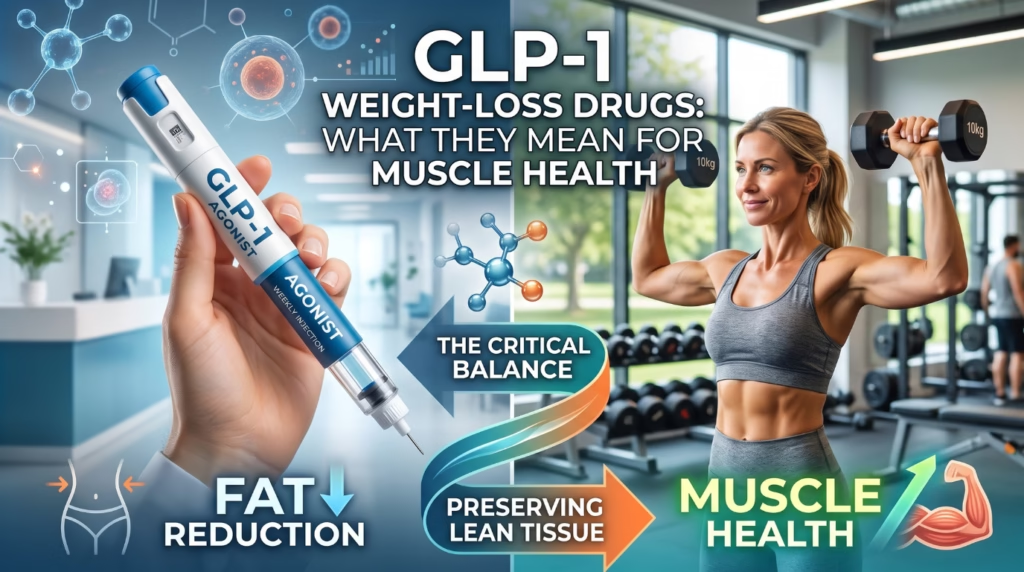
GLP-1 Weight-Loss Drugs: What They Mean for Muscle Health
The landscape of metabolic medicine and weight management has undergone a historic transformation. Medications like…