
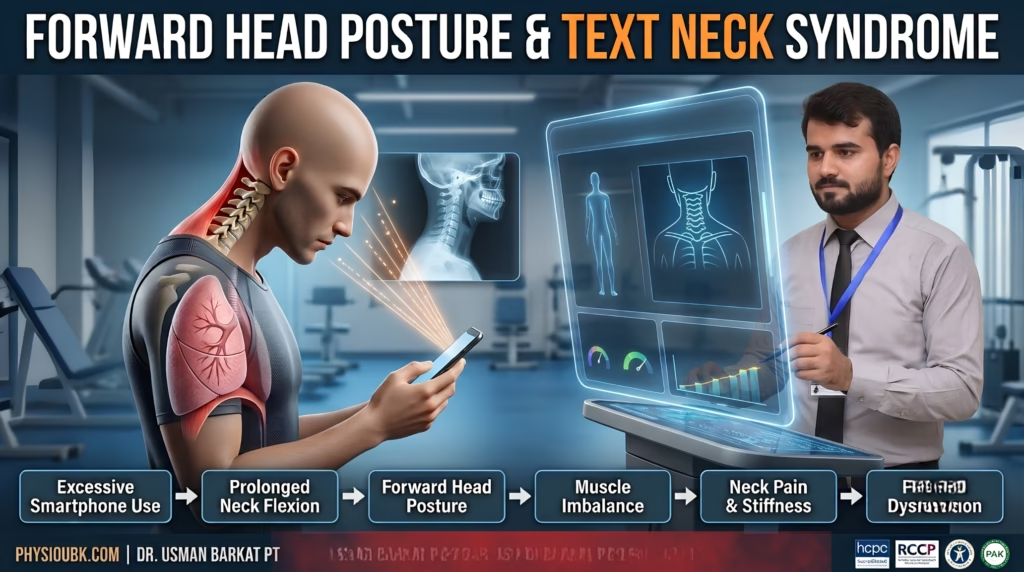
A Common Biomechanical Pattern Often Overlooked: Insights into Text Neck Syndrome
Imagine holding a 5-kilogram bowling ball close to your chest. Your primary postural stabilizers handle it with ease. Now, extend your arms straight out in front of you and attempt to hold that same ball away from your body. Within seconds, your muscles fatigue, burn, and strain. The mass of the ball hasn’t changed, but the mechanical lever arm has dramatically increased the structural load.
A nearly identical mechanical crisis happens to your cervical spine every single day.
Every time you drop your chin to check messages, scroll through social media feeds, watch video content, or answer emails, the physical forces acting on your neck increase exponentially. What appears to be a harmless, subconscious habit repeated hundreds of times a day gradually remodels your underlying posture, creates chronic muscle imbalances, and alters fundamental spinal mechanics.
In modern physical therapy clinics, we are observing a massive influx of younger patients presenting with musculoskeletal symptoms that were historically reserved for advanced age groups or heavy industrial laborers. Persistent neck stiffness, chronic shoulder tightness, tension-type headaches, and upper back discomfort have shifted from occasional complaints to daily struggles for students, office workers, mobile gamers, and remote professionals.
This widespread digital health epidemic is clinically recognized as Text Neck Syndrome, and at the absolute center of this condition lies one of the most structural postural shifts of the digital age: Forward Head Posture (FHP).
What Exactly Is Forward Head Posture?
Forward Head Posture describes a structural condition where the head drifts horizontally in front of the body’s vertical plumb line (the shoulders) instead of remaining perfectly balanced directly atop the cervical spine.
Think of your skull as that 5-kilogram bowling ball perfectly balanced over the structural pillar of your vertebrae. When aligned correctly, your skeleton bears the weight efficiently, requiring minimal muscular effort to stay upright. However, when the head migrates forward, your posterior cervical muscles, ligaments, and facet joints must contract non-stop just to prevent your head from falling forward onto your chest.
Over time, this chronic compensation alters the entire upper kinetic chain:
Forward Head Migration ──► Cervical Spine Compression ──► Rounded Shoulder Compensation ──► Restricted Ribcage Expansion ──► Shallow Diaphragmatic Breathing
This structural shift alters movement patterns throughout your entire torso, making everyday movements inefficient and structurally draining.
The “Smartphone Spine” Problem: The Physics of Text Neck
The mathematical reality of spinal loading explains why so many individuals suffer from chronic tension. As your head tilts forward to look at a device, gravity acts on the shifted mass, multiplying the relative weight your lower cervical spine must support.
How Neck Load Changes with Head Position
| Head Flexion Angle | Approximate Force on Cervical Spine | Relative Load Comparison |
| Neutral Position (0°) | 5 kg (10–12 lbs) | Normal Head Weight |
| Looking Down 15° | 12 kg (27 lbs) | A Standard Backpack |
| Looking Down 30° | 18 kg (40 lbs) | A Medium-Sized Dog |
| Looking Down 45° | 22 kg (49 lbs) | A Large Water Cooler Jug |
| Looking Down 60° | 27 kg (60 lbs) | An Average 8-Year-Old Child |
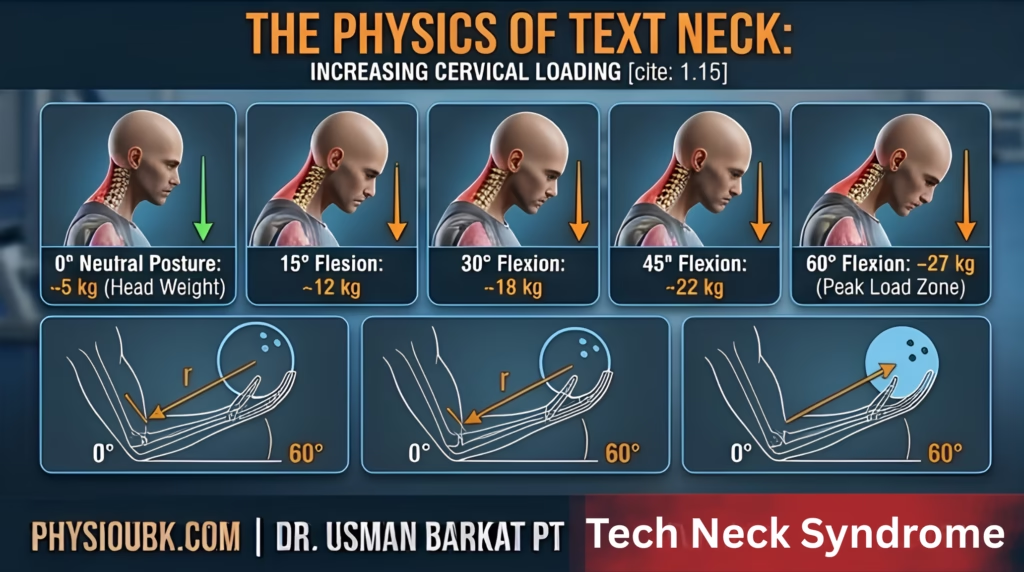
Visualizing the Mechanical Strain
Neutral Position (0°)  ■■■■■ (5 kg)
15° Flexion            ■■■■■■■■■■■■ (12 kg)
30° Flexion            ■■■■■■■■■■■■■■■■■■ (18 kg)
45° Flexion            ■■■■■■■■■■■■■■■■■■■■■■ (22 kg)
60° Flexion            ■■■■■■■■■■■■■■■■■■■■■■■■■■■ (27 kg)
By the time your neck is bent to a 60-degree angle—the standard posture for typing out a text message or holding a phone in your lap—your cervical spine is sustaining more than five times its natural structural load.
Why Are So Many People Developing Text Neck?
The root cause isn’t the smartphone itself; it is the pairing of prolonged structural loading with a complete lack of dynamic movement diversification.
Daily Postural Risks in the Digital Era
- Scrolling Social Media Apps: High Risk (Usually performed with deep head flexion and un-supported elbows).
- Mobile Gaming: High Risk (Characterized by hyper-focused, static neck flexion for extended durations).
- Watching Short-Form Reels/Videos: High Risk (Encourages a slumped, forward-creeping posture on couches or chairs).
- Laptop or Remote Desk Work: Moderate to High Risk (Dependent on screen height, desk ergonomics, and chair support).
- Streaming Video in Bed: Very High Risk (Propping pillows under the head forces the chin deeply against the chest, straining the posterior tissues).
- Senior Slump: Aging affects bone density. Gravity pulls our shoulders forward every single day. Muscles in the chest tighten. Muscles in the back become very weak. This imbalance creates a hunched-back look.
How to Stop Hunching at Home, best posture exercises for older are essential to prevent this forward neck posture.
The body adapts to what it does most often. If your head spends four to six hours every day tilted downward, your nervous system registers this position as your “default” state and begins structurally remodeling your tissues to stay there.
Signs Your Body Is Adapting to Poor Posture
Postural decline rarely happens overnight. It begins as subtle, easily ignored warnings before evolving into structural issues.
| Early Warning Signs (Functional Adaptations) | Progressive Complications (Structural Issues) |
| Generalized neck fatigue by midday | Persistent, localized cervical spine discomfort |
| Minor shoulder tightness and upper trap knots | Frequent suboccipital tension headaches |
| Slumped or slouching posture while sitting | Noticeably reduced neck rotation and extension |
| Mid-back stiffness after short periods of desk work | Chronic muscular tension and fibrotic knotting |
| Mild eye strain and jaw clenching | Postural dysfunction (e.g., Dowager’s Hump development) |
The Muscular Imbalance Matrix (Upper Crossed Syndrome)
Text neck isn’t just a bone or joint issue; it is a highly predictable pattern of muscular imbalance. As the head creeps forward, the muscular system splits into two problematic camps: muscles that become hypertonic (overactive and tight) and muscles that undergo lengthened inhibition (weakened and deactivated).
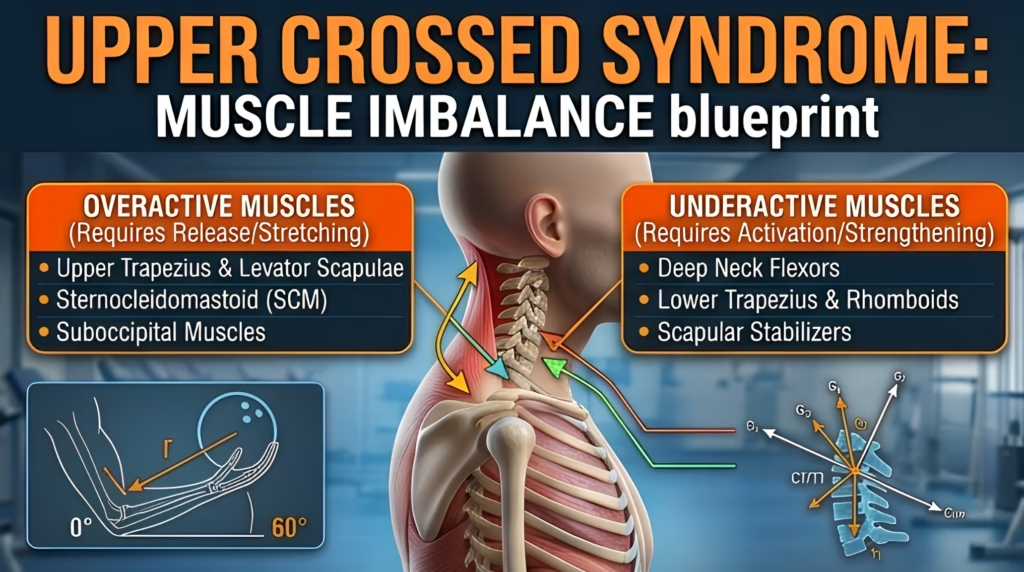
The Muscle Imbalance Blueprint
- Overactive & Hypertonic Muscles (Require Release/Stretching):
- Upper Trapezius & Levator Scapulae: Overworked from trying to pull the weight of the skull backward.
- Sternocleidomastoid (SCM): Pulls the skull forward into further deviation.
- Suboccipital Muscles: Constantly compressed at the base of the skull, frequently pinching nerves to cause tension headaches.
- Underactive & Weakened Muscles (Require Activation/Strengthening):
- Deep Neck Flexors: The core stabilizing muscles of the throat that keep the chin neatly tucked.
- Lower Trapezius & Rhomboids: Responsible for pulling the shoulder blades down and flat against the ribs.
- Serratus Anterior & Scapular Stabilizers: Deconditioned, leading to rounding or “winging” of the shoulders.
The Hidden Connection Between Posture and Breathing Mechanics
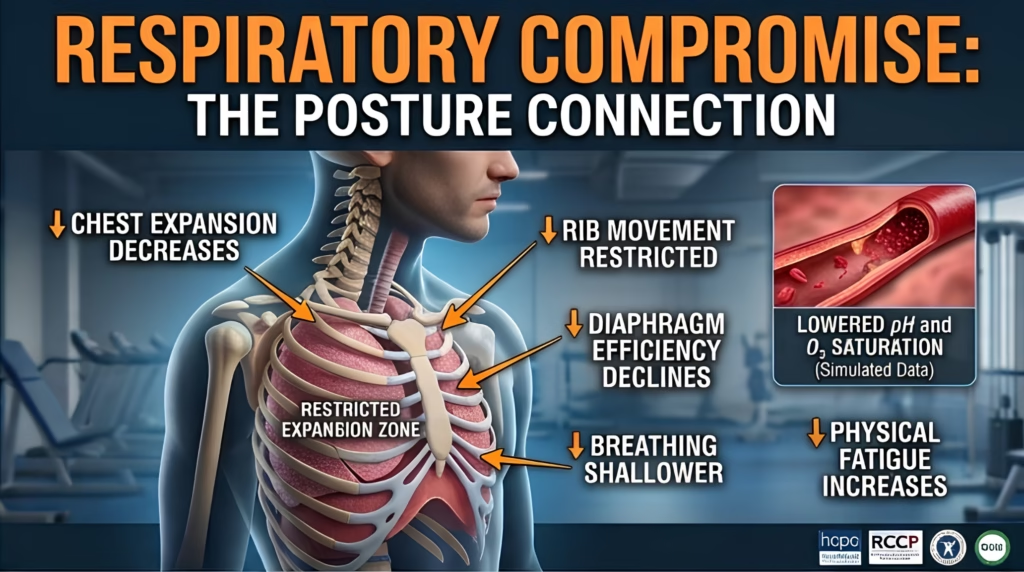
One of the most ignored consequences of Forward Head Posture is its impact on your respiratory system.
When your head glides forward, your shoulders automatically round inward to compensate, forcing your ribcage into a collapsed position. This structural compression restricts your lung expansion and limits diaphragm movement, forcing you to use your secondary neck muscles (like the scalenes and SCM) to pump shallow breaths. This inefficient pattern can lead to unexpected physical fatigue, low oxygen saturation, and heightened stress levels—even if you’ve spent the entire day resting in a chair.
The Structural Path: From Habit to Chronic Condition
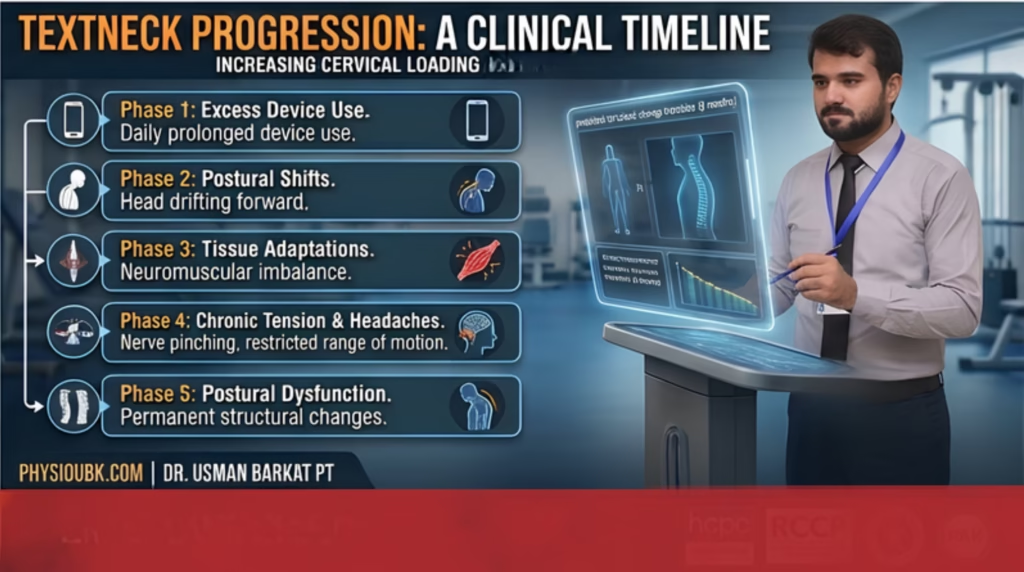
Excessive, Unmanaged Smartphone Use
               ⬇
Prolonged, Low-Angle Cervical Flexion
               ⬇
Development of Forward Head Posture (FHP)
               ⬇
Multiplied Structural Loading on Cervical Joints
               ⬇
Neuromuscular Imbalances & Tissue Adaptations
               ⬇
Restricted Range of Motion & Joint Stiffness
               ⬇
Chronic Neck, Shoulder, and Tension Headaches
               ⬇
Permanent Long-Term Structural Postural Changes
How Physical Therapy Corrects Text Neck Syndrome
In modern, evidence-based physical therapy practice, we don’t treat posture as a standalone flaw that can be fixed by simply telling a patient to “sit up straight.” Instead, we evaluate how your daily habits, desk ergonomics, device setups, and foundational movement patterns interact to influence your musculoskeletal architecture.
Correcting Forward Head Posture requires a strategic, multi-phase clinical approach:
- Releasing Overactive Tissues: Using targeted manual therapy, positional down-regulation, and precise stretches to calm hypertonic structures like the suboccipitals and chest wall.
- Activating Deep Stabilizers: Retraining the deep cervical neck flexors through progressive chin-tuck protocols to build endurance in the muscles that keep your head properly aligned.
- Restoring Thoracic Extension: Opening up the restricted mid-back and ribcage to provide a solid, upright foundation for your neck.
- Ergonomic Adaptation: Adjusting how you interact with your digital tools—such as raising your screens to eye level, utilizing arm supports, and introducing movement breaks—to stop the cycle of structural strain.
Key Takeaways for Digital Wellness
- Text Neck Is a Modern Habit: It is a lifestyle-driven musculoskeletal issue triggered by prolonged screen time and poor movement variety.
- Gravity Multiplies the Weight: A simple 60-degree forward tilt forces your neck to hold an effective load of 27 kg, placing intense stress on your cervical joints.
- Imbalances Run Deep: The issue causes a systemic shift in your upper body muscles and can even restrict your breathing capacity.
- Awareness Drives Change: Becoming conscious of your head position allows you to build healthier movement habits and protect your spine for the future.
How is your posture affecting your daily performance?
Would you like us to customize this content into a highly targeted social media video script series to educate your online community, or should we design a downloadable Ergonomic Desk Checklist that you can use as a high-value asset to capture email leads and build authority for your practice? Comment us so that we can continue according to your requirements.

What is a Functional Capacity Evaluation (FCE) in Physical Therapy?
CLINICAL GUIDE & ASSESSMENT PROTOCOL An exhaustive, clinician-reviewed guide explaining the protocols, physical tolerance metrics,…

Losing Muscle, Losing Protection? The Surprising Link Between Muscle Strength and Immunity
When most people think of the immune system, they picture white blood cells, lymph nodes,…
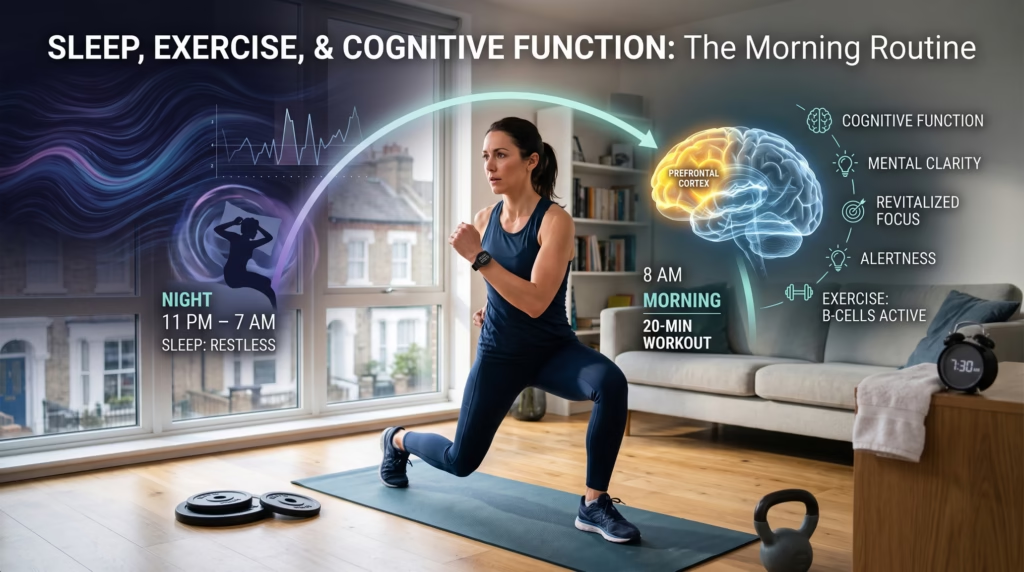
Sleep Better, Think Better: Can a 20-Minute Workout Undo a Sleepless Night?
Waking up after a sleepless night of tossing and turning feels like trying to operate…
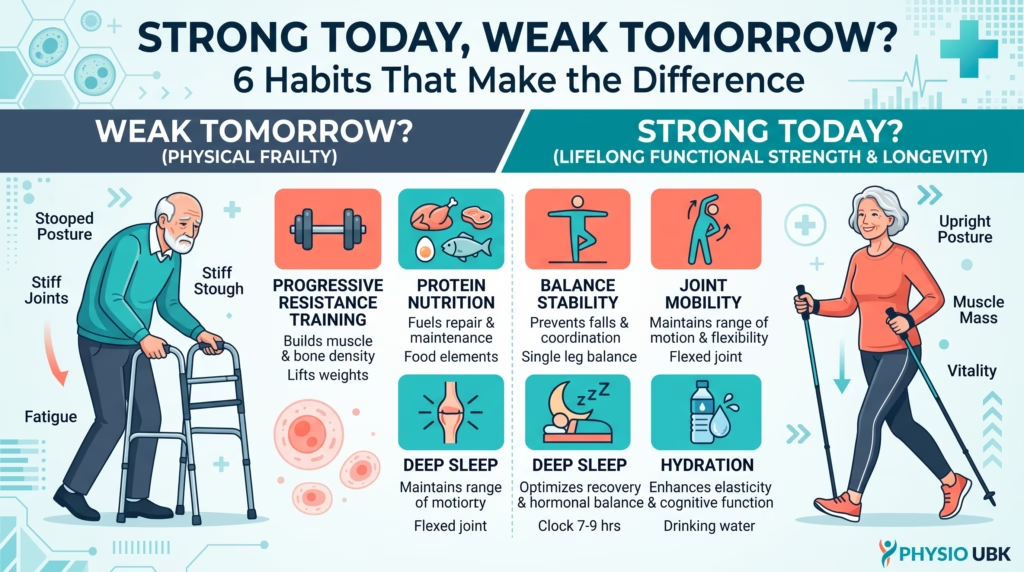
Strong Today, Weak Tomorrow? 6 Habits That Make the Difference
Physical strength often feels permanent when we have it. When you can effortlessly carry heavy…

The 5 Best Deep Core Exercises for Chronic Lower Back Pain
Lower back pain is the leading cause of disability worldwide. Millions of people wake up…
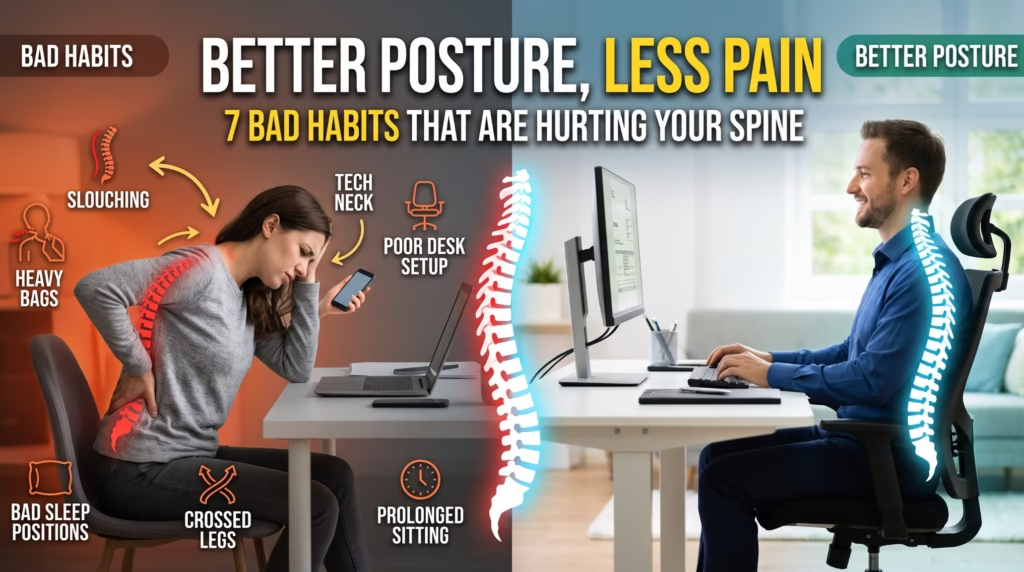
Better Posture, Less Pain: 7 Bad Habits That Are Hurting Your Spine
In our modern world, back and neck pain have become almost universal human experiences. We…
Pingback: Better Posture, Less Pain: 7 Bad Habits That Are Hurting Your Spine - physioubk.com